
Cold Plunge Benefits: Who Should Try It and Why?
Author:Jennifer Chesak
Reviewed By:Katherine Janosz, MD
Published:
May 28, 2026
Last Updated:
October 06, 2026
Truemed writers and editors independently evaluate all our product recommendations. If you make a purchase through any affiliate links we provide, we may receive compensation. Learn more.



Key Takeaways
Cold plunge: is the process of immersing yourself in cold water (about 50 to 59 degrees Fahrenheit).
Cold plunge benefits: cold plunging may support muscle recovery, mental health, and the immune system.
Truemed: specializes in helping you maximize your FSA, HSA, and other health-related benefits.
Key Takeaways
What Is a Cold Plunge?
Benefits of Cold Plunging: What the Evidence Suggests
Cold Therapy and the Nervous System
Who Should Be Cautious or Avoid Cold Plunges?
How to Cold Plunge
What to Look for in a Cold Plunge Product
Recommended Cold Plunge Products from Truemed Partners
How It Works with HSA/FSA and Truemed
FAQ
Shop Eligible Products
Ready to unlock your HSA/FSA funds for qualified medical expenses?
Cold plunge therapy is the practice of immersing yourself in frigid water for brief periods. Brrrr!
Maybe you’re wondering, Why would anyone do that?
Potential cold plunge benefits include muscle soreness relief, enhanced metabolic health, mental health support, immune system support, and more.
In this article, we explore what the science says about cold therapy, tips and safety precautions for cold plunging, and what to look for in a cold plunge product.
What Is a Cold Plunge?
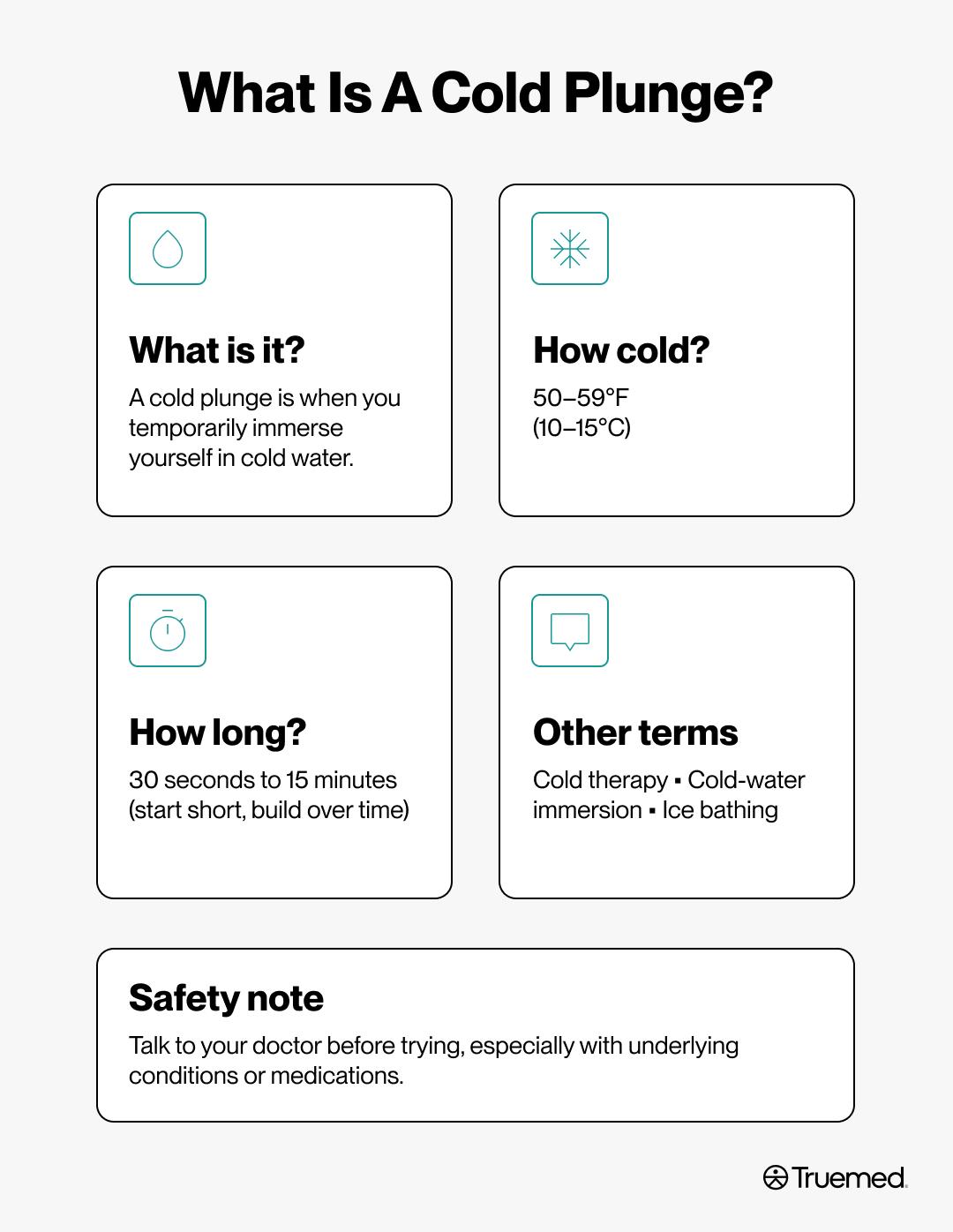
What is it? A cold plunge is when you temporarily immerse yourself in cold water. You can cold plunge at dedicated facilities or gyms that offer the therapy. Or you can buy a cold plunge product for your home or yard for even more convenience. These products usually have dedicated temperature controls.
- How cold? The recommended range is 50 to 59 degrees Fahrenheit (10 to 15 degrees Celsius).
- How long? Time estimates range from a few to 15 minutes, with shorter durations for colder water. People typically start out with just 30 seconds to a minute until they become more experienced.
Other terms: Cold plunging is also called the following: cold therapy, cold-water immersion, and ice bathing. However, ice baths can also refer to the process of adding ice to a tub followed by cold water.
A note on safety: Cold plunging is something you should talk to your doctor about before trying. Cold plunging is not recommended if you have certain underlying conditions or take certain medications. (More on this below.)
Benefits of Cold Plunging: What the Evidence Suggests
You might be wondering about potential cold plunge benefits. Here’s what science says.
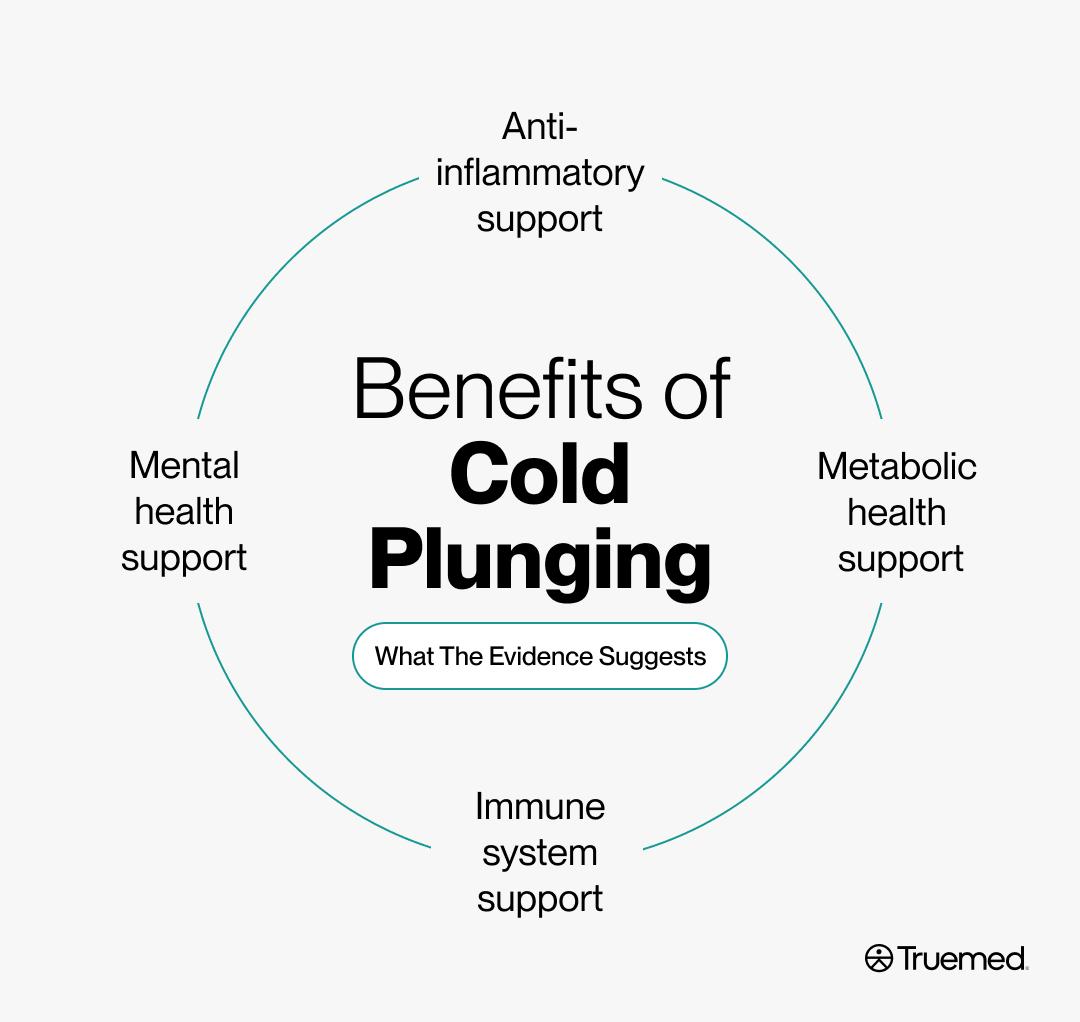
Anti-inflammatory support
Cold temps reduce blood flow to your muscles, which helps reduce swelling after endurance activities or intense exercise. This reduction in swelling may help provide relief from delayed-onset muscle soreness (DOMS).
Research shows that cold plunge study participants report reduced DOMS, and their blood tests reveal lower creatine kinase, a marker that indicates tissue damage, when compared to those who don’t cold plunge.
Metabolic health support
Cold plunging has some benefits for metabolism and overall metabolic health. It activates brown adipose tissue (BAT), which is a healthy type of fat tissue that burns energy to create heat through non-shivering thermogenesis. BAT is different from white adipose tissue (WAT), which stores energy. Cold plunge therapy also helps shift WAT to “beige” fat, making it behave more like brown fat.
Activation of brown and beige fat may help support insulin sensitivity, which helps your body manage glucose (blood sugar) more efficiently.
A reality check though: Although cold plunging enhances metabolic health, it’s not a substitute for lifestyle changes, such as getting more physical activity or eating a healthy diet.
Immune system support
Some evidence suggests that cold plunging might have beneficial effects on white blood cell counts, as observed among cold-water swimmers in one small study.
- Eosinophils: Although these white blood cells fight parasites, high numbers are associated with allergic reactions and inflammation. Cold-water swimming may reduce the count.
- Neutrophils: These white blood cells are the first to show up for fighting bacterial and fungal infections. Cold-water swimming may increase neutrophils.
- Lymphocytes: Includes T-cells and B cells for fighting viruses and producing antibodies, respectively. Some studies suggest cold-water swimming may influence lymphocyte activity, though findings remain mixed.
- Monocytes: These larger white blood cells function as “janitors,” cleaning up damaged cells. Cold-water swimming may increase monocytes.
Again, cold plunging is not a substitute for more evidence-based methods of maintaining a healthy immune system, such as getting quality sleep and eating a nutrient-rich diet.
Mental health support
Cold water exposure may also have some mental health benefits, but the research on these benefits is still mixed. For this reason, cold therapy should not be considered a form of mental health treatment, and it is not a substitute for adequate mental health care under the guidance of a medical professional.
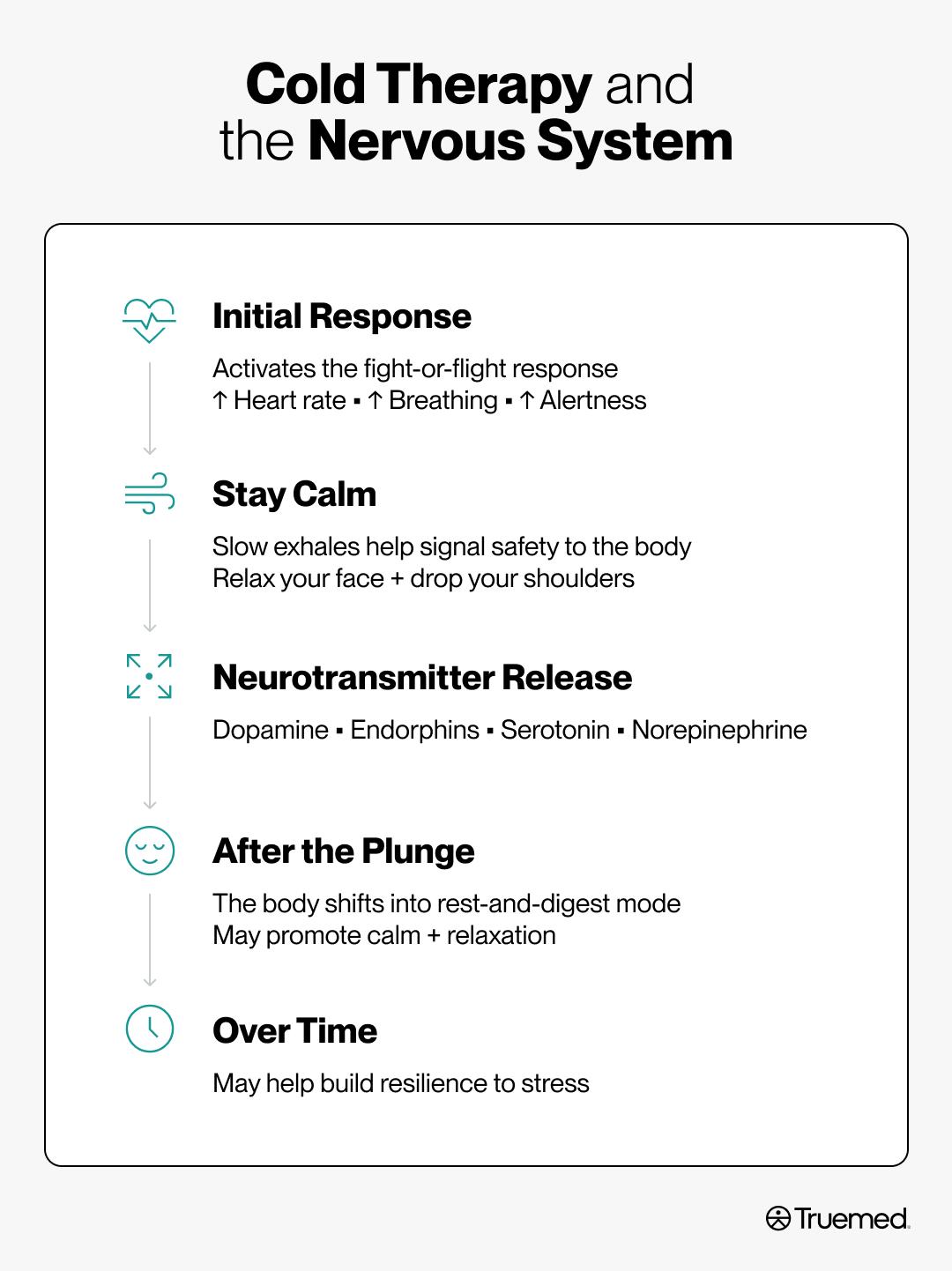
- Releases neurotransmitters: Cold exposure may influence neurotransmitters and stress hormones, such as norepinephrine, dopamine, cortisol, and endorphins. These neurotransmitters play roles in the stress response, reward and motivation, pleasure, attention and focus, and mood.
- May have a calming effect: Cold plunging activates your sympathetic nervous system, (aka your “fight-or-flight” response). But afterward, your parasympathetic nervous system (aka your “rest-and-digest” response) activates, leaving you in a more relaxed state.
- Might make you more resilient to stress: The toggle from sympathetic to parasympathetic activation may help build your resilience to stress over time.
Cold Therapy and the Nervous System
As noted in the previous section, cold therapy may have some beneficial effects on the nervous system. But you might feel a sense of panic at first. This is natural. Cold water will activate your fight-or-flight response. This will elevate your heart rate, blood pressure, breathing rate, and more. For these reasons, you might have a sensation of not being able to catch your breath.
“Focus on your breathing, especially a slower exhale,” says Justin Ternes, DPT. “The more relaxed you can be, the better. Big inhales and slower exhales repeatedly help teach your body to stay calm. A relaxed face and dropped shoulders also signal to your body that you are OK.”
Who Should Be Cautious or Avoid Cold Plunges?
Talking to your doctor before starting a cold plunge routine is essential. The therapy is not recommended for people with certain types of health conditions, including, but not limited to, the following:
- Heart conditions, including arrhythmias, congestive heart failure, history of heart attack, stroke, and more
- Circulatory conditions, including high blood pressure, Raynaud’s syndrome, etc.
- Respiratory conditions, including chronic obstructive pulmonary disease (COPD) or asthma
- Pregnancy
Additionally, you may need to avoid cold plunges if you take certain medications. Your prescribing provider is the best person to talk to regarding this concern.
How to Cold Plunge
As long as you have clearance from your doctor that cold plunging is safe for you, here are some recommendations for getting into a cold plunging routine.
- Try cold showers first: Before you go for the real deal, try simply ending your usual hot shower with a burst of cold water. This can help your body and brain get more comfortable with cold exposure.
- Use the buddy system: If you’re trying a cold plunge for the first time, have someone with you. The shock of the cold water can create a sense of panic, and you may find yourself needing help to get out.
- Start with a short timeframe: Even just 30 seconds to one minute for your first few sessions will help you get acquainted with the sensation. You can increase your duration slowly as you gain more experience.
- Try to take slow deep breaths: You might feel a sense of panic when you begin. This is natural. Cold water will activate your fight-or-flight response. This will elevate your heart rate, blood pressure, breathing rate, and more. For these reasons, you might have a sensation of not being able to catch your breath. Inhale deeply through your nose and exhale slowly through your mouth. If this does not calm you, get out of the cold plunge right away.
- Manage the “afterdrop”: Even after exiting the cold plunge, your body temperature may continue to drop slightly. Aid your body’s natural rewarming processes. Dry off, dress in warm layers, move around gently without overexerting yourself, sip a warm nonalcoholic beverage, and have a snack.
What to Look for in a Cold Plunge Product
If you’re interested in buying a cold plunge product for your home or yard, here are a few considerations:
- Does it have temperature controls if that’s something you desire?
- Are you planning to use ice instead of precise temp control?
- Do you want to convert your existing bathtub into a cold plunge?
- Will the product fit in your designated spot?
- Do you need a portable product?
- Do you need a product that you can take down and store when not in use?
- Will the product work for your body size?
- Can you safely get in and out of the cold plunge?
- What upkeep does the product require, including maintaining water cleanliness?
“I recommend starting simple,” Ternes says. “If things are complicated or hard to maintain, people usually don’t stick to it. To set yourself up for success, do your research and talk to professionals. I would say temperature control and cleanliness matter most.”
Recommended Cold Plunge Products from Truemed Partners
A compact vessel
The Plunge Pod is a sleek acrylic model with a small footprint that can still accommodate tall frames (up to 6'7"). An insulated lid protects your tub and keeps it ready for when you are.
A bath on a budget
The Ice Pod by The Pod Company does not require installation or plumbing modifications. It’s a great choice for cold plunge enthusiasts on a budget who just want to add ice and go.
Easy temperature control
If you already have the Ice Pod and want to level up with its compatible The Pod Chiller, you can buy it when you’re ready for more precise temperature control.
Bathtub-to-cold-plunge conversion
You don’t need a separate tub to cold plunge. You can convert your current bath by adding the Homeplunge chiller—no plumbing modifications necessary. A dedicated app helps you schedule quick water cooling.
Easy setup
The Plunge All-In is a roomy acrylic number that doesn’t require plumbing alterations. Just plug it in and take the plunge. It pairs with an app for temperature control.
A durable choice
The Modtub features foam-injected walls for better insulation and durability. It’s great as a backyard or garage gym setup with its included lid for added protection and safety.
How It Works with HSA/FSA and Truemed
You might be able to purchase a cold plunge product with your FSA or HSA dollars. Such a device might be an eligible expense if you’re using it to address a specific medical condition. If approved by an independent licensed clinician, such conditions might include recovering from a musculoskeletal injury, managing insulin resistance from prediabetes or type 2 diabetes, and more.
You might need a letter of medical necessity (LMN). An LMN is a formal document from a licensed healthcare provider that explains why a certain product, treatment, or service is necessary to treat, mitigate, or prevent a medical condition.
Certain health products and services may be eligible for qualified customers with an LMN issued by an independent practitioner when the item is used to address a specific medical condition.
Truemed* specializes in helping you maximize your FSA or HSA benefits:
- First, you can check whether a product or service is normally considered a qualifying medical expense or whether you might need an LMN.
- Complete a health intake survey that will be reviewed by an independent licensed clinician.
- Buy the item; either pay directly with your HSA/FSA card at checkout, or pay with a regular credit/debit card and seek HSA/FSA reimbursement afterward.
- The independent licensed practitioner will review your medical history, and if you qualify, will issue an LMN. Truemed itself does not make eligibility determinations.
- Truemed also offers support in the event you get a denial of reimbursement and need to provide substantiation documentation.
*Truemed is for qualified customers. HSA/FSA tax savings vary. Learn more at truemed.com/disclosures
FAQ
An ice bath is the practice of dumping ice in a tub, adding cold water, and immersing yourself. But sometimes the term is used to refer to a cold plunge. A cold plunge product is a dedicated tub with temperature-control features that help you maintain the exact temperature you want. Either option can be used for cold plunge therapy, which has some potential benefits, including for muscle recovery, metabolic health, the immune system, and more. But this therapy is something you should talk to your doctor about before trying. Cold plunging is not recommended if you have certain underlying conditions or take certain medications.
If you’re first starting out with cold plunging, staying immersed for 30 seconds to a minute helps you get acquainted with the sensation. You can then increase your time slowly over subsequent sessions. Even once you are more experienced, you should not stay in for longer than 15 minutes. However, you should ask your doctor about what’s safe for you.
Some research suggests cold plunges can help reduce delayed-onset muscle soreness (DOMS) after workouts by constricting blood vessels, which may ease inflammation that leads to aches and pains.



See what you can do with your HSA/FSA.
Join 1.5 million Americans who have routed their healthcare dollars toward root cause health via Truemed's HSA/FSA marketplace.
New product announcements
Sales and special offers
Tips for utilizing your HSA/FSA
Editorial Standards
At True Medicine, Inc., we believe better health starts with trusted information. Our mission is to empower readers with accurate and accessible content grounded in peer-reviewed research, expert insight, and clinical guidance to make smarter health decisions. Every article is written or reviewed by qualified professionals and updated regularly to reflect the latest evidence. For more details on our rigorous editorial process, see here.