
The Best Collagen Supplements for Skin, Joints, and More
Author:Kathleen Ferraro
Reviewed By:Michaela Robbins, DNP
Published:
May 28, 2026
Last Updated:
October 06, 2026
Truemed writers and editors independently evaluate all our product recommendations. If you make a purchase through any affiliate links we provide, we may receive compensation. Learn more.



Key Takeaways
There's no single "best" collagen supplement: The best collagen supplement ultimately depends on your specific goals, whether that’s skin support, joint comfort, exercise recovery, or healthy aging.
Hydrolyzed collagen peptides are the most common form: You'll often see these used in powders and skin-focused supplements.
Collagen type matters: Type I collagen is commonly associated with skin, hair, nails, and bones, while type II collagen is more often marketed for joint and cartilage support.
Certain uses are more research-backed than others: Research on collagen for skin health is the strongest so far, while evidence for joints, hair, nails, and exercise recovery is still evolving.
Look past the marketing hype: When comparing products, pay attention to serving size, collagen source, ingredient quality, and third-party testing, not just marketing claims.
Key Takeaways
How to choose the best collagen supplement
6 Best collagen supplements
What does collagen do in the body?
Collagen benefits: What the evidence suggests
Collagen for skin: what to know before buying
Best collagen for women
Types of collagen supplements: Which should you choose?
Safety and side effects
How it works with HSA/FSA and Truemed
Compliance & documentation
The bottom line
FAQ
Shop Eligible Products
Ready to unlock your HSA/FSA funds for qualified medical expenses?
Collagen supplements used to live mostly in the beauty aisle. Now they’re everywhere: mixed into smoothies, coffee, and protein powders aimed at everything from skin and nails to joints and tendons. But with so many options on the market, identifying the best collagen supplements for you can feel surprisingly complicated.
If you’ve ever found yourself standing in the supplement aisle wondering where to even start, I’ve been there, too. Part of the confusion is that collagen supplements aren’t all the same. Different products use different collagen types, sources, serving sizes, and added ingredients. And the research supporting specific benefits varies by formula and goal.
At the same time, collagen supplements aren’t magic. Results can vary based on the product, dose, and consistency, as well as your age, lifestyle, and health needs.
Below, learn how to find the best collagen supplements for skin, joints, hair, nails, and active lifestyles, plus which products may qualify for HSA/FSA dollars.
How to choose the best collagen supplement
The best collagen supplement depends on what you want it to do. Someone interested in skin health may care about different collagen types than someone focused on joint support, exercise recovery, or healthy aging.
When comparing products, focus on these practical factors:
- Collagen type: Different collagen types are associated with different parts of the body, says James J. Chao, MD, FACS, a board-certified physician and chief medical officer of VedaNu Wellness. Type I and III collagen are commonly used in collagen for skin, hair, nails, and bones, while type II collagen is more often marketed for cartilage and joint support.
- Collagen source: Collagen can come from bovine (cow), marine (fish), chicken, or egg sources, according to Chao. Marine collagen is often marketed for skin health, while bovine collagen is common in multi-purpose collagen peptide powders. The source also matters for allergies, dietary preferences, and sustainability concerns.
- Serving size: Serving size matters more than many people realize. “Research shows that the ideal dosage of collagen peptides is anywhere from 2.5 grams to 15 grams per day,” says Chao. “Anything less than 2.5 grams may not give enough to make a difference, and anything over 20 grams is simply not absorbed well.”
- Format: For most people, powders are the easiest and most flexible option. Capsules, gummies, and liquid products can be convenient (especially for travel), but often contain smaller doses.
- Third-party testing: Independent testing can help verify ingredient quality and purity. Keep an eye out for certifications like NSF Certified for Sport, USP, or Informed Choice.
- Added ingredients: Some supplements include extras like vitamin C, biotin, hyaluronic acid, or probiotics. Sometimes those additions support a specific goal; other times, they just make the label look fancier. It’s also worth checking for added sugars, artificial sweeteners, and fillers, which don’t necessarily add much value.
When you take collagen can also matter. While there’s no strong evidence that taking it at night is better than taking it at other times, some people find nighttime easier to fit into their routine. For more on timing, see our guide on whether you should take collagen at night.
6 Best collagen supplements
Here are a few collagen supplements worth considering based on different needs and preferences to help you cut through the noise.
Momentous Collagen Peptides
Momentous Collagen Peptides powder ($51.95/30 servings) contains a straightforward, quality-focused formula and is NSF Certified for Sport, which may appeal to athletes or anyone prioritizing third-party testing.
The unflavored powder mixes easily into coffee, smoothies, or protein shakes, making it a practical, everyday option for active adults focused on joint, tendon, and soft-tissue support.
Naked Nutrition Collagen Peptides Protein - 20 oz
The unflavored Naked Nutrition Collagen Peptides Protein Powder ($41.99/60 servings) is sourced from pasture-raised cows and designed to mix easily into drinks or recipes without significantly changing the flavor or odor. It may work well for people who prefer minimalist supplements and want flexibility in how they use collagen day to day.
Designs for Health Whole Body Collagen
This Whole Body Collagen powder ($69.99/30 servings) is made of hydrolyzed collagen peptide. It’s positioned around connective tissue, skin elasticity, and whole-body structural support, making it a great fit for those interested in a more clinical-style collagen formula marketed for skin, bone, and joint health.
Designs for Health is also a practitioner-focused supplement brand, which may appeal to those already working with healthcare providers.
Ancient Nutrition Multi Collagen Protein Powder Unflavored
This unflavored Multi-Collagen Protein Powder ($49.95/45 servings) contains 10 collagen types along with added vitamin C and probiotics. With 20 grams of collagen per serving, it’s a solid pick for people seeking more comprehensive collagen blends rather than single-source collagen peptides.
Equip Foods Grass-Fed Collagen Unflavored
This U.S.-sourced, unflavored Grass-Fed Collagen powder ($43.99/30 servings) provides 15 grams of collagen per scoop and focuses on ingredient simplicity without artificial flavors or complicated blends. It may work well for those who want a simple grass-fed bovine collagen powder with minimal ingredients.
NatureWise Liquid Collagen
NatureWise Liquid Collagen ($64.97/10 servings) contains type I and III collagen peptides, along with added biotin and vitamins to support hair, skin, and nail health. The grab-and-go format may appeal to people who don’t want to mix powders, though it’s still worth comparing the collagen per serving with powdered options.
What does collagen do in the body?
Collagen is the most abundant protein in your body. It’s part of the body’s structural framework, supporting skin, cartilage, tendons, ligaments, bones, and other connective tissues.
Your body naturally makes collagen using amino acids from protein-rich foods along with nutrients like vitamin C. But collagen production gradually declines with age, says Chao, which is why collagen supplements are often marketed for healthy aging, skin health, and joint support.
“When it comes to collagen supplements, I find that the least appreciated benefit is what they do to the extracellular matrix, [aka] the ‘glue’ that binds the skin, tendon, cartilage, and other connective tissue together,” says Chao.
Collagen benefits: What the evidence suggests
Overall, the strongest evidence supporting collagen supplementation is around skin health, while research on other benefits is still evolving.
Another important thing to keep in mind is that many collagen studies are relatively small, short-term, industry-funded, or use formulas that combine collagen with other active ingredients. That can make it harder to know exactly what’s driving the results.
Still, here’s where the research currently looks the most promising:
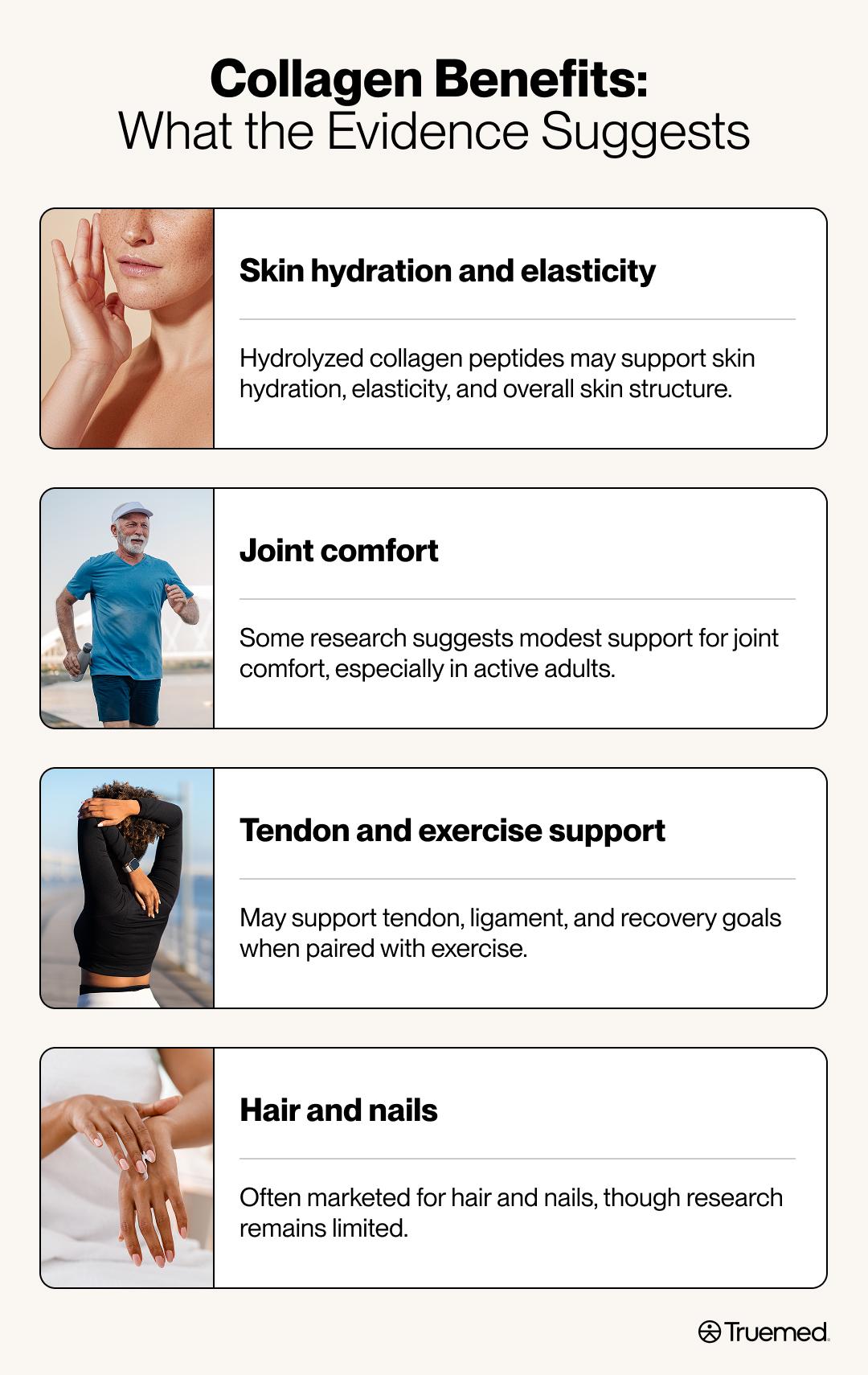
- Skin hydration and elasticity: Studies suggest hydrolyzed collagen peptides may help support skin hydration, elasticity, and overall skin structure. “Research has shown that you can see improvements in dermal density in as quickly as 8 weeks with daily dosing,” says Chao. “However, this compounds over time. The effects typically peak around 3-6 months of continuous use.”
- Joint comfort: Research on joint support is more mixed. But some studies have found modest improvements in joint discomfort, particularly in people with osteoarthritis or physically active adults.
- Tendon and exercise support: Emerging research suggests collagen supplementation—especially when paired with resistance training or exercise programs—may support tendon, ligament, and recovery goals.
- Hair and nails: Hair and nail benefits are heavily marketed, but the evidence is still limited. Some supplements also combine collagen with ingredients like biotin, zinc, or vitamins, making it harder to know how much benefit comes from the collagen itself.
Collagen for skin: what to know before buying
Most research on collagen for skin focuses on hydrolyzed collagen peptides, which are collagen proteins broken down into smaller peptides that are easier for the body to absorb and use.
From there, it helps to look at the collagen type, meaning the specific kind of collagen protein in the supplement. Type I collagen is especially important for skin health, according to Chao.“Type I makes up approximately 80-90% of your dermis and is responsible for much of your skin’s firmness and elasticity,” he says.
Collagen source matters, too. “Marine collagen has significantly higher levels of hydroxyproline and glycine. These are the amino acids your body uses to produce collagen in your skin,” explains Chao. “Long story short, if you’re looking for a supplement that has been scientifically proven to benefit skin quality, type I marine collagen is the best option.”
That said, it’s important to keep expectations realistic. Even the strongest collagen studies don’t suggest overnight changes, and these supplements can’t reverse skin aging. Skin-support benefits instead build gradually over weeks or months of consistent use, says Chao.
Collagen supplements also don't replace foundational habits like eating enough protein and vitamin C, wearing SPF, prioritizing sleep, and avoiding smoking.
Best collagen for women
Like any collagen supplement, the best collagen for women depends less on marketing buzzwords and more on factors like life stage, activity level, diet, and health goals.
According to Chao, collagen production declines more rapidly during perimenopause and menopause, which may contribute to changes in skin elasticity, joint comfort, and bone health over time.
That’s why a combination of type I and type III collagens is typically recommended for women’s health during those life phases, he says.
Type I collagen is associated with skin, bones, hair, and nails—areas some women become more focused on as collagen production naturally declines with age. Type III collagen is more closely tied to connective tissues like blood vessels and the uterus, he says, which is part of why it’s often included in women’s health-focused formulas.
For many women, powders are the easiest way to adjust serving size and build collagen into a daily routine. That said, capsules and liquid collagen products may work better for those who prioritize convenience or travel-friendly options.
Just note that women who are pregnant, breastfeeding, managing chronic health conditions, or taking medications should talk with a healthcare provider before trying a new supplement.
Types of collagen supplements: Which should you choose?
Beyond different brands and flavors, collagen products can vary in the type of collagen they contain, where the collagen comes from, and how the supplement is processed.
Here’s a breakdown of some of the most common types you’ll see while shopping.
Hydrolyzed collagen peptides
Hydrolyzed collagen peptides are the most common form found in collagen powders, liquids, and everyday supplements.
Peptides are smaller parts of the complete collagen protein, which means they dissolve more easily in liquids and are easier for the body to absorb and use. Most research on collagen for skin, joints, and exercise support focuses on hydrolyzed collagen.
Undenatured type II collagen
Undenatured type II collagen is typically sourced from chicken cartilage and is more commonly marketed for joint and cartilage support. These supplements are usually taken in much smaller doses than hydrolyzed collagen powders.
Marine collagen
Marine collagen comes from fish and contains type I collagen, which is linked to skin structure and elasticity, says Chao.
Some people prefer marine collagen because it tends to dissolve easily and often has a smaller peptide size. But if you have a fish or shellfish allergy, it’s best to steer clear.
Bovine collagen
Bovine collagen comes from cows and is one of the most common collagen sources used in powders and multi-purpose collagen supplements. It typically contains type I and type III collagen, which is part of why it’s often marketed for skin, joints, bones, and general connective tissue support.
“Vegan collagen”
Technically, true collagen is always animal-derived, so vegan collagen supplements don’t actually contain collagen itself.
Instead, these products usually contain nutrients involved in the body’s natural collagen production process (like vitamin C, amino acids, silica, or biotin). That’s why some products market themselves as “collagen boosters” rather than actual collagen supplements.
In other words, while a vegan collagen product may support collagen production indirectly, it’s different from taking collagen peptides directly.
Safety and side effects
Collagen supplements are generally considered safe for healthy adults, says Chao. But not every product is right for everyone.
According to Chao, here are a few safety considerations to keep in mind:
- Digestive side effects: Some people may experience bloating, fullness, nausea, or mild digestive discomfort.
- Allergies: Marine collagen may not work for people with fish or shellfish allergies, while some products may contain egg, dairy, or bovine-derived ingredients.
- Product quality: “Not all collagen is created equally,” Chao says. “Low-quality collagen extracted from cows can be contaminated with heavy metals.” Third-party testing can help verify quality and purity.
- Kidney or liver conditions: People with kidney or liver conditions that affect protein metabolism should use extra caution with high-protein supplements.
- Autoimmune conditions: Chao recommends talking with a healthcare provider before starting collagen if you have autoimmune conditions that affect connective tissue, like lupus.
- Pregnancy, breastfeeding, and medications: Pregnant or breastfeeding people, anyone taking medications, or people managing chronic health conditions should check with a healthcare provider before starting a new supplement.
Seek medical care if you experience severe allergic reactions, persistent joint swelling, severe pain, unexplained weight loss, rash, or sudden mobility changes.
How it works with HSA/FSA and Truemed
Qualified customers may use HSA/FSA funds for certain collagen supplements when they’re used to address a diagnosed medical condition and supported by appropriate documentation.
Truemed* helps guide you through that process. There’s also no extra cost to use Truemed—the service is included in the purchase price.
Here’s how it works:
- Start by checking Truemed’s supplements hub to see whether a product qualifies as an eligible medical expense or whether a letter of medical necessity (LMN) is needed.
- Complete a health intake survey that’s reviewed by an independent licensed clinician.
- If you qualify, the clinician may issue an LMN based on your medical history and health needs. Truemed itself does not make eligibility determinations.
- You can then purchase eligible vitamins with your HSA/FSA card, or pay out of pocket and submit for reimbursement afterward.
- If your reimbursement request is denied and you need to provide documentation, Truemed also offers support.
*Truemed is for qualified customers. HSA/FSA tax savings vary. Learn more at truemed.com/disclosures.
Compliance & documentation
Not all collagen products count as HSA/FSA-eligible supplements. Whether or not they qualify ultimately depends on the product, your health needs, and whether you have the right documentation.
In many cases, that means you’ll need LMN from a licensed provider, along with supporting records like receipts or reimbursement paperwork. Your plan administrator makes all final reimbursement decisions, not Truemed*.
*Truemed is for qualified customers. HSA/FSA tax savings vary. Learn more at truemed.com/disclosures.
The bottom line
The best collagen supplement depends on your goals, dosage, ingredient quality, and consistency, rather than trendy marketing claims. Research suggests collagen may help support skin hydration, elasticity, joint comfort, and connective tissue health, though results vary and the evidence is stronger for some benefits than others.
When comparing products, focus on the collagen type, source, serving size, and third-party testing. And for qualified customers, some supplements may also be eligible for HSA/FSA spending through Truemed (when medically necessary and supported by appropriate documentation).
FAQ
The best collagen supplements for skin typically contain hydrolyzed marine collagen peptides and type I collagen, which is closely associated with skin structure and elasticity, says Chao. Still, the best option ultimately depends on your preferences, budget, and whether you’ll realistically take it consistently.
Collagen supports the structure of cartilage and connective tissue in the joints. Research on collagen for joint health is still evolving, but some studies suggest certain supplements may help support joint comfort, particularly in people with osteoarthritis or active lifestyles.
Possibly, especially if your expectations are realistic. Research suggests collagen supplements may help support skin hydration and elasticity over time, though results vary and build gradually with consistent use.
Collagen supplements can be HSA/FSA eligible, but it depends on how they're being used. Under IRS rules, over-the-counter supplements like collagen aren't automatically qualified medical expenses just because they're available for purchase. To use HSA/FSA funds, you generally need a Letter of Medical Necessity (LMN) from a licensed provider connecting the supplement to a specific health condition — for example, using it to support joint health related to a diagnosed condition like osteoarthritis, aid skin healing or recovery after a medical procedure, or as part of a treatment plan for a connective tissue-related issue.




See what you can do with your HSA/FSA.
Join 1.5 million Americans who have routed their healthcare dollars toward root cause health via Truemed's HSA/FSA marketplace.
New product announcements
Sales and special offers
Tips for utilizing your HSA/FSA
Editorial Standards
At True Medicine, Inc., we believe better health starts with trusted information. Our mission is to empower readers with accurate and accessible content grounded in peer-reviewed research, expert insight, and clinical guidance to make smarter health decisions. Every article is written or reviewed by qualified professionals and updated regularly to reflect the latest evidence. For more details on our rigorous editorial process, see here.