
The 6 Best Creatine Supplements: What to Look For and How to Choose
Author:Kathleen Ferraro
Reviewed By:Katherine Janosz, MD
Published:
May 20, 2026
Last Updated:
September 10, 2026
Truemed writers and editors independently evaluate all our product recommendations. If you make a purchase through any affiliate links we provide, we may receive compensation. Learn more.



Key Takeaways
Creatine is a strong supplement choice: For most people, creatine monohydrate is the best creatine supplement thanks to its strong research backing, affordability, and straightforward dosing.
A good creatine supplement usually comes down to a few basics: An effective dose, quality testing, transparent ingredients, and a format you’ll actually use consistently are what matter most.
Powder is typically the best format: Gummies, capsules, and flavored blends can work, but they’re not automatically better than plain creatine powder.
Some creatine products may qualify for HSA/FSA use: For eligible customers, creatine may qualify for HSA/FSA dollars when it's connected to a diagnosed medical condition and backed by the right documentation.
Shop Eligible Products
Ready to unlock your HSA/FSA funds for qualified medical expenses?
Creatine has gone from a niche gym supplement to one of the most talked-about products in wellness. These days, it’s just as likely to come up in conversations about healthy aging, recovery, and staying strong long-term as it is in bodybuilding forums.
But when you start looking for the best creatine supplement, things can get confusing fast.
There are flavored powders, gummies, capsules, “elite performance” blends, and formulas that cost three times as much as basic options. The marketing can make it sound like you need a chemistry degree just to pick the right tub.
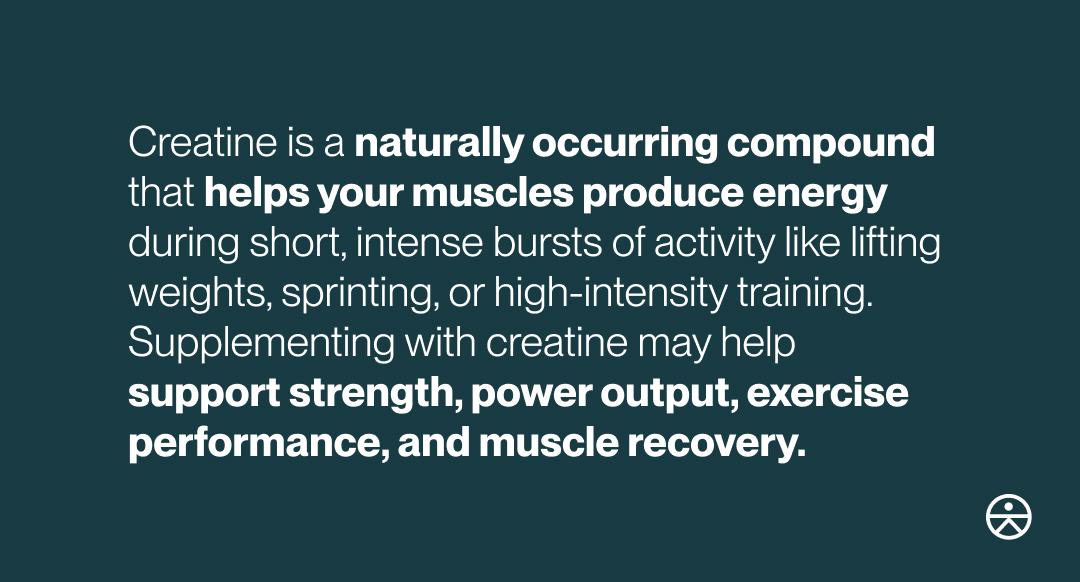
At its core, though, creatine itself is pretty straightforward. It’s a naturally occurring compound that helps your muscles produce energy during short, intense bursts of activity like lifting weights, sprinting, or high-intensity training.
For most people, choosing the best creatine supplement comes down to a few basics: the type of creatine, dose, quality testing, and a format you’ll actually use consistently.
We’ll break down what matters most and our top picks.
How to choose the best creatine supplement for you
Despite all the flashy marketing around “advanced” creatine formulas, the best creatine supplement for most people is usually creatine monohydrate. It’s the most researched form, widely available, and typically the standard option you’ll find on the shelves.
“Creatine monohydrate remains the gold standard regardless of sex,” says Alexander LeRitz, MSc, RDN, CDN, CNSC, CPT, a registered dietitian and sports nutritionist at JM Nutrition. “It has decades of research to support its efficacy, and is a very cost-efficient option.”
That also means the “best” creatine supplement usually isn’t the most expensive or heavily marketed one. Powders, gummies, capsules, and flavored blends can all work if they help you take creatine consistently.
According to LeRitz, here’s what’s worth paying attention to before you buy:
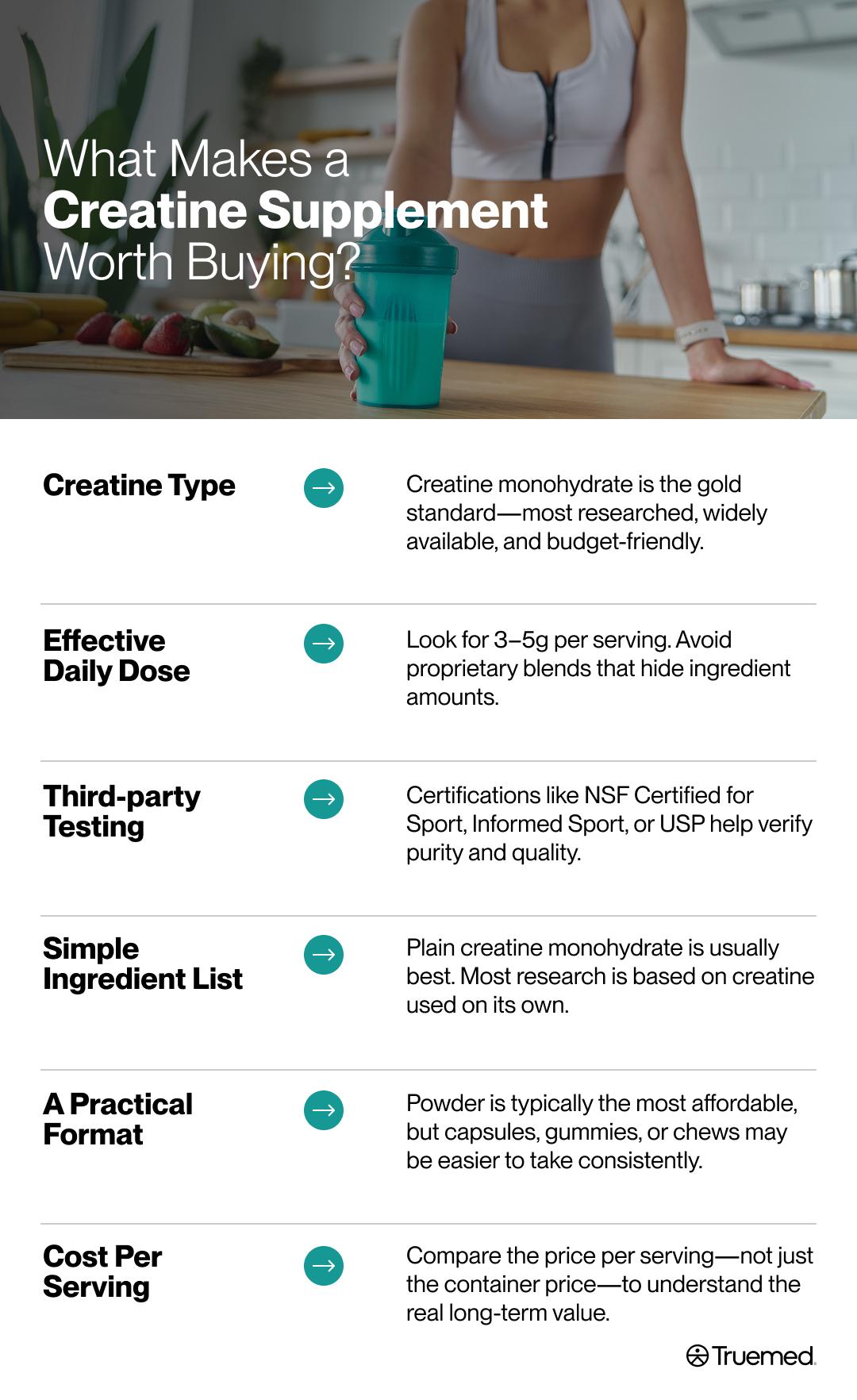
- Creatine type: For most people, creatine monohydrate is the best option. It’s the most researched form, easy to find, and usually more affordable.
- Effective daily dose: A good creatine supplement should clearly provide an effective daily dose, usually around 3 to 5 grams per serving. Be cautious with products that hide amounts inside proprietary blends or require multiple servings to reach that range.
- Third-party testing: One of the biggest quality signals is independent testing. LeRitz recommends looking for certifications like NSF Certified for Sport, Informed Sport, or USP verification, which help confirm the product contains what the label says and is free from banned or contaminated substances.
- Simple ingredient list: In most cases, less is more. “Most of the studies done on creatine have been conducted in isolation,” says LeRitz, meaning the strongest evidence we have is for plain creatine monohydrate—not heavily blended formulas packed with extra ingredients.
- A practical format: Powders are usually the most cost-effective option, but capsules, gummies, and chews can make sense if they’re easier for you to take consistently. The “best” format is often the one that realistically fits into your routine.
- Cost per serving: Some creatine supplements cost significantly more without offering meaningful benefits. Looking at the cost per serving, not just the price of the container, can give you a better sense of long-term value.
6 Best Creatine Products
Ultimately, most creatine shopping comes down to finding a product that fits your routine, budget, and preferences. The products below aren’t the only good options on the market, but they’re solid examples of what to look for in a creatine supplement: clear dosing, straightforward formulas, and transparent quality standards.
Best Overall: Gainful Creatine Monohydrate
Gainful Creatine Monohydrate ($15.99/28 servings) is a straightforward monohydrate option designed around simplicity. It’s a good fit for people who want a basic daily creatine habit without extra additives or performance blends.
Like most effective creatine supplements, the value here is less about flashy promises and more about consistency over time.
Best Minimalist Pick: Thorne Creatine
If you want a simple, no-frills creatine powder, this is it. Thorne Creatine ($44/90 servings) contains only creatine monohydrate. Along with straightforward dosing, it’s a practical option for people who just want an easy daily scoop without a long ingredient list.
It also works well for people focused on consistency and long-term value over trendy extras or heavily marketed blends.
Best Value: Naked Creatine
If your main goal is getting a straightforward creatine monohydrate supplement without spending a ton, Naked Creatine ($21.99/100 servings) is a strong value pick. The formula keeps things simple with pure creatine monohydrate, no fillers or artificial additives, and a low cost per serving that makes daily use feel a lot more sustainable long-term.
It’s also independently tested and available in larger container sizes, which can make it especially appealing for people who know they want creatine to become part of their regular routine.
Best for Women: BrickHouse Nutrition CreaTone
There’s no special type of creatine women need — plain creatine monohydrate can work well for both women and men. But CreaTone ($71/30 servings) stands out for women who want a more all-in-one formula.
In addition to micronized creatine monohydrate, it includes ingredients like HMB, magnesium L-threonate (Magtein®), ElevATP®, and vitamin D, which are aimed at supporting strength, recovery, energy production, and muscle maintenance. That holistic combination may especially appeal to women focused on supporting muscle retention and bone health as they age.
Like any multi-ingredient blend, though, it’s still worth making sure the added ingredients actually align with your goals and budget.
Best Gummies: Momentous Creatine Chews
If you know you’ll never consistently use powders, a chewable option like Momentous Creatine Chews ($49.95/150 chews) may make the habit easier to stick to. These chews use creatine monohydrate in a more portable, grab-and-go format that works well for travel, gym bags, or people who simply prefer not to drink their supplements.
Like most gummy-style creatine products, convenience is the biggest selling point here. Just note the serving size—1 gram per chew—to make sure you actually get an effective daily dose.
Best for Athletes: Momentous Creatine
Momentous Creatine ($39.95/90 servings) is a strong option for athletes and active people who prioritize third-party testing and brand transparency. The formula keeps things simple with pure creatine monohydrate, while placing an emphasis on quality standards and sport-minded certification (it’s NSF Certified for Sport).
How much creatine should I take?
For most people, the standard creatine dose is pretty simple: around 3 to 5 grams per day. That’s the amount most commonly used in research and the range many experts recommend for ongoing maintenance.
You may also come across something called a “loading phase,” where people take larger amounts of creatine—often around 20 grams daily split into multiple doses—for about a week before switching to a lower maintenance dose. Loading can help saturate muscle stores more quickly, but it’s optional.’
Most people can still see creatine benefits by simply taking a regular daily dose consistently over time. If larger doses upset your stomach, splitting creatine into smaller servings throughout the day may help improve comfort.
When should I take creatine?
When it comes to timing, consistency matters more than perfection.
Some people prefer taking creatine after workouts, while others mix it into breakfast, smoothies, or a daily protein shake. There’s no strong evidence that you need to take it at an exact time of day for it to work, so pick a time that’s most convenient for you.
Forms of creatine
With seemingly endless options, shopping for creatine can get overwhelming fast. Here’s what to know about the most common forms of the supplement:
- Monohydrate: For most people, creatine monohydrate is the best starting point. It’s the form backed by the most research, widely available, and usually the most budget-friendly option.
- Micronized monohydrate: Micronized creatine is creatine monohydrate that’s been processed into smaller particles, which may help it mix more easily into liquids. But functionally, it’s still a monohydrate product.
- Gummies and chews: Creatine gummies and chews can be convenient, especially for people who dislike powders or want something more portable. The tradeoff is that they’re often more expensive per serving and may require multiple gummies to reach an effective dose.
- Multi-ingredient blends: Some creatine supplements include ingredients like electrolytes, caffeine, protein, or pre-workout stimulants. Sometimes, those extras may make sense for your goals. But they’re not automatically better.“Creatine is really not a complicated supplement,” says LeRitz. “Generally, I recommend avoiding multi-ingredient creatine as they tend to be more pricey and often do not provide meaningful additional benefits.”
Ingredients to avoid overpaying for
That’s also why it’s worth being a little skeptical of products that lean heavily on flashy branding or vague ingredient lists. According to LeRitz, here are a few signs a creatine supplement may be more marketing than substance:
- Proprietary blends that don’t clearly list ingredient amounts
- “Revolutionary” or exaggerated performance claims
- Heavy stimulant loads or unnecessary add-ins
- Products that dramatically increase the cost without clear evidence behind them
- Companies that skip third-party testing
How it works with HSA/FSA and Truemed
Some creatine products may be eligible for HSA/FSA use for qualified customers when they’re tied to a diagnosed medical condition and supported by appropriate documentation.
Truemed* helps guide customers through that process. And there’s no additional cost to use it — Truemed’s services are included in the purchase price.
Here’s how it works:
Start by checking whether a product qualifies as an eligible medical expense or whether a letter of medical necessity (LMN) is needed.
Complete a health intake survey that’s reviewed by an independent licensed clinician.
If you qualify, the clinician may issue an LMN based on your medical history and health needs. Truemed itself does not make eligibility determinations.
You can then purchase eligible products with your HSA/FSA card, or pay out of pocket and submit for reimbursement afterward.
If your reimbursement request is denied and you need to provide documentation, Truemed also offers support.
*Truemed is for qualified customers. HSA/FSA tax savings vary. Learn more at truemed.com/disclosures.
Compliance & documentation
Not all creatine products are HSA/FSA-eligible supplements. Eligibility ultimately depends on the product, your health needs, and whether you have the right documentation on file.
For some purchases, that may include an LMN from a licensed provider, along with standard records like receipts or reimbursement paperwork. Final reimbursement decisions always rest with the plan administrator, not Truemed*.
*Truemed is for qualified customers. HSA/FSA tax savings vary. Learn more at truemed.com/disclosures.
The bottom line
For most people, the best creatine supplement is usually a straightforward creatine monohydrate product with a solid dose, good quality standards, and a format you’ll actually remember to take.
Flashy formulas usually matter a lot less than consistency. If the product is well-tested, fits your routine, and helps support your training goals, you’re already on the right track. And for qualified customers exploring HSA/FSA eligibility, Truemed can help guide the documentation process for certain eligible products.
her doses (around 20 grams) at the beginning, but that’s optional. Consistency matters more than taking large amounts.
FAQ
For most people, the best creatine supplement is usually a straightforward creatine monohydrate product with an effective daily dose, good quality testing, and minimal unnecessary ingredients. It’s the most researched form of creatine and typically the most affordable option, too.
Most people take around 3 to 5 grams of creatine daily. Some people choose to do a short “loading phase” with higher doses (around 20 grams) at the beginning, but that’s optional. Consistency matters more than taking large amounts.
There’s no perfect time to take creatine. Some people take it after workouts, while others mix it into breakfast, smoothies, or protein shakes. The biggest thing is taking it consistently day to day, regardless of the time.
Usually, no. The best creatine for women is often the same as the best creatine for men: creatine monohydrate with a clear dose and solid quality standards. Products marketed “for women” aren’t automatically better just because of the branding.
Creatine can be HSA/FSA eligible, but it depends on how it's being used. Under IRS rules, over-the-counter supplements like creatine aren't automatically qualified medical expenses just because they're available for purchase. To use HSA/FSA funds, you generally need a Letter of Medical Necessity (LMN) from a licensed provider connecting the supplement to a specific health condition — for example, using it to support muscle mass and strength related to a diagnosed condition (like sarcopenia or age-related muscle loss), aid recovery from an injury, or as part of a broader treatment plan for a qualifying condition.




See what you can do with your HSA/FSA.
Join 1.5 million Americans who have routed their healthcare dollars toward root cause health via Truemed's HSA/FSA marketplace.
New product announcements
Sales and special offers
Tips for utilizing your HSA/FSA
Editorial Standards
At True Medicine, Inc., we believe better health starts with trusted information. Our mission is to empower readers with accurate and accessible content grounded in peer-reviewed research, expert insight, and clinical guidance to make smarter health decisions. Every article is written or reviewed by qualified professionals and updated regularly to reflect the latest evidence. For more details on our rigorous editorial process, see here.