
Best Electrolyte Powder for Everyday Use: Our Top Picks and What to Look For
Author:Kathleen Ferraro
Reviewed By:Michaela Robbins, DNP
Published:
July 07, 2026
Last Updated:
September 02, 2026
Truemed writers and editors independently evaluate all our product recommendations. If you make a purchase through any affiliate links we provide, we may receive compensation. Learn more.



Key Takeaways
Electrolyte powders aren't one-size-fits-all: The right formula depends on factors like how much you sweat, your activity level, diet, and overall health needs.
Not everyone needs electrolyte powder: Supplements may be helpful during prolonged exercise, heavy sweating, or illness. Otherwise, water and a balanced diet often provide enough hydration.
Compare your options: Pay close attention to sodium content, carbohydrates, sweeteners, and ingredient quality, not just marketing claims.
Some electrolyte products may be HSA/FSA eligible: Qualified customers may be able to use pre-tax funds to purchase electrolyte supplements that support a diagnosed medical condition.
Key Takeaways
How to choose the best electrolyte powders for your needs
What electrolytes do in the body
Who may benefit from electrolyte supplements
When electrolyte powders may not be the right fit
Key ingredients to compare on the label
Choosing by use case: daily hydration, workouts, heat, and travel
Sugar, carbs, and sweeteners in electrolyte powders
Taste, mixability, and convenience matter more than many people realize
Recommended electrolyte products available on Truemed
How it works with HSA/FSA and Truemed
Compliance & documentation
Bottom line
Deep dive recommendations
FAQ
Shop Eligible Products
Ready to unlock your HSA/FSA funds for qualified medical expenses?
Electrolyte powders have become a go-to tool for hydration. But with hundreds of options on the market, choosing the best electrolyte powder isn't always straightforward.
First things first, electrolytes are minerals that help regulate fluid balance, muscle contractions, nerve signaling, and other essential body functions. While many people get the electrolytes they need through food and water alone, supplements can be helpful during periods of heavy sweating, illness, travel, or other situations that increase fluid and mineral losses.
But not all electrolyte powders are created equal. The best choice for you depends on what you're using it for and how it’s made. Here's how to separate marketing claims from the details that matter most.
How to choose the best electrolyte powders for your needs
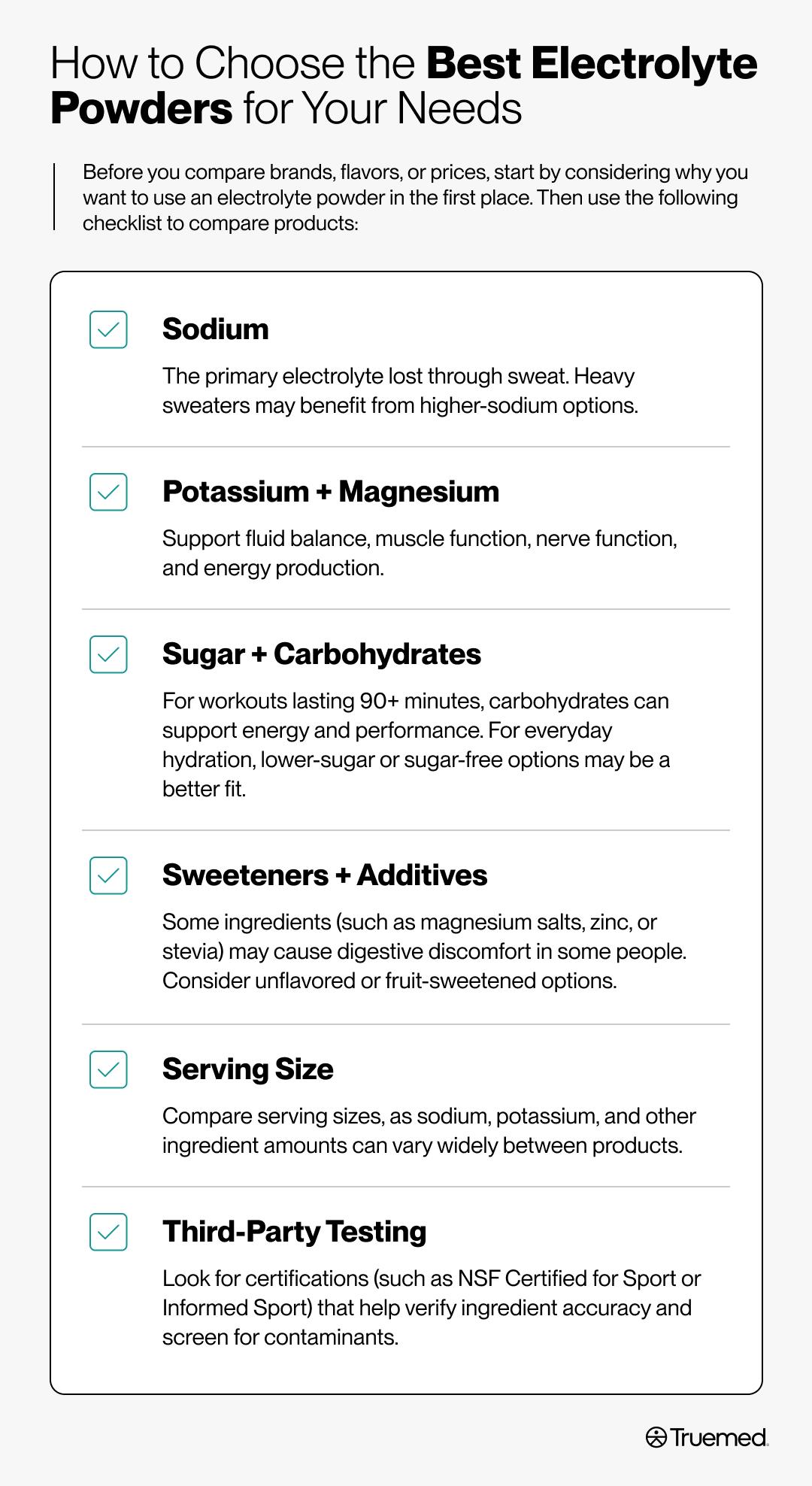
Before you compare brands, flavors, or prices, start by considering why you want to use an electrolyte powder in the first place.
"Choosing the right product for you thus is largely dependent on your activity level, sweat level, and climate," says Alexander Leritz, RD, CPT, a sports dietitian at JM Nutrition. "For someone who regularly does long runs in a hot and humid climate, their needs will look entirely different than someone who’s sipping their electrolyte drink in the office."
Once you've identified your goal, use the following checklist to compare products:
- Sodium content: Sodium is the primary electrolyte you lose through sweat, making it one of the most important numbers to consider. "If you’re a heavy sweater and notice visible salt crusts or marks on your clothing after it dries, you may need a product with more sodium," Leritz says.
- Potassium and magnesium: These minerals support fluid balance, muscle contractions, nerve function, and energy production. The right amount depends on your needs and why you're using the product.
- Sugar and carbohydrates: For exercise lasting longer than 90 minutes, electrolyte powders with carbohydrates can help support energy and performance, says Leritz. For everyday hydration, lower-sugar or sugar-free options may make more sense.
- Sweeteners and additives: It’s also important to consider extra ingredients. "[Powders] containing magnesium salts, zinc, or stevia may cause gastrointestinal symptoms such as nausea, bloating, or cramping in some patients," says Katherine Janosz, MD, medical director at Truemed. She recommends unflavored or fruit-sweetened products over those that contain proprietary or undisclosed flavoring agents.
- Serving size and concentration: Serving sizes vary considerably between products, which can contain different amounts of sodium, potassium, and other ingredients.
- Third-party testing: Certifications from organizations like NSF Certified for Sport or Informed Sport help verify that a product contains what's listed on the label and is free of contaminants.
What electrolytes do in the body
Electrolytes are minerals that carry an electrical charge when dissolved in fluid. They help regulate hydration, muscle contractions, nerve signaling, and other essential bodily functions. A few play an important role in electrolyte replacement, including:
- Sodium: This mineral helps regulate fluid balance, supports nerve signaling, and allows your muscles to contract properly. It's also the primary electrolyte lost through sweat, although the amount varies depending on the individual.
- Potassium: Potassium works closely with sodium to maintain healthy body fluid levels. It also helps maintain normal muscle function, nerve signaling, and cardiac electrical activity, making it an important part of overall hydration and recovery.
- Magnesium: Magnesium plays a role in hundreds of processes throughout the body, including energy production, muscle function, nerve signaling, and protein synthesis.
- Chloride: Chloride is essential for maintaining fluid balance and helping your body regulate acid-base balance.
- Calcium and phosphate: These minerals are best known for their role in bone health, but they also help support muscle function and cellular energy production.
- Bicarbonate: Bicarbonate helps maintain the body's acid-base balance. While it's not commonly found in everyday electrolyte products, it's sometimes used in formulations designed for high-intensity exercise.
Who may benefit from electrolyte supplements
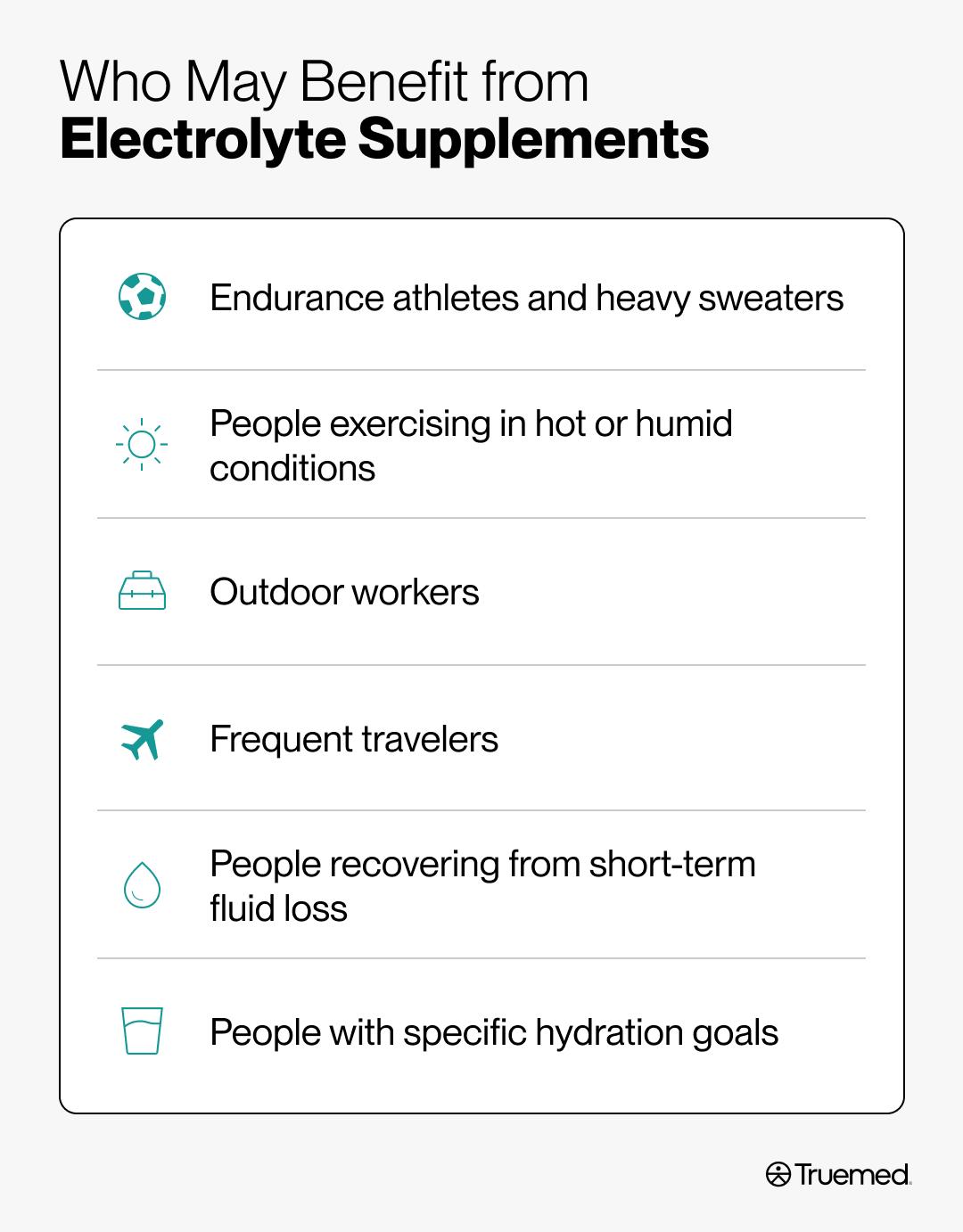
Electrolyte supplements aren't a daily necessity for everyone. But according to Leritz, they can be useful for certain people, including:
- Endurance athletes and heavy sweaters: People who participate in long-duration exercise or who sweat heavily may benefit from replacing the sodium and other electrolytes lost during activity.
- People exercising in hot or humid conditions: Heat and humidity can increase sweat losses, making it harder to maintain fluid and electrolyte balance.
- Outdoor workers: Construction workers, landscapers, agricultural workers, and others who spend long hours outdoors may benefit from electrolyte replacement, especially during warmer months.
- Frequent travelers: Air travel, changes in climate, disrupted routines, and limited access to familiar foods can sometimes make staying hydrated more challenging.
- People recovering from short-term fluid loss: Vomiting, diarrhea, and other illnesses that cause fluid loss can also deplete electrolytes. In these situations, specially formulated oral rehydration solutions are often the way to go.
- People with specific hydration goals: Some people take extra electrolytes to supplement a training program, low-carbohydrate diet, or hydration strategy recommended by their healthcare provider.
When electrolyte powders may not be the right fit
Electrolyte powders aren't a must-have for everyone. According to Leritz, most people can get the electrolytes they need through a balanced diet. And in some cases, supplements may even be harmful.
Here’s when you can probably skip the powder, according to Leritz and Janosz:
- On low-sweat or low-activity days: If you spend most of the day indoors or exercise for less than an hour, plain water and a balanced diet are often enough.
- If your diet is already high in sodium: Some electrolyte products contain as much as 1,000 mg of sodium. If you already consume a lot of sodium through food, adding an electrolyte supplement likely isn’t necessary.
- If you have an underlying health problem: Conditions like kidney disease and heart disease can change how your body handles electrolytes. In these cases, check with your healthcare provider before trying a supplement.
- If you take medications that affect fluid or mineral balance: Certain medications (including some diuretics and blood pressure drugs) can affect how your body regulates sodium, potassium, and fluid levels. If you're unsure whether an electrolyte supplement is appropriate for you, check with your healthcare provider.
- For young children: Children have different hydration and electrolyte needs than adults, so adult electrolyte powders likely aren’t the best option.
- If you’re pregnant: If pregnant, talk to a healthcare provider before using electrolyte powders. Some products contain high amounts of sodium, and while the relationship between sodium intake and hypertensive disorders of pregnancy is still being studied, it is reasonable to be mindful of total sodium intake. Additionally, dietary supplements are not evaluated by the FDA in the same way as drugs, so ingredient quality and dosing may vary between products.
- If you're experiencing severe or persistent symptoms: If you're experiencing ongoing vomiting, diarrhea, dizziness, confusion, or other concerning symptoms, seek medical attention rather than relying on a supplement for relief.
Key ingredients to compare on the label
Once you've figured out why you're using an electrolyte powder, it's time to flip the package over and review the Supplement Facts panel. These are the ingredients and amounts that matter most:
- Sodium: This is usually the most important number to compare. Depending on the product, sodium content can range from around 100 to more than 1,000 mg per serving. In general, products designed for endurance exercise, heavy sweating, or hot weather tend to contain more sodium than those intended for everyday hydration.
- Potassium: Most electrolyte powders contain between 100 and 400 mg per serving. Unless you've been advised otherwise by a healthcare provider, there's usually no need to seek out the highest-potassium formula.
- Magnesium: Magnesium can be a helpful addition to an electrolyte formula, but more isn't always better. Higher-dose products or certain forms of magnesium (like magnesium citrate) are more likely to cause digestive side effects.
- Carbohydrates: For prolonged or high-intensity exercise lasting approximately 60 minutes or longer, added carbohydrates can support performance, says Leritz. For everyday hydration, they're usually not necessary.
- Sugar and sweeteners: Electrolyte powders may contain sugar alcohols or artificial sweeteners. If you have a sensitive stomach, pay attention to both the type and amount of sweetener used as some may aggravate your GI tract.
- Additives and allergens: Depending on your preferences, you may want to avoid artificial colors, preservatives, or products that include proprietary flavor blends.
Choosing by use case: daily hydration, workouts, heat, and travel
The best electrolyte drink for you depends largely on when, where, and why you're using it. Here are a few common scenarios to consider:
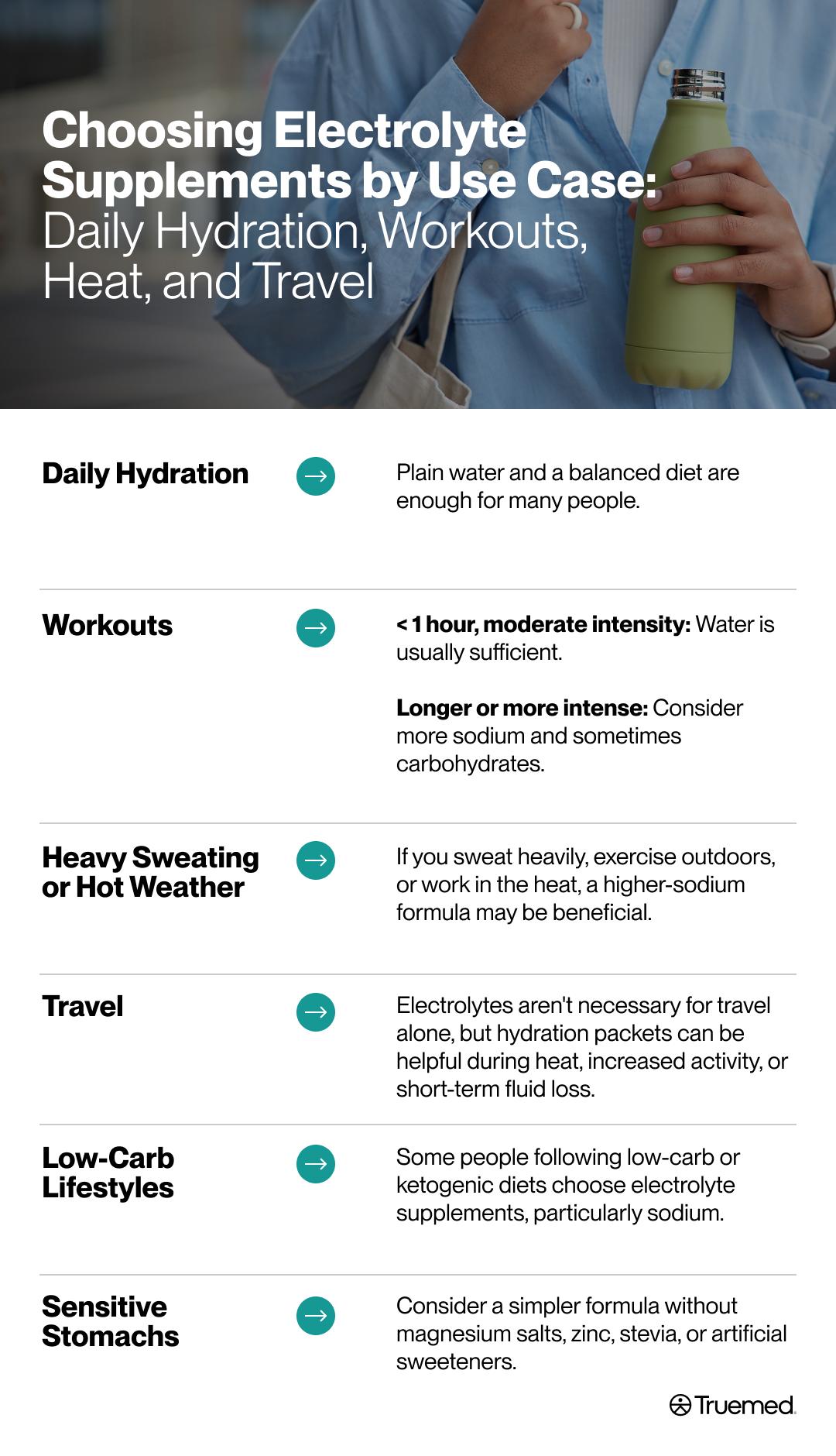
- Daily hydration: If you're simply looking to drink more water throughout the day, you may not need an electrolyte supplement at all. For many people, plain water and a balanced diet are enough, according to Leritz.
- Workouts: For exercise lasting less than an hour at a moderate intensity, water is usually sufficient. For longer or more intense workouts, a product with more sodium—and, in some cases, added carbohydrates—may be helpful, says Leritz.
- Heavy sweating or hot weather: If you exercise outdoors, work in the heat, or sweat heavily, Leritz says you may benefit from a higher-sodium formula.
- Travel: Most people don't need electrolytes simply because they're traveling. But if you're dealing with heat, increased activity, or fluid loss from illness, hydration packets are a convenient option.
- Low-carb lifestyles: Some people following low-carb or ketogenic diets choose to supplement with electrolytes, particularly sodium due to lower insulin levels, which increase urinary sodium losses during the early stages of carbohydrate restriction.
- Sensitive stomachs: If you're prone to digestive discomfort, start with a simpler formula free of magnesium salts, zinc, stevia, or artificial sweeteners.
Sugar, carbs, and sweeteners in electrolyte powders
Some electrolyte powders contain added sugars, but that's not necessarily a bad thing.
"Carbohydrates are the primary source of fuel for the body when we are exercising," says Leritz. This is especially true when it comes to long-lasting or endurance exercise, when those extra carbohydrates can support both hydration and performance. If you're using electrolyte powders outside of endurance exercise, though, a lower-sugar or sugar-free formula may make more sense.
The type of sweetener in your electrolyte drink matters. Products with regular sugar (like dextrose) actually help your body absorb water and sodium better, which is why medical rehydration drinks contain some sugar — while sugar alcohols (like sorbitol) can cause bloating or diarrhea in some people. All FDA-approved sweeteners are considered safe, so personal tolerance is also an important factor in choosing a product.
Taste, mixability, and convenience matter more than many people realize
Even the most scientifically formulated electrolyte powder won't do much good if you hate the taste or find it inconvenient to use. Here are practical factors the experts recommend considering:
- Powder tubs: These are often the most cost-effective option. They also allow you to adjust serving sizes more easily.
- Single-serve hydration packets: Packets are convenient for travel, workouts, outdoor activities, and anyone who wants a grab-and-go option.
- Tablets: Electrolyte tablets dissolve directly in water bottles and can be an easy, mess-free option for everyday use or travel.
- Liquid drops: Concentrated electrolyte drops allow you to customize the strength of your drink and typically have very simple ingredient lists.
- Mixability: Some powders dissolve instantly, while others can be gritty. Read reviews or try a smaller size first to avoid buying a product you won't enjoy.
- Flavor: Some people prefer unflavored products, while others are more likely to stay hydrated if they enjoy the taste. Ultimately, the best electrolyte powder is the one you'll actually reach for when you need it.
Recommended electrolyte products available on Truemed
Below are a few solid options designed for different hydration needs, activity levels, and ingredient preferences.
DripDrop Zero Sugar Citrus Variety Pack Electrolyte Powder, 8 oz sticks, 32 count
DripDrop Hydration Zero Sugar ($35.99) is a convenient, sugar-free electrolyte powder for workouts, outdoor activities, travel, or hot-weather hydration. The single-serve packets are easy to pack on the go, and the citrus variety pack offers multiple flavor options. DripDrop Hydration electrolyte powder is an especially good option if you don't need the extra carbs that traditional sports drinks provide.
Redmond Re-Lyte® Hydration Electrolyte Powder
Re-Lyte Hydration Electrolyte Powder ($45.99/60 servings) is a good pick if you’re looking for a simple, sugar-free electrolyte powder. It contains sodium, potassium, magnesium, and trace minerals, making it a versatile option for both everyday use and situations that call for more intentional electrolyte replacement. It's also available in an unflavored version that contains no sweeteners or artificial flavors.
Gainful High-Performing Hydration
Gainful High-Performing Hydration ($25.49/21 servings) offers a middle ground between sports drinks and sugar-free electrolyte powders. It contains four key electrolytes, a small amount of sugar, and no artificial sweeteners or dyes, making it a good option for people who want some carbohydrate support without a lot of added sugar.
Hydrant HYDRATE Rapid Hydration Mix with Electrolytes
If high-sodium electrolyte powders feel like overkill, Hydrant ($44.99/30 servings) offers a more moderate approach with lower electrolyte content and fruit-based flavorings. That’s why it’s recommended for general hydration, travel, and lighter activity rather than endurance training or heavy sweating.
NOBULL Electrolytes
NOBULL Electrolytes ($25/15 servings) are designed for active people who want more electrolyte support than a typical hydration mix without going all the way to a high-sodium formula like LMNT. With 500 mg each of sodium and potassium plus 85 mg of magnesium per serving, they're well suited for workouts, outdoor activity, and other situations that involve moderate to heavy sweat losses.
LMNT
LMNT’s Raw Unflavored powder ($45/30 servings) is designed for people who need serious electrolyte replacement. With 1,000 mg of sodium per serving and no sweeteners, flavors, or additives, it's a good fit for heavy sweaters, people following low-carbohydrate or ketogenic diets, or others who need to prioritize sodium intake.
That said, its higher sodium content makes it a less practical choice for people who are simply looking for everyday hydration.
Root'd
If you’re looking for more than just electrolytes, Root'd ($29.99/15 servings) delivers. Besides electrolytes, it contains B vitamins and botanical ingredients. It's also sugar-free, though some varieties contain stevia and natural flavors.
Normalyte
Normalyte ($39.99/30 servings) takes a more clinical approach to hydration. Based on the principles used in the World Health Organization's oral rehydration solution recommendations, it combines sodium, glucose, and potassium. This combo makes it a good option for people managing dehydration, gastrointestinal illness, POTS, or other situations involving significant fluid loss, according to Janosz. It also contains no artificial sweeteners or dyes.
How it works with HSA/FSA and Truemed
Some supplements are HSA/FSA-eligible for qualified customers when they're used to address a diagnosed medical condition and supported by appropriate documentation.
Truemed* helps guide customers through that process, and there's no additional cost to use the service. Here's how it works:
- Start by checking whether a product is generally considered an eligible medical expense or whether you may need a letter of medical necessity (LMN).
- Complete a health intake survey that’s reviewed by an independent licensed clinician.
- If you qualify, the clinician may issue an LMN. Eligibility determinations are made by an independent licensed clinician, not Truemed.
- Purchase the product using your HSA/FSA card, or pay out of pocket and submit for reimbursement afterward.
- If your reimbursement request is denied and you need to provide additional documentation, Truemed also offers support.
*Truemed is for qualified customers. HSA/FSA tax savings vary. Learn more at truemed.com/disclosures.
Compliance & documentation
Whether a powder counts as an HSA/FSA-eligible supplement depends on the specific product, your medical needs, and whether you have the appropriate documentation on file.
For some purchases, that may include an LMN, receipts, or reimbursement paperwork. Final reimbursement decisions always rest with your plan administrator, not Truemed*.
*Truemed is for qualified customers. HSA/FSA tax savings vary. Learn more at truemed.com/disclosures.
Bottom line
There's no one-size-fits-all electrolyte powder—ultimately, the right choice depends on why you're using it in the first place. If you're sweating heavily, training for endurance events, recovering from illness, or managing a health condition that affects hydration, an electrolyte supplement may be worth considering. If not, plain water and a balanced diet are often enough.
Deep dive recommendations
FAQ
The biggest difference is that sports drinks usually provide both hydration and fuel, while electrolyte powders focus more on replacing minerals like sodium, potassium, and magnesium. Some electrolyte powders also contain carbohydrates, but many are low-sugar or sugar-free.
Not necessarily. Hydration packets are convenient because they're pre-portioned and easy to throw in a gym bag or carry-on. Powder tubs are often more affordable if you use electrolytes regularly and give you more flexibility over serving size.
You can, but many people don't need to. If you're eating a balanced diet and not sweating heavily or losing fluids through illness, plain water is often enough. Daily electrolyte supplements typically make more sense for people who exercise frequently, work in the heat, sweat a lot, or have specific health needs that affect hydration.



Editorial Standards
At True Medicine, Inc., we believe better health starts with trusted information. Our mission is to empower readers with accurate and accessible content grounded in peer-reviewed research, expert insight, and clinical guidance to make smarter health decisions. Every article is written or reviewed by qualified professionals and updated regularly to reflect the latest evidence. For more details on our rigorous editorial process, see here.