
The Benefits of Red Light Therapy
Author:Jennifer Chesak
Reviewed By:Katherine Janosz, MD
Published:
February 23, 2026
Last Updated:
October 06, 2026


Key Takeaways
Red light therapy: These devices are a form of photobiomodulation that uses low-level light to influence cellular functions.
How they work: They improve cellular health and function, boosting skin collagen and elastin, and improving blood flow.
It's not a quick fix: Red light therapy may work best as a complement to other treatments rather than as a standalone solution.
Shop Eligible Products
Ready to unlock your HSA/FSA funds for qualified medical expenses?
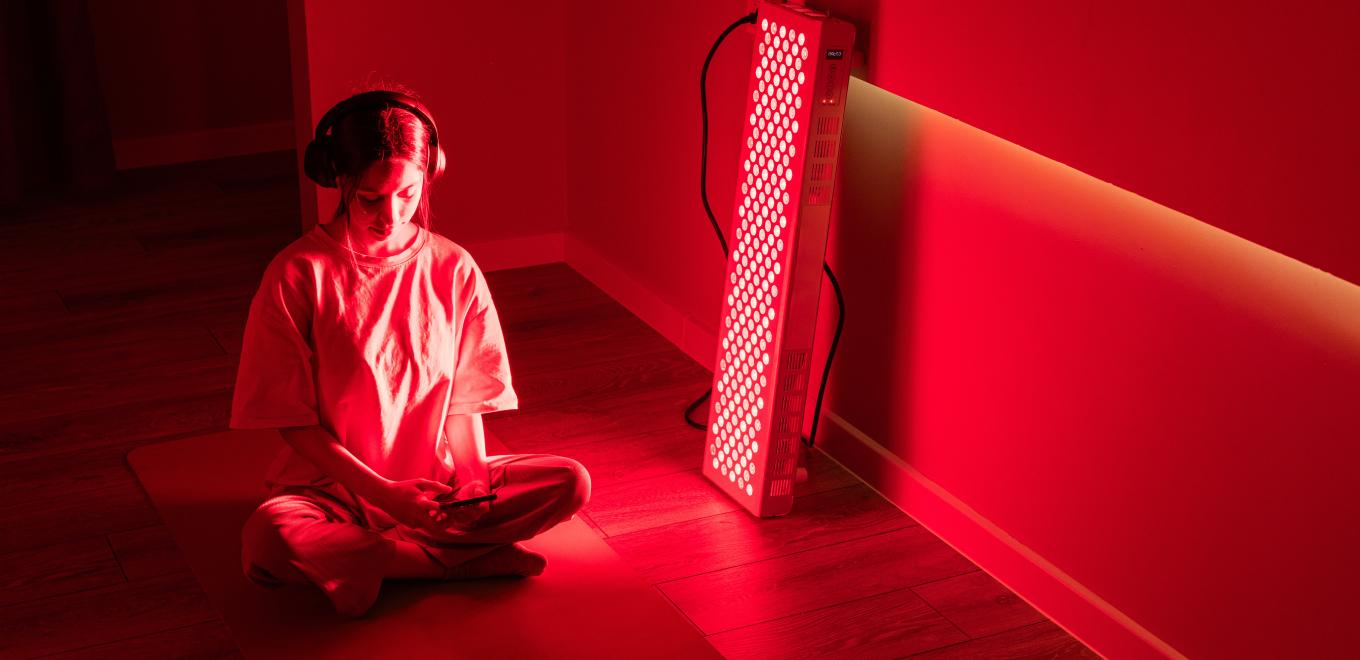
Red light therapy has become increasingly popular as an at-home wellness treatment, with devices ranging from masks and helmets to wands and mats. But what does red light therapy actually do, and does the research support the hype?
If you’re considering trying red light therapy, it’s worth understanding what the research says, what it may be useful for, and what to keep in mind before choosing a device. We’ll break it down.
What is Red Light Therapy?
Red light therapy is a form of photobiomodulation (PBM). PBM uses light to alter cellular functions and other biological processes. Red light therapy is a noninvasive option for treating various conditions related to skin, hair, and muscles and joints.
It uses a low level of red light, a type of light on the visible light spectrum (620 to 750 nanometers).
How Does Red Light Therapy Work?
How red light therapy works:
- Improves mitochondrial function: Red light therapy triggers mitochondria, the powerhouse of your cells, to produce more adenosine triphosphate (ATP). ATP is your body’s universal form of energy. With this boost in energy, your cells theoretically can function more efficiently, including when repairing damage.
- Stimulates collagen and elastin: Red light therapy stimulates fibroblasts (cells in connective tissue) to produce collagen and elastin. These are structural proteins in the skin that deliver firmness and elasticity, qualities that decline as we age.
- Boosts blood flow: Red light therapy stimulates angiogenesis (formation of new blood vessels) and boosts vasodilation (widening of blood vessels) by causing the release of nitric oxide, which relaxes blood vessels.
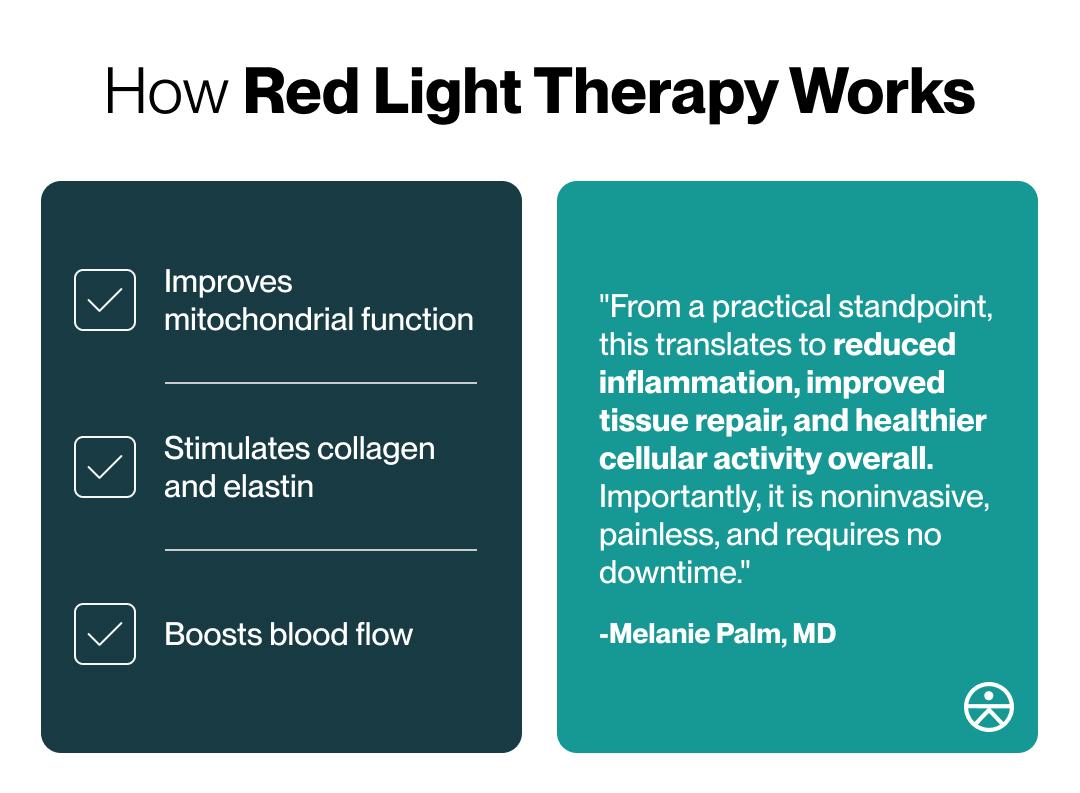
“From a practical standpoint,” says Melanie Palm, MD, a board-certified dermatologist with Art of Skin, “this translates to reduced inflammation, improved tissue repair, and healthier cellular activity overall. Importantly, it is noninvasive, painless, and requires no downtime.”
What is Red Light Therapy Good For?
Red light therapy devices undergo clearance with the Food and Drug Administration (FDA), rather than approval. Clearance for various conditions depends on the specific device.
The list below features the range of conditions cleared across various devices.
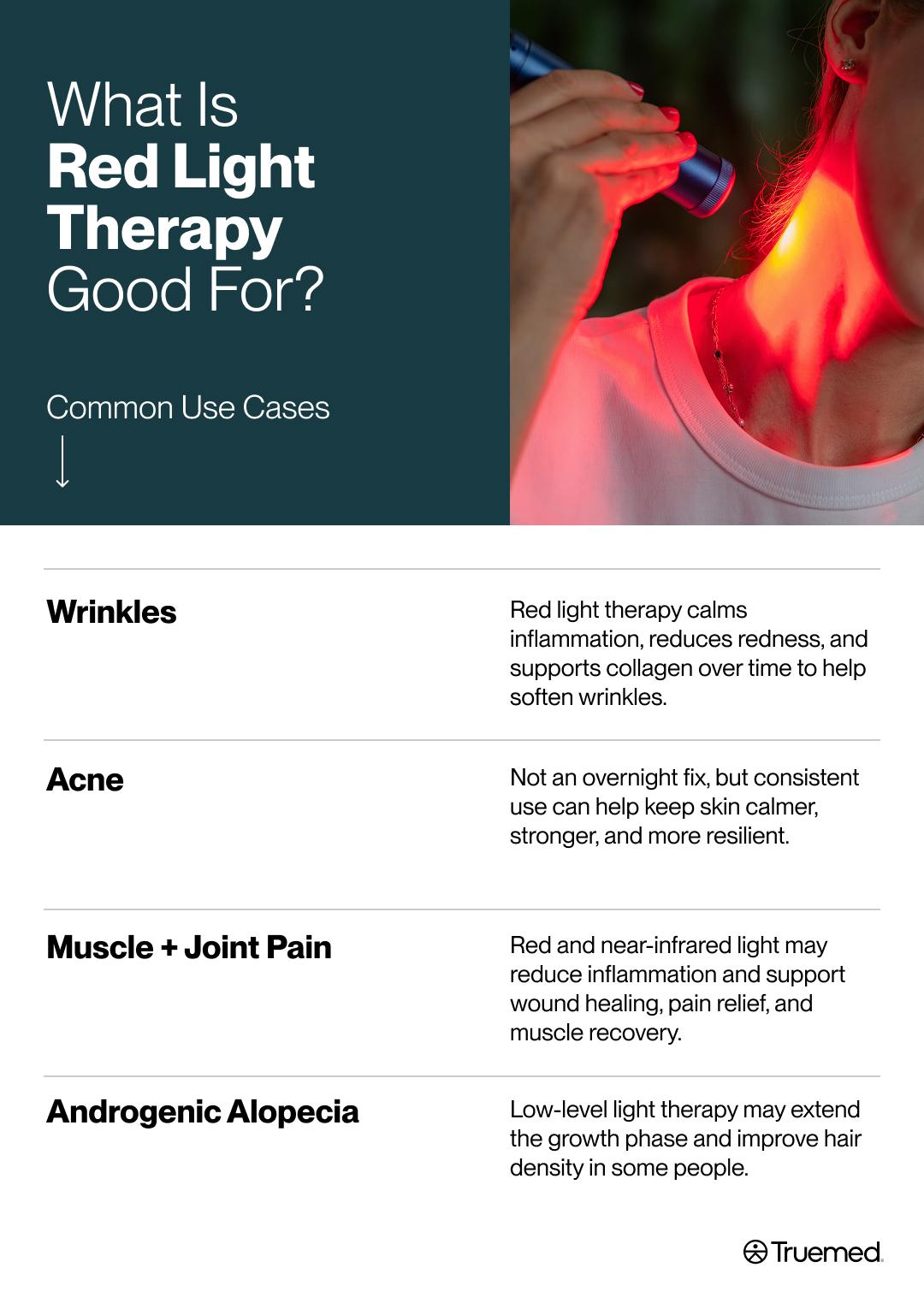
Wrinkles
“Red light therapy helps your skin do what it’s naturally designed to do, heal and repair itself,” says Brandon Beal, MD, a board-certified dermatologist at St. Louis Dermatology & Cosmetic Surgery. “It can calm inflammation, reduce redness, and support collagen production over time.” The loss of collagen and elastin is part of why we develop wrinkles as we age.
Acne
“I tell my patients it is not a quick fix, but it works,” Dr. Beal says. “It won’t erase acne overnight, but with consistent use, it can help your skin stay calmer, stronger, and more resilient.”
Muscle and joint pain
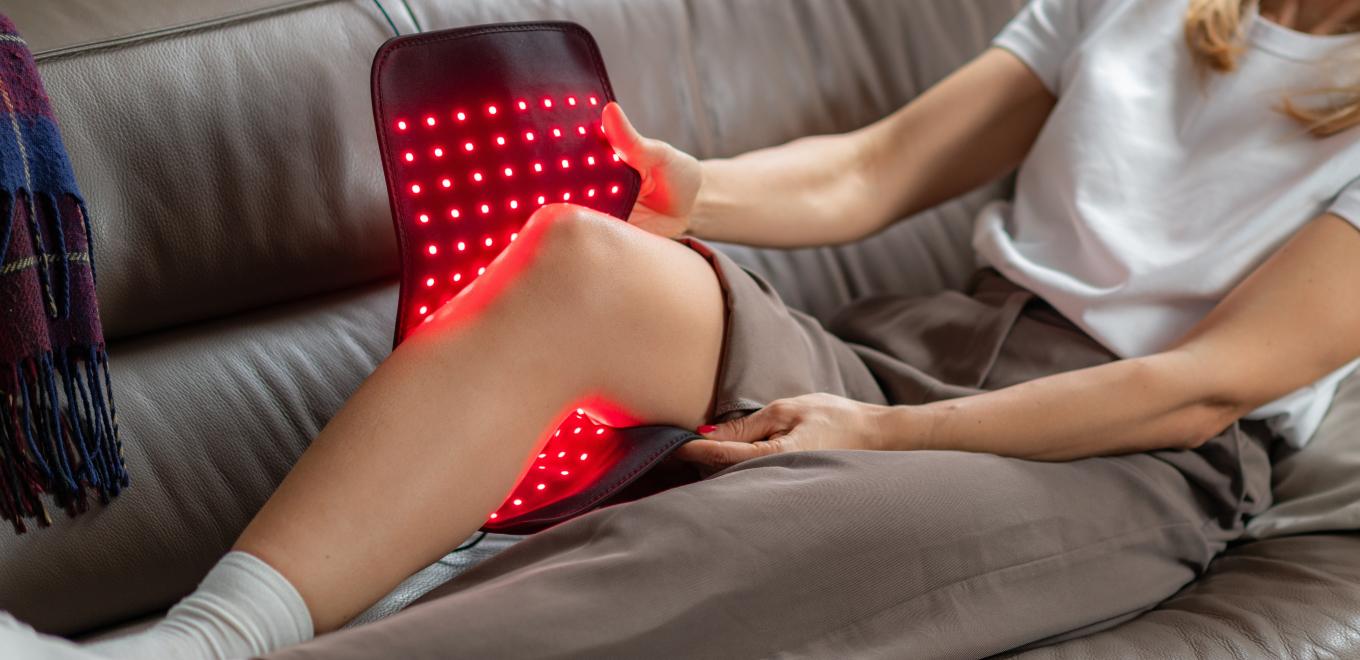
“Clinically, red and near-infrared light therapy have been used for reducing inflammation, wound healing, musculoskeletal pain, [and] muscle recovery,” says Dr. Casciorizzo.
Androgenic alopecia
“One of the most well-supported applications is androgenetic alopecia, or pattern hair loss,” says Dr. Palm. “Multiple studies have demonstrated that low-level light therapy can help prolong the anagen—or growth—phase of the hair cycle and improve hair density in appropriately selected patients.”
Does Red Light Therapy Work? How to Think About Evidence and Claims
“Red LED is scientifically proven technology that has been demonstrated to be effective in proper studies,” says Jessica Weiser, MD, a board-certified dermatologist and the founder of Weiser Skin MD. She’s also an assistant clinical professor of dermatology at Columbia University.
A 2025 umbrella review of existing studies looked at 204 randomized controlled clinical trials with more than 9,000 participants.
The review showed moderate evidence for several conditions:
- Reduced pain in burning mouth syndrome
- Reduced disability for knee osteoarthritis
- Reduced fatigue in fibromyalgia
- Increased hair thickness in androgenic alopecia (hair loss)
- Some evidence suggests potential cognitive benefits
Other research from 2021 indicates some benefit for acne, wound healing, and body contouring.
And a meta-analysis that reviewed 17 randomized controlled clinical trials found that red light therapy showed low-to-moderate evidence for reduced pain for tendinopathy when combined with exercise when compared to a sham treatment. Tendinopathy is chronic tendon pain and inflammation. But when the researchers compared other treatment methods in combination with exercise to red light therapy and exercise, they found no difference.
“When asked if it ‘actually works,’” says Alyssa Casciorizzo, DNP, APRN, an aesthetic dermatology nurse practitioner, “I state that it can be effective when used correctly and for appropriate indications.”
But she adds, “Many people tend to have unrealistic expectations. Red light therapy should be used as an adjunct to other treatments and not a standalone solution or a quick fix that they saw on social media.”
Infrared Light Therapy vs Red Light: What’s the difference?
The terms red light therapy and infrared therapy can be confusing. They are sometimes used for similar issues, and even in the same devices, but they are different.
- Red light therapy: is on the visible light spectrum (620 to 750 nanometers), doesn’t use heat, and treats surface level concerns.
- Infrared light therapy: is invisible (750 nanometers to 1 millimeter), uses some heat and penetrates deeper.
Several devices include red light wavelengths as well as near-infrared wavelengths, which range from 700 to 2,500 nanometers. Devices that include near-infrared wavelengths often stick 700 to 850 nanometers.
HSA/FSA: When Red Light Therapy Devices May Be Eligible
In some instances, red light therapy devices may be eligible for purchase using your HSA or FSA dollars. Read on for details on how. This can help save you money in the long run.
Buying eligible items with your HSA or FSA can feel like using a 30% off discount code because you are using pre-tax dollars.
How It Works with HSA/FSA and Truemed
As noted above, you might be able to purchase some red light therapy devices, like red light therapy masks, with your HSA or FSA dollars. Red light therapy devices might be eligible expenses for these health benefit accounts if you’re using the product to address a specific medical condition. If approved by an independent licensed clinician, such conditions might include the following: androgenic alopecia, acne vulgaris, and other skin conditions.
You might need a letter of medical necessity (LMN). An LMN is a formal document from a licensed healthcare provider that explains why a certain product, treatment, or service is necessary to treat, mitigate, or prevent a medical condition.
Certain health products and services may be eligible for qualified customers with an LMN issued by an independent practitioner via Truemed’s clinical partner, when the item is used to address a specific medical condition.
Truemed* specializes in helping you maximize your FSA, HSA, and other health-related benefits:
- First, you can check whether a product or service is normally considered a qualifying medical expense or whether you might need an LMN.
- If an LMN is appropriate, an independent licensed practitioner (via Truemed’s clinical partner) will review your medical history, and if you qualify, they’ll issue the LMN. Truemed itself does not make eligibility determinations.
- You can then pay for qualifying products and services with your HSA’s or FSA’s debit card or get reimbursed for expenses after submitting your LMN and receipts.
- Truemed also offers support in the event you get a denial of reimbursement and need to provide substantiation documentation.
*Truemed is for qualified customers. HSA/FSA tax savings vary. Learn more at truemed.com/disclosures
FAQ
The main benefits of red light therapy include enhancing cellular energy and function, boosting collagen and elastin for skin health, and improving blood flow.
The disadvantages of red light therapy are that research is still somewhat on the fence about how well devices work. Research shows modest benefits for skin health, hair health, and pain relief. But experts point out that they are not a replacement for other therapies. Instead, they can be an add-on therapy option.
The best results with red light therapy come from consistent use. How often and for how long each time depends on the device and what you are using it for. Follow the instructions that come with your device.


See what you can do with your HSA/FSA.
Join 1.5 million Americans who have routed their healthcare dollars toward root cause health via Truemed's HSA/FSA marketplace.
New product announcements
Sales and special offers
Tips for utilizing your HSA/FSA
Editorial Standards
At True Medicine, Inc., we believe better health starts with trusted information. Our mission is to empower readers with accurate and accessible content grounded in peer-reviewed research, expert insight, and clinical guidance to make smarter health decisions. Every article is written or reviewed by qualified professionals and updated regularly to reflect the latest evidence. For more details on our rigorous editorial process, see here.