
The Best Running Shoes for Women
Author:Mia Taylor
Reviewed By:Bo Hickey, CSCS
Published:
May 25, 2026
Last Updated:
October 06, 2026
Truemed writers and editors independently evaluate all our product recommendations. If you make a purchase through any affiliate links we provide, we may receive compensation. Learn more.


Key Takeaways
"Best" Varies For Everyone: The best running shoe for you will vary based on a variety of factors including how the shoe fits your gait and your training style, and whether it feels comfortable right away.
Comfort Is Not a Bonus: Comfort isn’t just a nice bonus in a running shoe. It's a pretty reliable sign the shoe is working with your body instead of against it.
Basic Shoe Considerations: For basic walking needs or daily light runs, experts recommend a simple, balanced shoe choice, rather than something overly aggressive.
Key Features For Racing: If you need a running shoe for fast efforts or racing it's typically best to look for options that are lighter and more responsive.
When Support Matters: Support-minded shoes can be useful for runners who want a steadier platform or more guidance, but not all experts recommend using these types of shoes.
Key Takeaways
How to choose running shoes for women
Top women’s running shoes by use case
Women’s running shoes fit guide
Cushioned vs. supportive vs. natural-feeling shoes
Common mistakes women make when buying running sneakers
Recommended Truemed women’s running shoes that may fit into the journey
How it works with HSA/FSA and Truemed
The bottom line
FAQ
I have a confession to make. I've always found the process of buying running shoes a little exhausting. Not being a lifelong athlete, let alone a running pro, I never really knew what to look for in a running shoe. As a result, my approach to buying running shoes mostly involved wandering around an athletic footwear store looking for options that were stylish enough to catch my eye. And then, if the running shoe in question felt comfortable on my foot once I tried it on, the deal was sealed.
It should go without saying that this isn't the best approach to making such an important (and often costly) purchase.
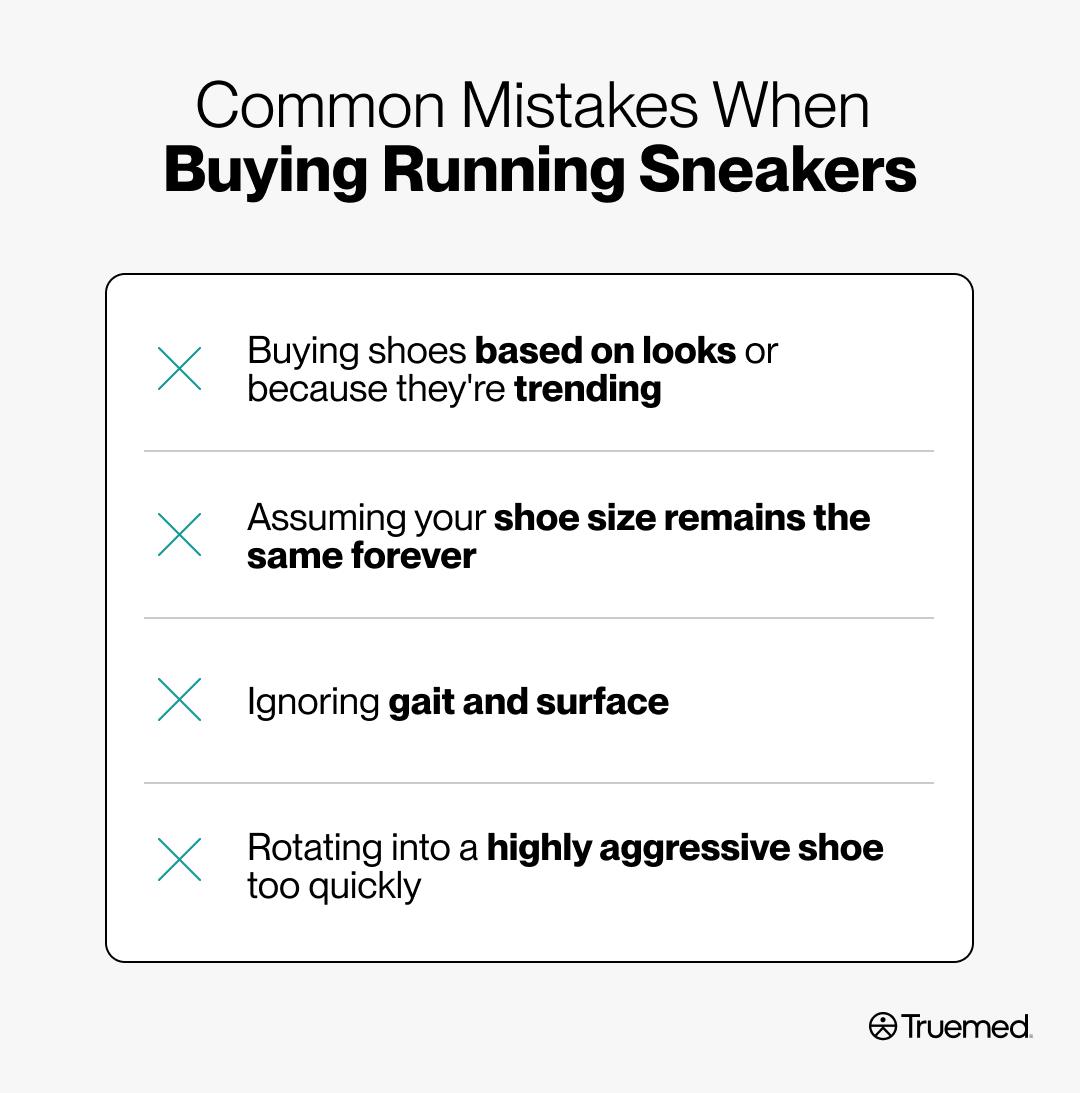
"The biggest mistakes people make are buying based on looks or what’s trending, and not how the shoe actually feels," says Dr. Suzanne Fuchs, a board certified podiatrist with Luxe Podiatry, "I also see people jump into very minimal or very aggressive shoes too quickly, which can lead to injury. Another common issue is ignoring fit."
The good news is this guide can help you avoid making these and other types of mistakes, helping you find the best running shoes for women based on a variety of critical criteria including fit, training goals, comfort preferences, support needs, and the ways a woman's foot and gait can shape the right choice.
How to choose running shoes for women
Before we get too far into this topic, let's address perhaps one of the most important ideas when it comes to buying running shoes. The word "best" in connection with selecting a running shoe means very different things to different women. And what constitutes "best" will also vary based on a variety of factors related to you, your shoe and your specific needs and goals.
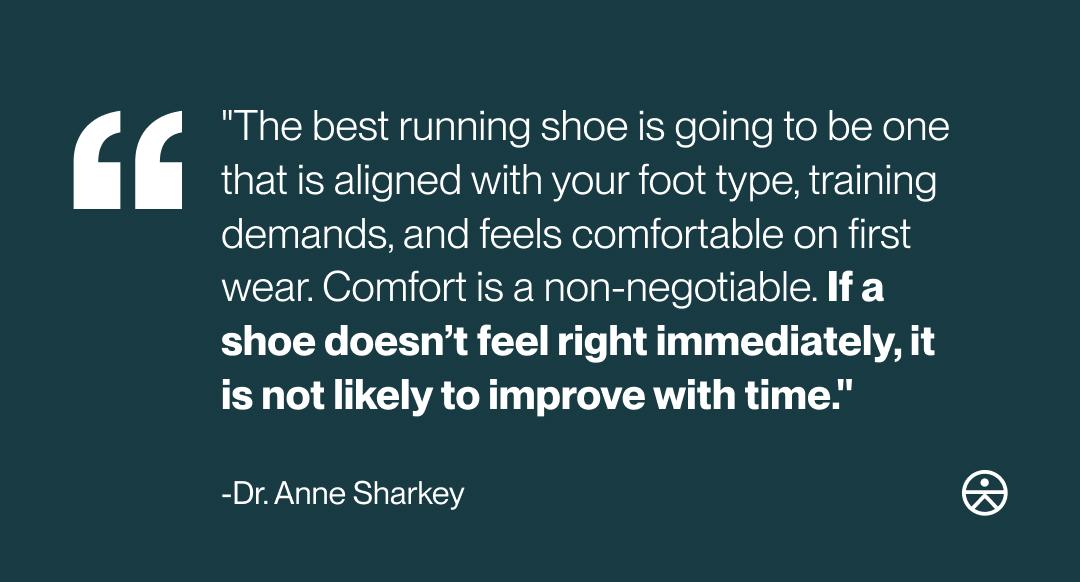
"The best running shoe is going to be one that is aligned with your foot type, training demands, and feels comfortable on first wear. Comfort is a non-negotiable. If a shoe doesn’t feel right immediately, it is not likely to improve with time," says Dr. Anne Sharkey, a board certified podiatrist with Solely Podiatry.
Fuchs expands on this criteria, adding that "picking the right women’s running shoe really comes down to how your foot functions and what you’re using the shoe for."
"Surface matters—road, treadmill, and trail all place different demands on the body," says Fuchs. "Mileage matters too, since longer distances usually call for more cushioning. Pace is a factor, but not the main one. What I see in practice is that shoes work best when they match your mechanics and simply feel natural from the start. "
With all of this expert guidance in mind, we've created a buying guide based around real shopping questions, rather than brands or brand hype. And rather than identifying one overall best shoe, we'll cover good sneaker choices by use case.
Top women’s running shoes by use case
Let's look at some of the most common use cases and what sort of shoes fit each purpose.
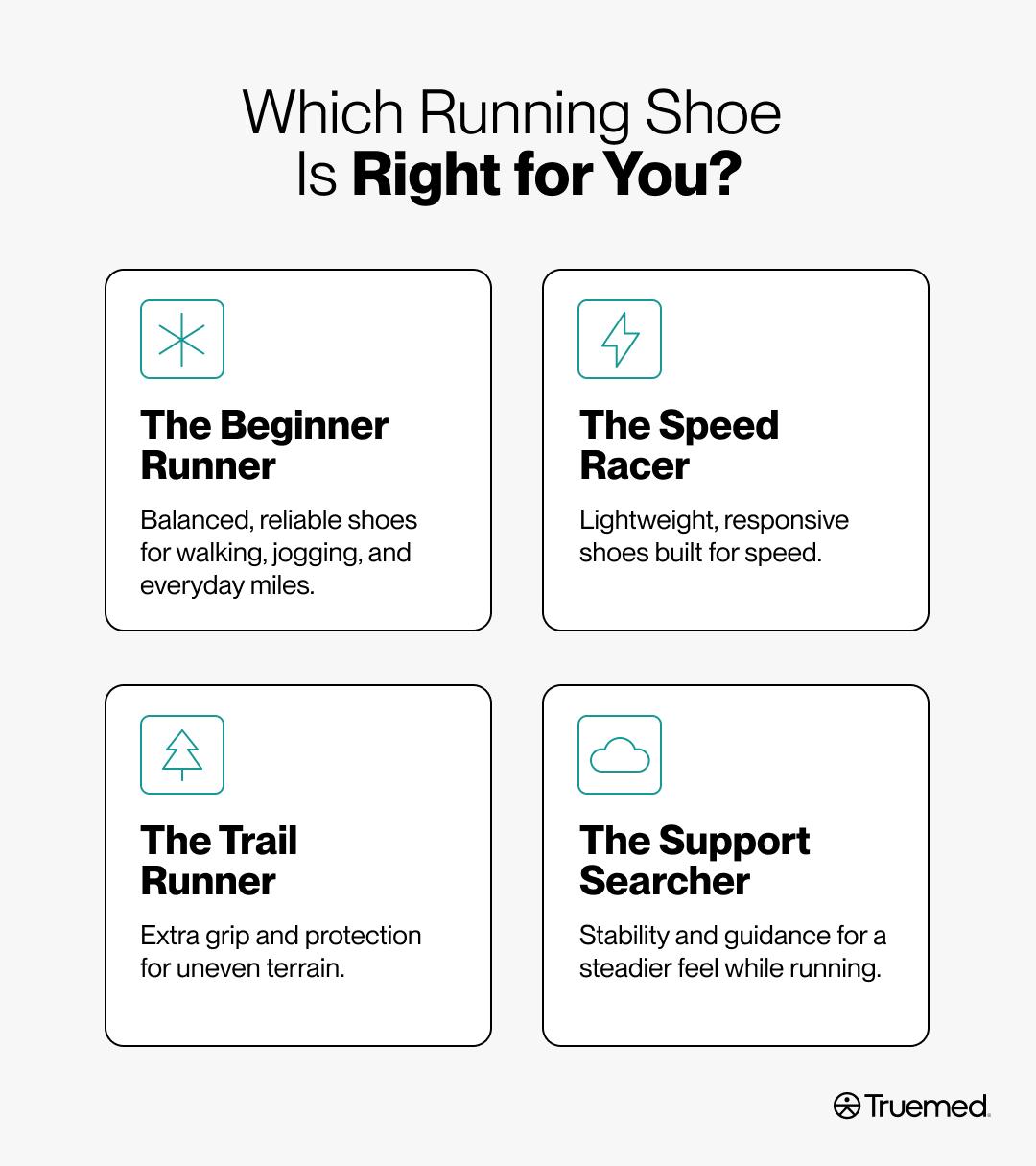
Beginner runner
For beginners who will be using their shoes for basic walking needs or daily light runs, experts recommend a simple, balanced shoe choice, rather than something overly aggressive. Think: stable and easy to trust.
"A neutral or lightly stable daily trainer with moderate cushion makes for a much more forgiving ride and its not too expensive," explains Dr. Chandana Halaharvi, DPM, a double board-certified podiatric surgeon and owner of Thrive Foot & Ankle. "You want a shoe that is immediately usable and not something one has to break into."
Some examples recommended by experts in this category include:
Speed and racing
Do you need running shoes for fast efforts or racing? If so, it's typically best to look for options that are lighter and more responsive.
"Speed‑oriented shoes, the ones for interval days and races, have their own profile. They’re usually lighter, with less upper material and sometimes a little less bulk in the midsole," says Dr. Mike Daniels, president and chief medical officer at WeTreatFeet Podiatry. "The foam is often more responsive, with more 'pop' when you push off, and some of these shoes use plates or strong rockers to encourage a quick roll forward."
These types of shoes can be ideal for workouts and events, but they still need to fit properly, stresses Daniels, who has seen women tolerate numb toes, hot spots, and even blistering all because “it’s a race shoe.” "That’s a good way to end up in my office instead of at the start line" says Daniels.
When discussing running shoes designed for speed, it's also important to note that the very factors that make them better at this function, can also cause them to put more stress on your body, advises Fuchs. And depending on your skill level, a speed shoe should be added into your routine gradually.
Trail runs
Women’s trail shoes should have different features than a beginner shoe. They will need to have grip and protection to help you handle uneven terrain.
Look for aggressive lugs for a better grip, a rock plate or protective midsole to help shield from sharp rocks or roots and a more secure upper to keep the debris out and a lower stack to feel more on the ground and uneven terrain," says Halaharvi.
Some of the expert's top choices in this category include:
Support
If support is your goal with a running shoe purchase, identifying a sneaker that provides stability and guidance will be key.
"That can be a firmer section of foam on the inside, a wider base under the midfoot, or newer designs that cradle the foot without an uncomfortable post under the arch," advises Daniels. "The platform under the arch should feel stable, not like you’re collapsing inward with each step."
In addition, cushioning with this type of shoe should match your weekly mileage and body type, especially if you're typically walking on hard surfaces, or have a history of injuries such as plantar fasciitis, tibial stress, or medial knee pain. Noteworthy sneaker choices in this category include:
Women’s running shoes fit guide
Along with how you plan to use the shoe, fit is also a key factor in determining whether a shoe is right for you. And according to a study done by The Journal of Foot & Ankle Research between 63% – 72% of people are wearing the wrong shoe size.
Experts say a woman’s running shoe purchase decision should be based on more than simply opting for the size you've historically worn.
"Width, the amount of space over the top of your foot, arch feel, and how well the heel stays in place all matter," says Fuchs. "Common issues I see are toes being cramped, heels slipping, pressure across the top of the foot, and hot spots that turn into blisters."
For many women, two fit checks matter most: a heel that truly locks in (women's comparatively narrow heels are prone to slipping in shoes cut for a broader foot), and a toe box with room for the toes to splay. If you're caught between sizes, favor the pair that secures your heel without crowding your forefoot.
It's also important to note that your sock choice and lacing can change the fit of a shoe more than expected. You may even want to try shoes on later in the day or after an activity when your feet may be slightly swollen, to get a true sense of how well a shoe fits.
Cushioned vs. supportive vs. natural-feeling shoes
First up, cushioning in women’s running shoes makes a difference in how soft or firm the shoe feels and how much impact or shock the shoe will absorb with each stride, which is important. But that doesn't mean more cushioning is always better.
So what's the right level of cushioning to select if this is the style of shoe you're seeking? The answer is, it depends. "Cushioning level should line up with your mileage and comfort preference. Enough shock absorption that the surface doesn’t beat you up, not so soft that you feel wobbly," advises Daniels, adding that there is no universal "right" amount of cushioning. "While some women may love a plush feel, others feel better with a slightly firmer platform that gives more feedback from the ground. If you’re consistently sore after runs, or feel like you’re sinking into the shoe, something is off, adds Daniels.
Turning to support-minded shoes, these are useful for runners who want a steadier platform or more guidance. They are also a good idea for those who overpronate, which means that your gait, whether walking or running, will eventually cause flattening of your arches. This in turn, can trigger a greater risk of injury to your foot and leg.
"For a more support‑minded shoe I look for some degree of built‑in stability," continues Daniels. "That can be a firmer section of foam on the inside, a wider base under the midfoot, or newer designs that 'cradle' the foot without an uncomfortable post under the arch." The platform under the arch should feel stable, adds Daniels, and not like you’re collapsing inward with each step.
Still not all experts are fans of support minded shoes, and this is an important factor to keep in mind.
In fact, Dr. Jen Perez, co-founder of the education site Gait Happens, recommends shoes that have less built in features like arch support. "This may be surprising but it all comes down to one simple rule. The golden rule of the musculoskeletal system is 'use it or lose it'. When our shoes are doing the majority of the work for us, we no longer have to put in the work," Perez explains.
Our feet have three built in arches with four layers of muscles that provide all of the support they need, adds Perez. If you're looking for more support than what your body provides, it can sometimes be a good choice to instead look for a running shoe that features a stiffer heel counter, which offers the same supportive feel without adding additional support in the shoe.
Finally, natural-feeling or roomy-toe-box shoes are useful for women who prioritize toe splay and a foot-shaped fit.
"The number one feature I'm looking for in recommended footwear, including running shoes for women, is for them to support the natural function of your feet," explains Fuchs. "This means we are looking for a wide toe box that allows the toes to spread, and a low or zero heel to toe drop to encourage balance between the ball of the foot—forefoot—and heel."
Common mistakes women make when buying running sneakers
Now that we've covered all the things you should look for when shopping for a running shoe, let's briefly address some of the things you should not do. To get to the bottom of this question, we asked the experts to identify the most mistakes people make when running shoe shopping.
Buying shoes based on looks or because they're trending.
"Choosing what's popular over what is a good fit for your feet is a road I don't recommend," says Perez. "I also see women opting for smaller shoe sizes for vanity. Trust me, no one cares if you are a size 9 or a size 10, wear the shoe that fits."
Buying the same model year after year.
You should instead factor in how the model has changed over time — as well as how your own body and/or routines may have shifted.
Assuming your shoe size remains the same forever.
"Feet change with age, pregnancy, weight changes, and activity level. I tell patients to re-measure at least once a year, especially after big life changes like pregnancy or major weight shifts," says Daniels.
Ignoring gait and surface.
Failing to consider your gait or the types of surfaces your shoes will be used on is another big pitfall, says Daniels. "Wearing a soft neutral road shoe when you have strong over‑pronation and knee pain, or wearing a slick road racing shoe on a technical trail, is just asking for issues," he explains.
Rotating into a highly aggressive shoe too quickly.
Jumping too quickly into very aggressive shoes is another common story. "Switching overnight from a traditional cushioned trainer into a very minimal shoe or a very high‑stack, super‑stiff plated racer can overload tissues that aren’t ready for that change," says Daniels. "I have seen it cause the Achilles tendonitis, trigger metatarsal stress reactions, and wake up plantar fascia problems that had been quiet."
Recommended Truemed women’s running shoes that may fit into the journey
Here's a closer look at some of the running shoes available through Truemed that may fit the use cases and features we've talked about.
- Best for: Road runners who want plush cushioning, a roomy toe box, and zero-drop geometry
- Features: Breathable mesh upper, soft underfoot feel, foot-shaped fit, road-mile comfort
Altra Running Torin 8 is a good choice for readers interested in a natural-feeling platform with more toe room.
- Best for: Runners who want a soft, high-stack feel with rocker geometry and a roomy forefoot
- Features: Altra EGO foam, 4mm drop, rocker shape, responsive cushioning
Alta Running FWD VIA 2 running shoes offer a solid choice for maximum cushion, along with long-run comfort.
Altra Running Experience Flow 3
- Best for: For women who want an easy daily trainer with toe room and a lower-drop ride
- Features: Secure midfoot, roomy toe box, rocker-led transition, natural movement feel
These Altra running shoes are a good option if you're searching for a general daily trainer or a balanced comfort shoe.
- Best for: Neutral road runners who want a wide, anatomical toe box with a more traditional heel-to-toe drop
- Features: Neutral road-shoe build, wide toe box, comfort for running and walking
If toe spacing is a top priority for you, Veloci's Ascent shoe is a solid choice without fully zero-drop geometry.
- Best for: Runners who want a stability road shoe with a wide, anatomical forefoot
- Features: Stability-minded ride, road use, comfort-focused shaping
The Veloci Mesa provides a strong option in the support-minded category of running shoes.
- Best for: Women prioritizing lasting cushioning and comfort for long runs or achy feet
- Features: Cushioned ride, comfort focus, long-run support feel
KURU's Triple Max Ion offers a solid mix of comfort and support for a running shoe.
Backcountry Zegama 2 Trail Running Shoe - Women's
- Best for: Trail runners who want soft cushioning and grip for longer off-road efforts
- Features: ZoomX cushioning, rugged traction, technical-terrain control
The Backcountry Zegama provides a great choice in the the trail-running segment offering a solid mix of both cushioning and the grip needed for off-road exercise.
How it works with HSA/FSA and Truemed
Women's running shoes don't automatically qualify for HSA or FSA benefits because they're a general fitness item. And general fitness or personal wellness expenses do not meet IRS criteria for allowable use of the funds in either type of account.
However, if the shoes are a necessary part of your treatment or management of a diagnosed medical condition, then you may be able to tap into HSA or FSA funds to cover the cost of your running shoe purchase. Examples might include when the shoe is being used to address musculoskeletal or foot-related issues like plantar fasciitis. Other conditions that might qualify range from achilles or tendon problems to gait abnormalities and bone issues like heel spurs or bunions.
If you're curious about whether a running shoe purchase might be covered by your HSA or FSA you can reach out to your plan administrator and find out. You'll want to ask whether the plan covers athletic or orthopedic footwear purchases and whether a Letter of Medical Necessity (LMN from your medical provider is required to document that the shoes are needed to treat a specific condition.
Once you have those questions answered, Truemed can guide you through the purchase process. Here's what that entails:
- When you click on running shoes on the Truemed marketplace that you're interested in, you’ll be redirected to view the running shoes on the merchant’s site. At that point, be sure you select "pay with HSA/FSA funds at checkout."
- Next, you’ll complete an intake survey that will be reviewed by an independent licensed healthcare provider. If the purchase is deemed medically necessary to prevent or treat disease, you’ll be able to obtain an LMN and pay with your HSA or FSA funds.
- You can purchase the item using your HSA/FSA card at checkout, or pay out of pocket and submit for reimbursement later. If you pay out of pocket, save the transaction receipts to submit to your HSA administrator for reimbursement.
Equally importantly, Truemed also offers support in the event you get a denial of reimbursement and need to provide substantiation documentation.
*Truemed is for qualified customers. HSA/FSA tax savings vary. Learn more at truemed.com/disclosures
The bottom line
If you haven't done your homework, shopping for women’s running shoes can be perplexing, especially if you aren't sure what shoe features and functionality to review for your unique needs.
Some of the most important criteria to keep in mind include finding a shoe that's aligned with your gait, foot type and training demands, while also feeling comfortable from your very first wear. But remember, even after considering all of these factors, there is no single best option no matter what your goal.
FAQ
There is no single "best" running shoe for women. Best means very different things to different people. Moreover, what constitutes "best" varies based on many factors related to you, your shoe and your specific needs and goals. In general, experts say that the best running shoe is one that aligns with your foot type and training demands, and also feels comfortable on first wear.
For beginners who will be using running shoes for basic needs such as daily light runs, experts recommend a simple, balanced shoe choice, rather than something overly aggressive. Aim for a stable and easy to trust shoe style.
Running shoes should be replaced every 300 to 500 miles or sooner if the shoe's tread is worn or they become uncomfortable due to loss of cushioning responsiveness, says Sharkey.


Editorial Standards
At True Medicine, Inc., we believe better health starts with trusted information. Our mission is to empower readers with accurate and accessible content grounded in peer-reviewed research, expert insight, and clinical guidance to make smarter health decisions. Every article is written or reviewed by qualified professionals and updated regularly to reflect the latest evidence. For more details on our rigorous editorial process, see here.