
The Ultimate Guide to HSA Approved Exercise Equipment
Author:Kennedy Coleman
Published:
June 18, 2026
Last Updated:
September 17, 2026


Key Takeaways
Most exercise equipment is not automatically HSA/FSA eligible: The IRS classifies it as a "dual-purpose" expense that can serve both medical and general-fitness goals.
A Letter of Medical Necessity (LMN) makes all the difference: Appropriate documentation from a licensed provider is what makes fitness equipment eligible for qualified customers. The LMN must tie a specific diagnosed condition to the equipment proving its medical necessity.
Many conditions could qualify: Qualifying conditions commonly include obesity, type 2 diabetes, hypertension, cardiovascular disease, arthritis, chronic back pain, and post-surgical rehabilitation.
The list of potentially eligible fitness equipment is extensive: Eligible items could include treadmills, exercise bikes, ellipticals, rowing machines, weights, and connected fitness equipment. Pools and recreational sports gear generally do not qualify.
Key Takeaways
What Are the Health Benefits of Exercise?
How Does an HSA Work?
What Does an HSA Cover?
Does an HSA Cover Exercise Equipment?
What Medical Conditions Qualify for HSA-Approved Exercise Equipment?
Letter of Medical Necessity Definition and Details
What Qualifies as HSA Eligible Exercise Equipment?
How It Works with HSA/FSA and Truemed
FAQ
Shop Eligible Products
Ready to unlock your HSA/FSA funds for qualified medical expenses?
You can spend HSA dollars on cough drops and contact lens solution, but the treadmill your doctor wants you to use? That takes a little more work. Exercise is medicine, but it is not treated that way by default. The American Heart Association recommends adults get at least 150 minutes of exercise a week, a target four in five Americans miss, often because the equipment to get there feels out of reach. Here's how to put your HSA to work on the gear that actually matters.
What Are the Health Benefits of Exercise?
Regular exercise can dramatically reduce your risk of developing diseases like obesity, diabetes, and heart disease. These conditions often come with co-occurring conditions like chronic pain, joint health issues, and mobility issues.
Maintaining a healthy body weight and properly conditioning your musculoskeletal system are two foundational imperatives for overall good health. Exercise is necessary for both objectives.
Your doctor may have recommended increasing your daily exercise or adding more movement into your daily routine to address a health concern. If you have an HSA, you may be wondering how your HSA funds can work for you when you need to purchase something like exercise equipment or a gym membership to help you meet your health goals.
How Does an HSA Work?
A health savings account (HSA) is a savings account specifically designated for healthcare-related expenses. The IRS allows you to deposit pre-tax money into a health savings account if you have a high-deductible health plan and have not contributed to an FSA (flexible spending account) in the same year. You can divert pre-tax money from your paycheck or exclude HSA contributions from your taxes as an independent contractor, sole proprietor, or small business owner.
Many banks, credit unions, and insurance companies offer HSAs to their clients or policyholders. Many offer special interest rates on HSA accounts, and some offer debit cards linked directly to the HSA.
You'll keep proof of your purchases and submit them at the end of the year to justify tax-free spending on eligible expenses. If you're unable to prove that all of the purchases you made with HSA funds were eligible, you may have to pay a tax penalty on the HSA funds that you spent.
What Does an HSA Cover?
The IRS is in charge of HSA rules since an HSA is a way to make income exempt from taxes. Some health products fall into the “always eligible category.” This includes things like copays, prescriptions, medical appointments, and many over-the-counter purchases. HSA funds can also be used to purchase medical supplies like diabetes testing equipment, canes, glasses, dentures, and contact lens care products. Sometimes it’s confusing to try and figure out if an item is HSA or FSA eligible, so always check with your plan and look for online resources like this one that explains eligibility in detail.
Other health products are not always eligible but rather fall into the category of “dual-use.” This means the product has both a general and medical purpose. A great example of a dual-use product is a road bike. Some people purchase road bikes because they enjoy riding and it’s generally good for health. In that exact case, the road bike would not be medically necessary and thus would fall into the category of general use. However, cycling is an excellent activity for adults who have been diagnosed with conditions where exercise is a medically backed intervention. In that case, a licensed healthcare provider may prescribe cycling as a treatment for a medical condition, turning a general use product into a medical intervention. More on that below.
Does an HSA Cover Exercise Equipment?
HSA guidelines don't regard exercise equipment as a healthcare cost, even though many doctors would disagree that exercise isn't a healthcare essential. Since things like exercise equipment fall into the general use category we discussed above, the IRS created a provision that allows coverage to be extended for certain therapeutic products or services if a licensed clinician formally states that such a purchase is a medical necessity for their patient.
In cases like this, patients can acquire a letter of medical necessity (LMN) that connects the exercise equipment to a specific diagnosis and treatment plan. A letter of medical necessity is the documentation that verifies the medical need of a product, like a treadmill, that might otherwise be considered general use only.
What Medical Conditions Qualify for HSA-Approved Exercise Equipment?
Exercise equipment becomes eligible when a provider can connect it to a diagnosed condition rather than a general wellness goal. Conditions that could support a Letter of Medical Necessity for exercise equipment include:
- Obesity and weight management tied to a clinical diagnosis (not appearance-based weight loss)
- Type 2 diabetes and metabolic syndrome, where resistance and cardiovascular exercise improve insulin sensitivity and blood sugar control
- Hypertension and cardiovascular disease, where structured aerobic exercise is part of treatment or cardiac rehabilitation
- Arthritis and joint conditions, where low-impact equipment like ellipticals and recumbent bikes preserves mobility
- Chronic back pain, where core-strengthening and low-impact cardio are prescribed
- Post-surgical or post-injury rehabilitation, where equipment supports a recovery protocol
The key is that the equipment must help treat, manage, or prevent the diagnosed condition. The more specifically your LMN names both the condition and the equipment, the stronger your documentation.
Want to understand what makes a solid LMN? Read our blog that covers all of the specific details that go into LMNs that commonly get approved.
Letter of Medical Necessity Definition and Details
A medical necessity letter is a formal document from a licensed healthcare provider explaining why a particular product, treatment, or service is necessary to cure, treat, mitigate, or prevent the patient's health [or medical] condition.
Your Letter of Medical Necessity acts in conjunction with your receipt for the purchase to serve as a justification. You'll need proof of purchase and a copy of the letter when tax time rolls around to show that your purchase was in accordance with guidelines.
A strong LMN generally contains: the diagnosed condition (ideally with an ICD-10 code), an explanation of why the product is medically necessary, the specific equipment type or category being recommended, how it fits into your treatment plan, and the provider's name, credentials, signature, and date. Naming a specific category ("adjustable dumbbells," "recumbent exercise bike") or product rather than vague terms like "fitness gear" reduces the chance of a claim denial.
What Qualifies as HSA Eligible Exercise Equipment?
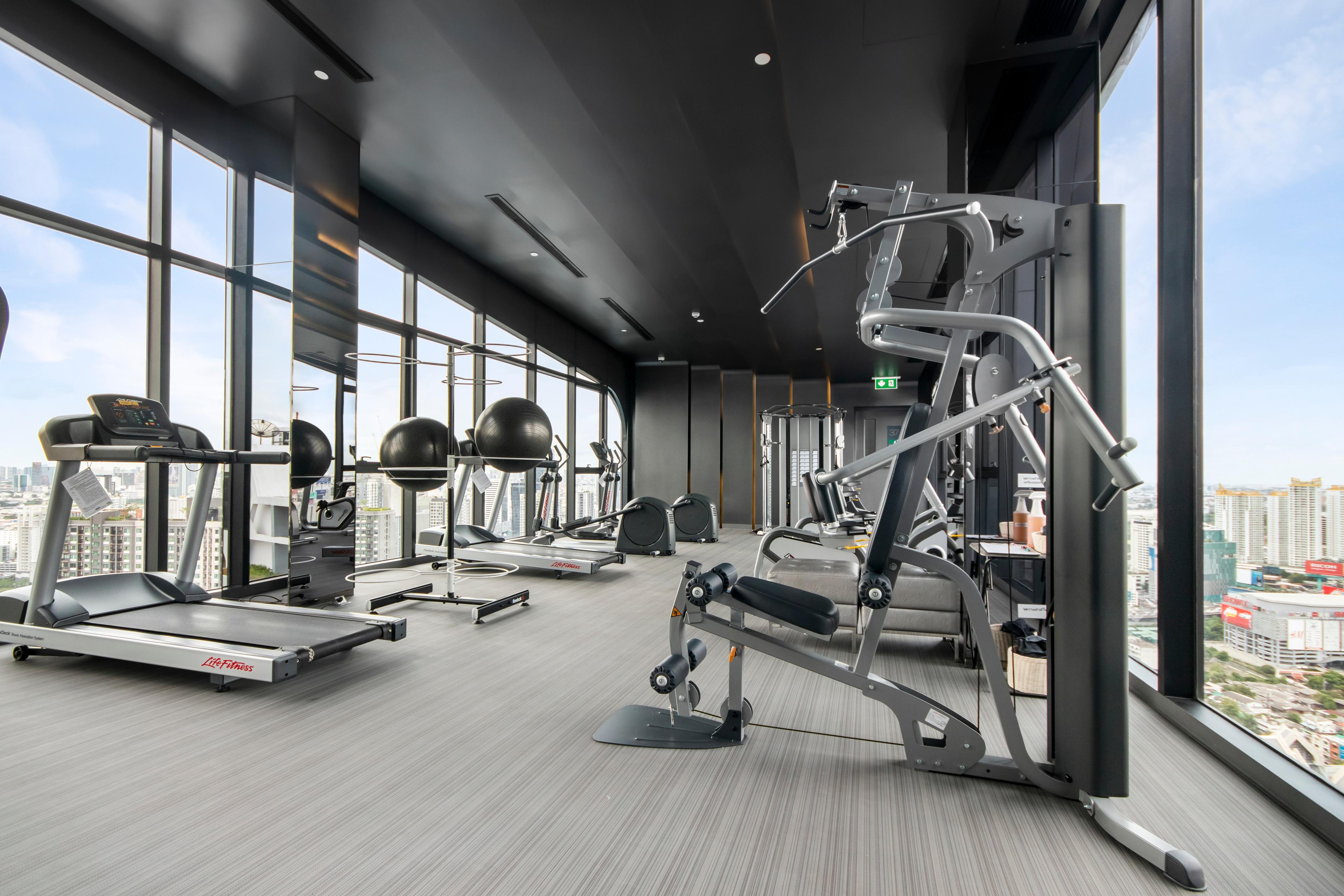
HSA funds can be used (in conjunction with a Letter of Medical Necessity) to cover anything that could reasonably be considered exercise or strength training equipment. This would include weights, a weight bench, and cardiovascular exercise equipment like ellipticals, treadmills, and exercise bikes.
The further away you get from clinically proven fitness modalities, the more likely you are to have your claim denied. For example, swimming is absolutely a medically backed fitness modality, but having a pool constructed at your home for water aerobics is quite the stretch.
Examples of HSA eligible fitness equipment brands that Truemed works with includes:
- Peloton fitness equipment
- Canyon bicycles
- Major Fitness power racks and weight lifting equipment
- Nike Strength weight systems
- OMORPHO premium weighted vests
- Pvolve functional movement and resistance fitness system
- Tonal home fitness system
- Wahoo cycling equipment
Does an HSA Cover a Gym Membership?
If you don't have a lot of space in your home or you don't have a budget that would accommodate purchasing your own exercise equipment, a gym membership is a convenient alternative. You're able to exercise as often as you want and utilize dozens of different pieces of equipment without having to commit to buying, maintaining, or storing machines.
For qualified customers, gym and studio memberships could be HSA or FSA eligible. This could include things like Barry’s class packs, 24 Hour Fitness monthly memberships, or even personal training or consultation services when supported by appropriate documentation.
Can You Use HSA Funds for Health Trackers?
It can be difficult to track your movement level and progress toward your health goals without a health-tracking device. Health trackers can give you data about your heart rate and the amount of steps you've taken, helping you to meet your doctor's recommendations for cardiovascular activity. They can also be extremely necessary for people who need to track other health metrics like sleep.
For qualified customers, health trackers and wearables like WHOOP or even Garmin smart watches can be HSA/FSA eligible when supported by appropriate documentation. Check out potentially eligible health trackers and other health tech interventions over on the Truemed marketplace.
How It Works with HSA/FSA and Truemed
You might be able to pay exercise equipment with your HSA or FSA dollars. Such a product might be an eligible expense if you’re using it to address a specific medical condition. If approved by an independent licensed clinician, such conditions might include obesity, diabetes, anxiety, or hypertension.
You might need a letter of medical necessity (LMN). An LMN is a formal document from a licensed healthcare provider that explains why a certain product, treatment, or service is necessary to treat, mitigate, or prevent a medical condition.
Certain health products and services may be eligible for qualified customers with an LMN issued by an independent practitioner when the item is used to address a specific medical condition.
Truemed* specializes in helping you maximize your FSA or HSA benefits:
- First, you can check whether a product or service is normally considered a qualifying medical expense or whether you might need an LMN.
- Complete a health intake survey that will be reviewed by an independent licensed clinician.
- Buy the item; either pay directly with your HSA/FSA card at checkout, or pay with a regular credit/debit card and seek HSA/FSA reimbursement afterward.
- The independent licensed practitioner will review your medical history, and if you qualify, will issue an LMN. Truemed itself does not make eligibility determinations.
Truemed also offers support in the event you get a denial of reimbursement and need to provide substantiation documentation.
*Truemed is for qualified customers. HSA/FSA tax savings vary. Learn more at truemed.com/disclosures
FAQ
Exercise equipment can be HSA eligible, but not automatically. Because the IRS treats it as a dual-purpose expense, you generally need a Letter of Medical Necessity from a licensed provider connecting the equipment to a diagnosed medical condition.
Yes, a treadmill can qualify with a Letter of Medical Necessity if your provider documents that cardiovascular exercise is part of treating a condition such as obesity, hypertension, or cardiovascular disease.
A gym membership can be covered with an LMN when regular exercise is a documented part of your treatment plan.
Items considered recreational or general-wellness — such as a home swimming pool, basketball hoops, or sports gear — generally don't qualify, even with a letter.



See what you can do with your HSA/FSA.
Join 1.5 million Americans who have routed their healthcare dollars toward root cause health via Truemed's HSA/FSA marketplace.
New product announcements
Sales and special offers
Tips for utilizing your HSA/FSA
Editorial Standards
At True Medicine, Inc., we believe better health starts with trusted information. Our mission is to empower readers with accurate and accessible content grounded in peer-reviewed research, expert insight, and clinical guidance to make smarter health decisions. Every article is written or reviewed by qualified professionals and updated regularly to reflect the latest evidence. For more details on our rigorous editorial process, see here.