
The Best Compact Treadmill For Your Home
Author:Mia Taylor
Reviewed By:Bo Hickey, CSCS
Published:
May 28, 2026
Last Updated:
October 06, 2026
Truemed writers and editors independently evaluate all our product recommendations. If you make a purchase through any affiliate links we provide, we may receive compensation. Learn more.


Key Takeaways
Treadmills Come in Many Sizes: Treadmills come in all sizes. There are even models compact enough and quiet enough for apartments, small rooms, shared spaces, home offices and more.
Measure Floorspace in Advance: When shopping for a compact treadmill, it's important to determine the exact amount of floor space you have available.
Treadmil Options: There are various types of compact treadmills, including walking pads, foldable treadmills and full-folding treadmills.
Factors to Consider: Some key features to consider when shopping for a treadmill include belt length and width, speed range, noise level, incline capabilities and safety features.
Key Takeaways
How to choose the best compact treadmill for your space
Compact treadmill vs walking pad vs foldable treadmill
Key features to compare before buying
Best compact treadmill picks on Truemed
Safety considerations for compact treadmills
How to make a small treadmill for home easier to use consistently
Maintenance, storage, and setup tips
How It Works with HSA/FSA and Truemed
The bottom line
FAQ
Purchasing a treadmill for home use is a significant decision. There are numerous brands, features and specifications to research and sort through, not to mention price points. And if space is limited and you need a compact treadmill, the search can seem even more complicated.
This guide was designed to help you navigate the purchase process and identify the best compact treadmill or walking pad for a small space, whether you hope to use it for walking, light jogging or to meet other daily movement goals. To help you narrow down the options, we'll sort through key buying factors, including folding design, weight capacity, noise, and portability, as well as operational considerations such as belt size, speed, and incline.
And before wrapping up our deep dive into all things compact treadmills, we'll also discuss how you may be able to use HSA or FSA funds to pay for your treadmill purchase when its use is tied to a qualifying medical need and how Truemed can help.
How to choose the best compact treadmill for your space
There are several key details to consider when choosing a compact treadmill for your home. First up, you'll need to determine the exact amount of floor space you have available and decide which type of treadmill you want: a walking pad, a foldable treadmill or a full-folding treadmill?
Identifying the treadmill's dimensions (both folded and unfolded), to ensure it fits within the area you have available, is also critical. And speaking of dimensions, it's also important to match the treadmill belt length to your stride and height to ensure you purchase a piece of equipment that works with your body. A treadmill's weight capacity and belt ply rating are some other important factors.
"Skipping any one of those steps is how you end up with a treadmill that either doesn't fit through your door or feels unstable the second you hit a real pace," says Denise Chakoian, a certified fitness trainer and owner of Core Cycle and Fitness LaGree.
"Folded dimensions are just as important as unfolded ones if you're in a small space, because a treadmill that technically fits open but blocks a doorway can be a problem," adds Chakoian. Belt length is one of the things that people underestimate most; if you're tall or you run rather than walk, a short belt will throw off your stride in a way that's both uncomfortable and potentially unsafe."
A treadmill's weight capacity matters beyond just your body weight, too, adds Chakoian. The frame rating also speaks to a treadmill's build quality and how well it can absorb vibration and stress over time.
One more important note when selecting the best treadmill for your needs: If space is especially limited in your home and you plan to purchase a foldable treadmill, it's a good idea to decide where it will be stored when not in use. Under the bed? Against the wall? Closet?
Compact treadmill vs walking pad vs foldable treadmill
If you're not entirely certain what the difference is between a compact treadmill, a walking pad and a foldable treadmill, you're likely not alone. But understanding their differences and what each model offers is an important part of making an informed purchase.
Compact treadmill: These have a smaller frame than traditional treadmills, but typically still include many of the same features as larger treadmills. "A compact treadmill is still a proper treadmill, a real motor, handles, an actual usable speed range, just a smaller footprint," says Rob Moal, a personal trainer and founder of Train Like Rob.
Walking pad: A walking pad is a portable piece of equipment designed for low-speed walking. They're much smaller than treadmills, but still include a motor and running belt. Walking pads and treadmills, says Moal, "get thrown together like they're the same thing, and they're really not."
"A walking pad is really flat, slim, and usually with no handles," Moal continues. In addition, the top speed of a walking pad is typically about 4 miles per hour.
Foldable treadmill: The largest of the three options, as its name implies, folding treadmills fold up when not in operation. And often, their design includes transport wheels so that they can be moved around as needed.
"Foldable treadmills have a bigger deck that stores vertically, so you can reclaim your floor space when you're done," says Moal. "They are the most versatile of the three, but they're heavy, so if you're thinking you'll be moving it around your place regularly, that's probably not the right pick."
Key features to compare before buying
The specific type of treadmill you're seeking is one of the first questions to consider. Beyond that, it's important to consider the design, size and functionality details of treadmills.
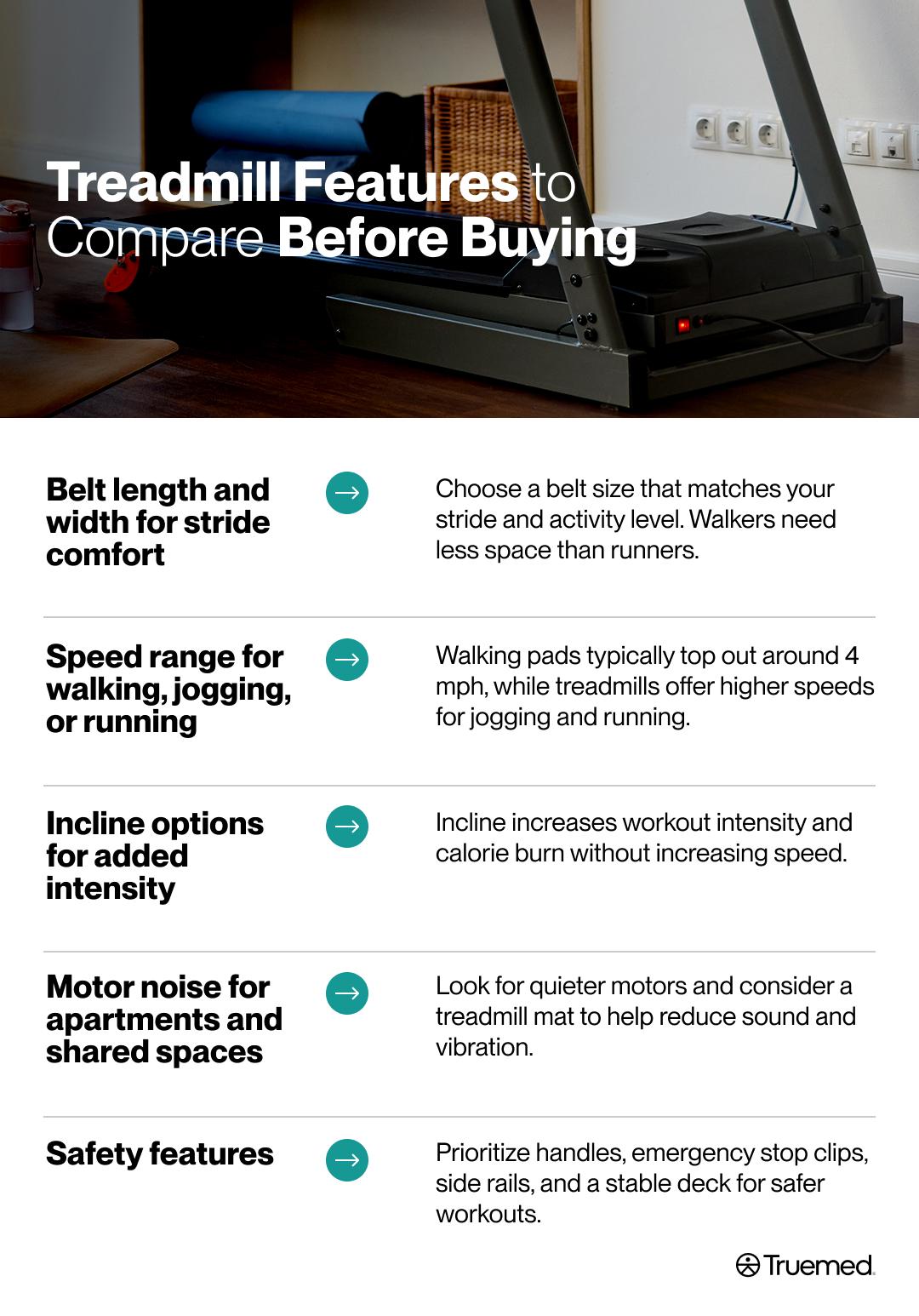
- Belt length and width for stride comfort: This is a key consideration when purchasing a treadmill, as you want the belt to be long enough for your stride and intended use. And length needs will vary for those who plan to use the treadmill primarily for walking versus those who plan to run or jog.
"For walkers, a comfortable deck length should be around 45 inches. A shorter deck length leaves open the possibility you could drop off the back end if your walking stride increases or your incline rises," says Gwenn Jones, a certified physical therapist and owner of Auburn Yoga & Fitness.Runners and joggers will require a treadmill that accommodates a longer stride. Think: about 60 inches in belt length and about 22 inches for a safe width.
- Speed range for walking, jogging, or running: The treadmill's speed range should match your exercise plans and goals. Meaning, if you plan to use a treadmill to jog or run, a walking pad is not your best bet, since its top speed is around 4 mph.
"Both treadmills and walking pads have speed options. Walking pads range from 0.5-4.0mph. Standard treadmills will top at 12mph. Upgrades will boost you to 15mph," says Jones.
- Incline options for added intensity: Incline adds significant intensity to your workout without requiring more speed. "This makes it especially useful for people who want a real workout in a small space without the noise or impact of running," explains Chakoian. "Even a modest 6%-10% incline can seriously increase calorie burn, so it's a feature worth prioritizing if cardio efficiency matters to you."
- Motor noise for apartments and shared spaces: No matter where you plan to use your treadmill, be it an apartment or a shared space, it's important to consider the noise your machine will make. The maximum walking pad motor should max out at 45 decibels, explains Jones. "Anything higher is annoying and can disturb neighbors," Jones adds. "Running on a treadmill also creates more pounding noise and emits 60-70 decibels. Treadmill mats help to absorb sound and vibration."
- Safety features: The various safety features to look for with a treadmill include handles, an emergency stop clip, a stable deck and side rails. These may be the least glamorous part of your treadmill comparison shopping, but they're probably the most important. "Handles give you stability during high-intensity intervals, and an emergency stop clip is non-negotiable if you're using the machine alone," says Chakoian. A stable deck and good side rails matter too, because a wobbly or narrow treadmill frame becomes a true hazard the moment you lose your footing at any speed. Be sure to check all of these things before making a purchase, advises Chakoian.
Best compact treadmill picks on Truemed
Now that we've covered some of the key types of treadmills and their features, here's a closer look at some of the treadmill options available through the Truemed marketplace that may suit your needs.
Best for: Walkers who want a slim, portable treadmill for home or office movement.
Key features: Compact walking treadmill, speeds up to 3.7 MPH, 245 lb capacity, LED display, remote, SunnyFit app connectivity.
The Treadpad 100 offers the strongest fit for readers searching for a portable treadmill or small treadmill that will be used for home walking.
Best for: Readers who want a folding treadmill with incline for walking and jogging.
Key features: Foldable design, 15 incline levels, speeds up to 9 MPH, shock-absorbing deck, 300 lb capacity, LED display, SunnyFit app sync.
The Active 400 is a good middle of the road option for readers who want more training range than a walking pad.
Best for: Readers who want a strong running experience from a compact treadmill.
Key features: Run free mode, lateral tilt, high-intensity pace capabilities, ultra quiet.
Solid choice for readers who want a realistic outdoor running experience at home.
Best for: Runners or households that want a more capable foldable treadmill for small-space storage.
Key features: 20-inch wide running surface, quiet brushless motor, speeds up to 10 MPH, 15 incline levels, 24 programs, 300 lb capacity.
The Premium Foldable model from Sunny Health & Fitness offers a good choice for readers who are searching for the best folding treadmill for a small space, while also getting more running support.
Safety considerations for compact treadmills
As with any fitness equipment purchase, safety is a critical consideration. And with treadmills and walking pads in particular, there are some important factors to bear in mind. Let's start with walking pads, as they typically do not have all of the same safety features as standard treadmills, such as handles to hold onto.
"Because walking pads lack handles, they require more core stability and natural balance," explains Joe Ghafari, co-founder and head coach at Visiting Wrld. "If someone has lower back issues, tight calves, or balance challenges, it's smart to check in with a healthcare provider before using one."
Because walking pads do not have handles, they may not be the right choice for beginners or users with significant balance issues. Similarly, compact treadmills do not always include safety rails, which can be an important consideration if balance or stability is a concern.
Shorter treadmill belts, meanwhile, may also cause discomfort or impact running form, especially for taller users who require more space. And when you use any treadmill, regardless of type, operate at higher speeds with caution.
Finally, if you experience shortness of breath, chest pain, vertigo, dizziness, or any other concerning physical symptoms during exercise, you should stop use immediately and consult a physician.
How to make a small treadmill for home easier to use consistently
So you've bought your new treadmill, unboxed it and set it up in your home. Now, the question is how to make using your new fitness machine a consistent habit. We've got you covered here as well. Here are some steps experts say can make it easier to incorporate a new treadmill into your daily routine.
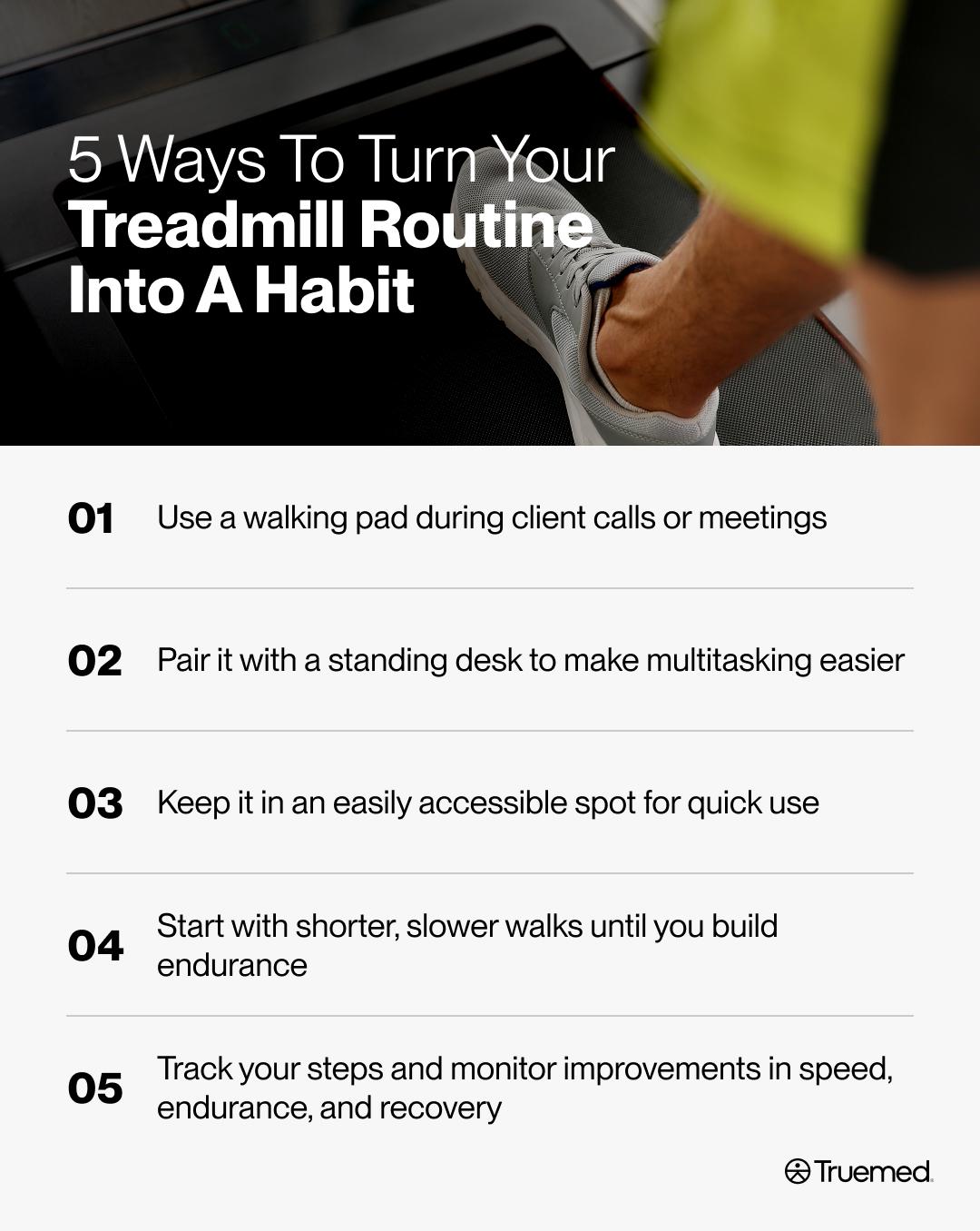
"To make treadmill use a consistent habit, try incorporating it into your workday by using a walking pad during client calls or meetings.," suggests Noelle McKenzie, co-founder and CEO of Leading Edge Personal Trainers LLC. "Pairing it with a standing desk can also make multitasking easier while staying active."
Keeping your treadmill or walking pad in a convenient, easily accessible spot so you can quickly use it whenever you have free time is another hack that can help ensure it gets used regularly, says McKenzie. Better yet, leaving your treadmill set up and ready to go (if space allows) can help save time and reduce excuses when your schedule gets busy.
It can also be helpful to start with shorter, slower walks until you become more comfortable and build endurance. "Using a fitness or step-tracking app can also help you monitor your daily steps and track improvements in your speed, endurance, and recovery over time," adds McKenzie.
Making exercise a habit is key to seeing real results, adds Ghafari. "Think of your mindset like a muscle that needs to be exercised, just like your legs. To make it stick, you need to fit it into your daily routine."
So, if you have a treadmill, don't hide it away in a dark basement; put it somewhere you'll use it, like in front of the TV or under your desk, adds Ghafari. "Start with small steps, like adding 10 or 15 minutes of movement to your day. You've got 112 hours a week when you're not sleeping, so surely you can spare a few of those to get moving," he continues. "Make it more enjoyable by listening to a podcast, watching a show, or listening to an audiobook while you walk."
Gradually increase your time or incline as you get more comfortable. The most important thing is to focus on the process, not the end result. Instead of saying "I want to lose weight," say "I'll walk for 20 minutes, three times a week," advises Ghafari. "Focus on the actions you need to take, and the results will follow naturally. By doing so, you'll be more likely to stick to your routine and make exercise a sustainable part of your lifestyle."
Maintenance, storage, and setup tips
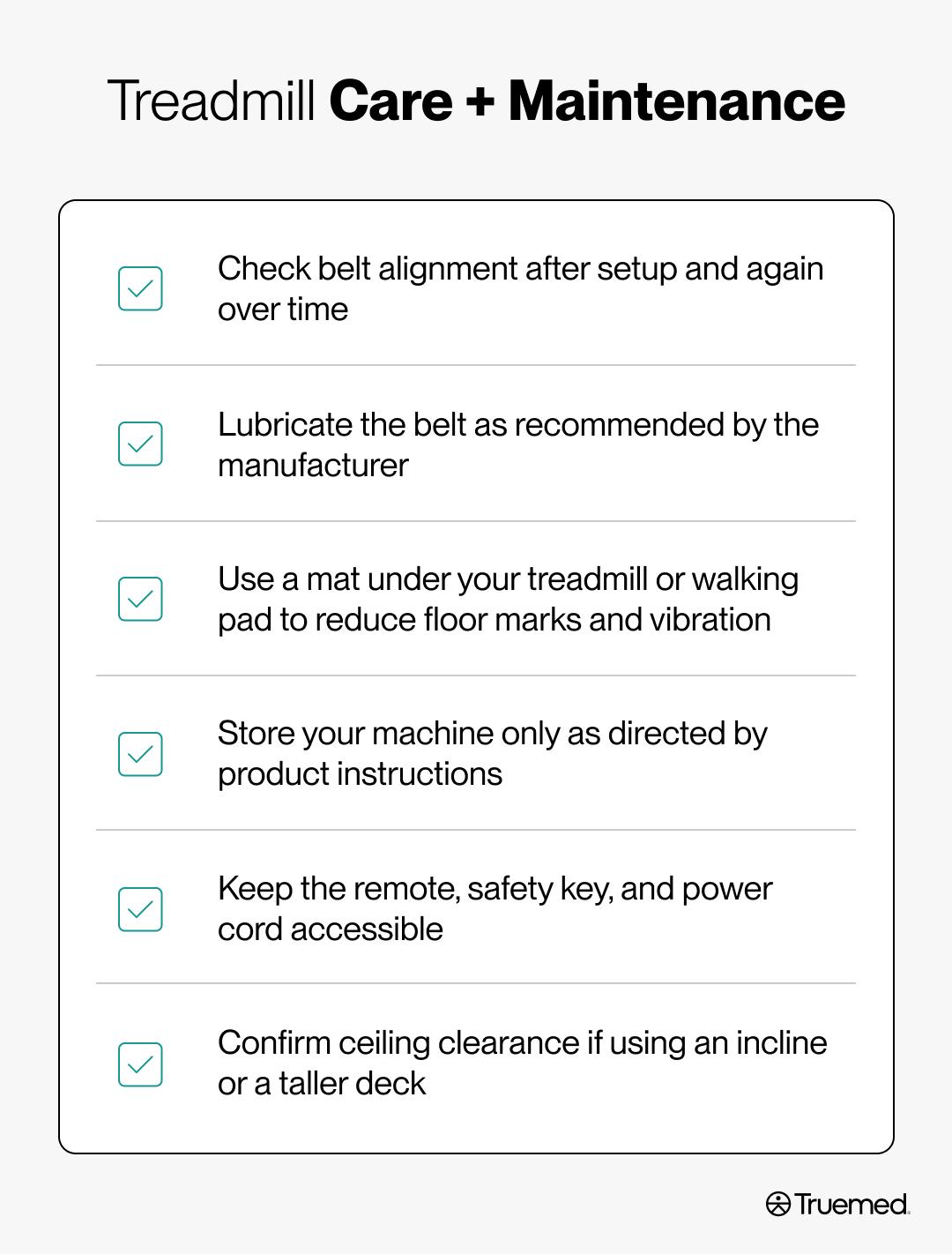
To help your new treadmill or walking pad last as long as possible and keep it functioning optimally, it's important to take care of it properly and perform maintenance or inspections periodically. This should include:
- Checking belt alignment after setup and again over time
- Lubricating the belt as recommended by the manufacturer
- Using a mat under your treadmill or walking pad to reduce floor marks and vibration
- Storing your machine only as directed by product instructions
- Keeping the remote, safety key, and power cord accessible
- Confirming ceiling clearance if using an incline or a taller deck
How It Works with HSA/FSA and Truemed
Once you've completed your research and are ready to start shopping, Truemed can help streamline the process. We specialize in helping you maximize your HSA and other health-related benefits (such as an FSA).
Here's how it works:
First, it's best to check with your plan administrator about whether a product such as a treadmill is considered a qualifying medical expense or whether you might need a Letter of Medical Necessity (LMN). An LMN is a formal document explaining why a particular product, treatment, or service is necessary to cure, treat, mitigate, or prevent the patient's health or medical condition.
Next you can search our platform for a treadmill that you may be interested in purchasing. Once you've found a machine that you're interested in learning more about, simply click on the "Shop Now" button to be taken to the brand's own website.
As part of this process, you will be directed to complete an intake, which an independent licensed medical provider will review to determine whether you're eligible for HSA spending. Truemed itself does not make eligibility determinations.
If it's determined that the purchase you're considering is medically necessary to treat or prevent a medical condition, based on your health information, an LMN will be issued. The LMN will be sent to the email address you provide to be saved for your records.
When you buy the item you can either pay directly with your HSA/FSA card at checkout, or pay with a regular credit or debit card and seek HSA or FSA reimbursement afterward.
*Truemed is for qualified customers. HSA/FSA tax savings vary. Learn more at truemed.com/disclosures
The bottom line
A treadmill is a significant investment and one that can truly support your health and fitness. And you don't need much space to incorporate a treadmill into your home. There are many models available that fit into smaller spaces. But before you make a purchase, it's important to do your research, ensuring you've carefully measured your available space and the dimensions of the machine you're considering. In addition to this step, be sure to review all of the treadmill's other features and specifications. And if you hope to purchase a treadmill using HSA or FSA funds, Truemed can streamline the process.
FAQ
The best compact treadmill for a small home varies based on your goals and needs. If your goal is to use the treadmill solely for walking, then a walking pad (which typically has a small footprint and may even be foldable so it can be stored when not in use) may be a suitable choice. If your goal is to run or jog, a compact treadmill, which is not the same thing as a walking pad, can be a better choice.
No matter the size of the treadmill you're purchasing, safety features should be a top priority. This includes handrails, if you plan to use the treadmill for running or jogging. An emergency stop clip is also an important feature, as is a sturdy, stable deck. Beyond safety features, you'll want to look for a treadmill that isn't overly noisy and fits in the space you have available.
While a treadmill doesn't automatically qualify for HSA or FSA spending, in some cases, it may be considered an eligible expense if a licensed healthcare provider determines the equipment is medically necessary to help manage or treat a diagnosed condition, rather than for general fitness.


Editorial Standards
At True Medicine, Inc., we believe better health starts with trusted information. Our mission is to empower readers with accurate and accessible content grounded in peer-reviewed research, expert insight, and clinical guidance to make smarter health decisions. Every article is written or reviewed by qualified professionals and updated regularly to reflect the latest evidence. For more details on our rigorous editorial process, see here.