
The Best Walking Pads to Get Moving in Your Home Office
Author:Mia Taylor
Reviewed By:Bo Hickey, CSCS
Published:
February 04, 2026
Last Updated:
September 11, 2026
Truemed writers and editors independently evaluate all our product recommendations. If you make a purchase through any affiliate links we provide, we may receive compensation. Learn more.


Key Takeaways
Sitting persistently is a health risk: Sitting at a desk all day has been linked to a variety of health concerns ranging from diabetes and poor heart health to depression, dementia and cancer.
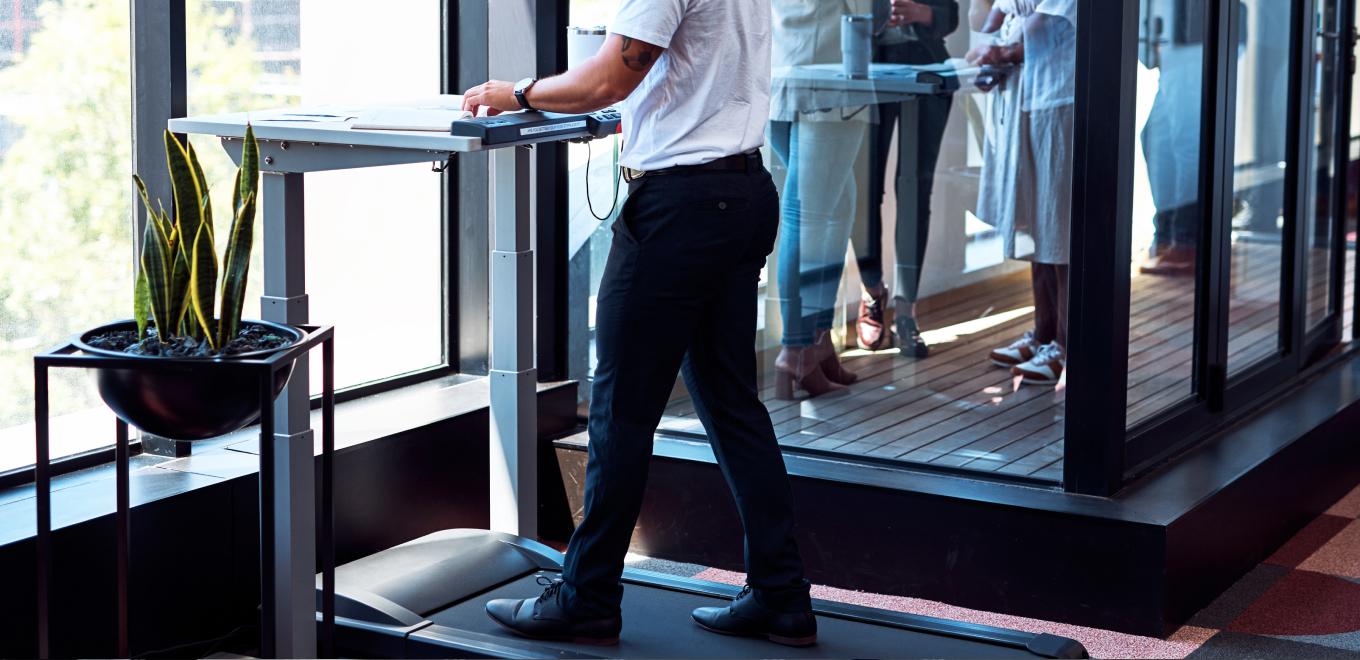
Walking pads are a great way to get in steps throughout the day: Walking pads are simplified treadmills that fit under desks and can help make it easier to keep moving during the day while still getting your work done.
Walking pads have many health benefits: Using a walking pad can help burn calories, improve heart health, reduce body aches and improve mental health.
There are things to look out for when considering a walking pad purchase: When shopping for a walking pad, some of the key factors to consider include noise level, portability, durability, weight capacity, surface size and stability.
Key Takeaways
Best Walking Pads: Quick Recommendations
Walking Pad Treadmill vs Traditional Treadmill: What’s Different
Buying Guide: What to Look For in the Best Walking Pad Treadmill
How to Choose the Right One for Your Routine
Walking Treadmill Safety, Comfort and Set-Up
Top Picks: Best Walking Pads by Category
HSA/FSA Eligibility Basics for Walking Pads
How It Works with HSA/FSA and Truemed
FAQ
Shop Eligible Products
Ready to unlock your HSA/FSA funds for qualified medical expenses?
For at least the past two decades, I've spent my workdays sitting at a desk, typing away on a computer. But it wasn't until recently that I became aware of the very serious range of health hazards associated with my occupation.
It seems my sedentary line of work can cause so much harm that it may ultimately shorten my lifespan. And that's not all. Sedentary behavior has been linked to everything from diabetes and poor heart health to depression, dementia and even cancer.
So what can those of us who spend hours at a desk do about the health challenges we face? Enter: Walking pads.
These simplified treadmills, which fit under desks, can help make it far easier to keep moving during the day while still getting your work done. But if you don't know what to look for when shopping for a walking pad, you've come to the right place.
This buying guide will help you identify the best walking pad option for your space and budget, along with covering some of the key features to look for. And here's more good news, some people may even be able to use their HSA or FSA funds to cover the cost of buying a walking pad, if there's a qualified medical need. (But more on that later. ) First, let's cover everything you need to know about walking pads.
Best Walking Pads: Quick Recommendations
- Best overall for most desks — Walking Pad Z1 Folding Under Desk Treadmill.
- Best budget walking pad — UREVO SpaceWalk 3S Smart Walking Pad
- Best foldable walking pad for small spaces — WalkingPad A1 Pro Foldable Under Desk Treadmill
- Best under desk treadmill for quiet/shared spaces —Rove Concepts Camino Treadmill
- Best with incline—DeerRun Z10 12% Auto Incline Smart Walking Pad Treadmill with remote control-Black
- Best portable walking pad —LifePro PacerMini Portable Treadmill
Walking Pad Treadmill vs Traditional Treadmill: What’s Different
If you're wondering what the difference is between a walking pad and a treadmill, you're not alone. At first glance, these two types of fitness equipment appear very similar. But they are made for different levels of activity.
"Treadmills are designed for higher intensity exercise, and are best for traditional structured exercise," says personal trainer and exercise scientist Domenic Angelino."Walking pads are best for more casual walking that you can do while multitasking."
The primary feature that separates treadmills from walking pads is the top speed at which a treadmill can operate. A walking pad does not go fast enough to allow the user to run, while treadmills are built to allow for this type of activity.
Walking pads are also designed without features that allow you to be safe while going fast, adds Angelino. "For example, treadmills usually have longer belts, better handrail support, and highly effective emergency stop systems. All of that isn’t as necessary when all you’re doing is walking casually," Angelino explains.
Walking pads also typically feature a lower profile that makes them easier to use under a desk. Many are also very light so that they can be moved and stored easily.
Buying Guide: What to Look For in the Best Walking Pad Treadmill
When shopping for costly fitness equipment, it's important to understand which features and considerations impact quality and overall usefulness. Here are some of the key factors to keep in mind as you shop for a walking pad:
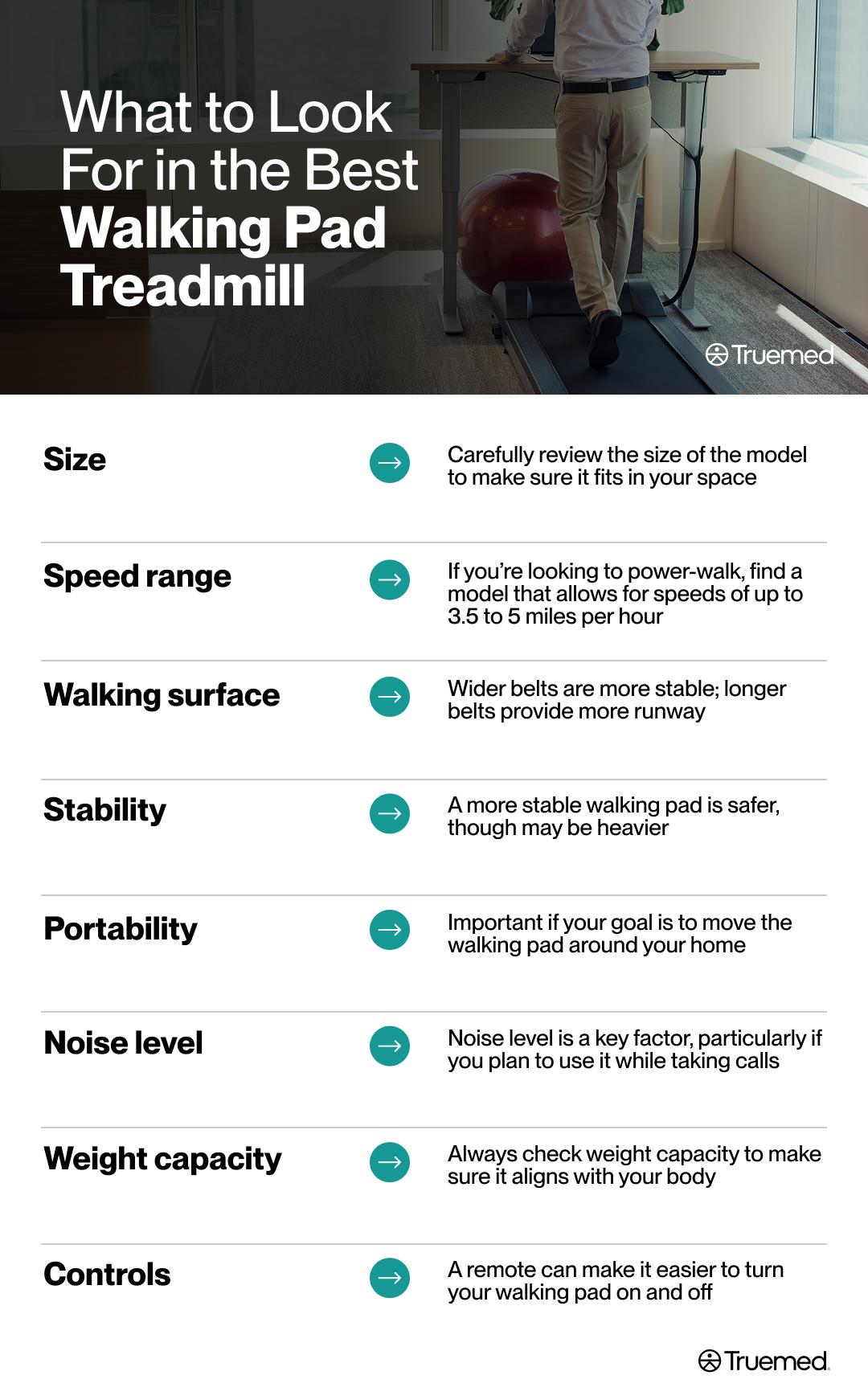
- Size: Likely one of the most important considerations if you plan to use your walking pad under your desk or in a small space, be sure to carefully review the size of the model you're thinking of purchasing. "The most important thing for most people is usually going to be the dimensions of the walking pad itself. You want to make sure it fits in the space to plan to use it in," says Angelino.
- Speed range: Most walking pads top out at a speed of 5 mph, but that doesn't mean you need to purchase a model that goes this fast. But keep in mind that the right speed for you will vary based on how you plan to use the walking pad. For instance, if your primary goal is to use it while working, then the ideal speed may be no more than a slow, steady 1.5 mph. If you also want to use your walking pad to get in some light exercise, then investing in a model that has a broader speed range can be a good choice. "If you’re looking to power walk, find a model that allows for speeds of up to 3.5 to 5 miles per hour. Otherwise, lower speed maximums are fine," says Angelino.
- Walking surface size: Another important consideration when shopping for a walking pad is the surface size of the belt. Wider belts provide several important benefits. "Wider belts are more stable and give you more leeway when walking on a pad," explains Angelino. "You’re less likely to mis-step if you have a lot of room on your sides." Longer belts are also helpful for a similar reason: They allow for longer steps, and provide you with more of a runway to get back on track if you accidentally slow down and the belt pulls you closer to the back of the walking pad.
- Stability: This is a critical factor, in terms of overall safety and also when it comes to your overall satisfaction. A more stable walking pad is of course safer. If possible, try to test out a walking pad before making a purchase to gauge how it feels. Often models made with metal frames are more stable because they're heavier. Belt stability is important as well; a poorly constructed belt can cause additional torsion to be felt through the knees (and potential for knee pain). "Stability and how the belt feels are probably the most important. If a walking pad feels wobbly or cheap, people stop using it fast," says Cara D’Orazio, owner, personal trainer and fitness instructor at C.G.M. Fitness, Inc.
- Portability: If you hope to easily move your walking pad around your home for use in multiple spaces then it's important to look for a model that emphasizes portability. Some models, for instance, fold up. Others have wheels and handles. If your goal is to move the walking pad around your home, be sure the model you're considering allows you to do so..
- Noise level: The noise level associated with a walking pad is another key factor, particularly if you plan to use it while working, taking calls, attending Zoom meetings and more. Read product descriptions and specifications carefully, (though not every manufacturer lists noise information). To obtain more information about the noise level associated with a walking pad, it can be helpful to read online customer product reviews
- Vibration control: If you're on a call and your pad is vibrating a ton, it can be distracting—like you're trying to hold a meeting while watching an action movie.
- Weight capacity: Not all walking pads are created equal. Some are more heavy duty than others, allowing them to accommodate users of greater weight. The walking pad's technical specifications should clearly spell out the weight limits. Some can accommodate up to 300 pounds. "Weight capacity matters, always check weight capacity to make sure it aligns with your body weight," advises Angelino." Most people will be fine with most models, but if you’re on a budget, you might find models with a weight capacity that you exceed."
- Controls: Some walking pads come with a remote control. While this may not seem necessary or critical to your purchase, a remote can make it easier to turn your walking pad on and off with less effort.
How to Choose the Right One for Your Routine
Given all of the factors we just covered, how should you choose the right walking pad for your routine? To begin with, there are some key features that lend themselves to overall quality.
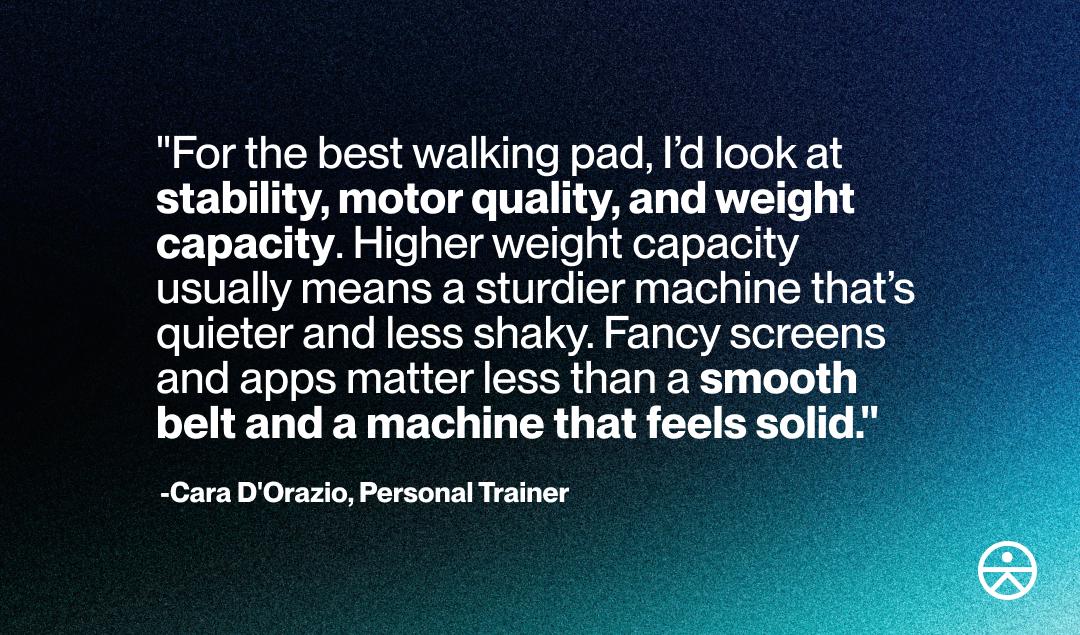
"For the best walking pad, I’d look at stability, motor quality, and weight capacity," advises D’Orazio." Higher weight capacity usually means a sturdier machine that’s quieter and less shaky. Fancy screens and apps matter less than a smooth belt and a machine that feels solid."
Beyond those considerations, it's really a matter of your personal goals and needs. For instance:
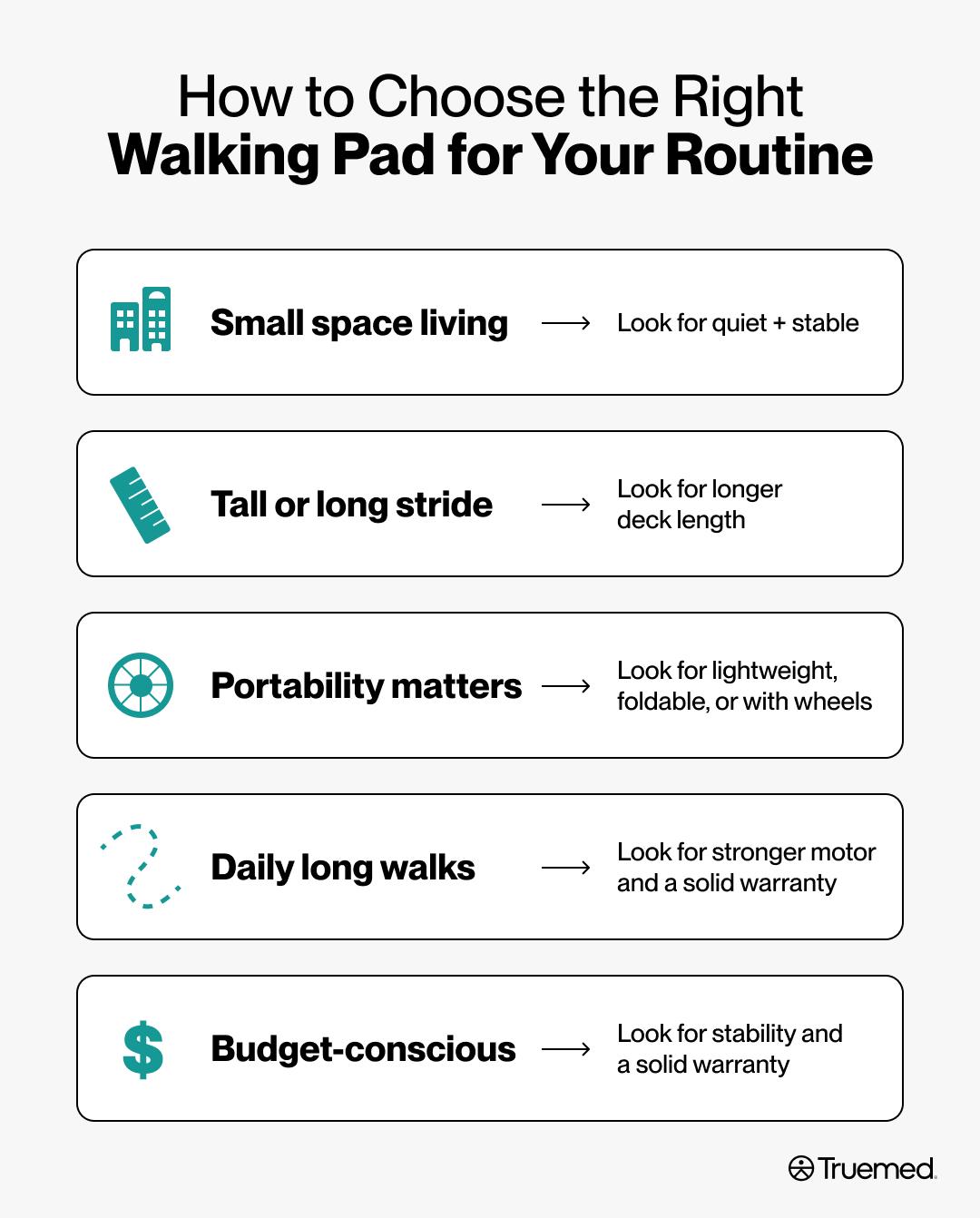
- If you live in an apartment, it can be wise to prioritize a quiet, stable walking pad.
- If you’re tall or have a long stride, be sure to prioritize deck length.
- If you’ll move the walking pad daily then focus on finding a lighter weight model, or one that features good wheels or alternatively, a foldable walking pad.
- If you plan to walk several hours each day, a walking pad with a stronger motor and warranty will be key.
- If you’re budget-limited, focus on finding a model that offers stability and a solid warranty over fancy apps or LED screen features.
Walking Treadmill Safety, Comfort and Set-Up
Once you've purchased a walking pad, it's important to ensure you use it safely and understand how best to ensure your comfort while exercising.
On the safety front, it's a good idea to use the machine's safety clip. These clips are typically connected to a magnetic key via a cord. The cord turns the machine off if you fall back by pulling the magnetic key out. Make sure the area around the pad is clear. This way, nothing can get sucked into the motor while you’re using it.
It's also a good idea to avoid starting the device until after you step on it, says Angelino. "Once on, gradually ramp up the speed until you reach a comfortable, slow, pace," he says. "This should normally be around 1.5 to 2.5 miles per hour. "
D’Orazio advises first time users to go slower than you think may be necessary. "Even 0.5 to 1 miles per hour, at first, is fine," she says.
Another tip for beginners: For your first use, try to focus exclusively on exercise (and not working) in order to get a feel for your new walking pad and what it's like walking on it. Even if your long-term plan is to multi-task, do so only after you've conducted an initial test walk, ensuring that you are comfortable with how it feels.
Additionally, be sure to keep posture in mind when using your walking pad. Don’t lean into your desk too much, and keep your shoulders away from your ears. This helps reduce tension and cue better posture.
Finally, if you feel discomfort or pain while walking, it may be helpful to pause use of your walking pad and consult with a physical therapist to identify the underlying cause.
Top Picks: Best Walking Pads by Category
- Best overall for most desks — Walking Pad Z1 Folding Under Desk Treadmill.
- Best budget walking pad — UREVO SpaceWalk 3S Smart Walking Pad
- Best foldable walking pad for small spaces — WalkingPad A1 Pro Foldable Under Desk Treadmill
- Best under desk treadmill for quiet/shared spaces —Rove Concepts Camino Treadmill
- Best with incline—DeerRun Z10 12% Auto Incline Smart Walking Pad Treadmill with remote control-Black
- Best portable walking pad —LifePro PacerMini Portable Treadmill
HSA/FSA Eligibility Basics for Walking Pads
Fitness equipment, including walking pads, is not automatically HSA or FSA eligible. Often, eligibility may be product specific, condition specific and may also vary by plan. It's also not unusual for a fitness equipment purchase like walking pads to require medical necessity documentation from a medical provider.
If you purchase a walking pad that you hope to use HSA or FSA funds to pay for, be sure to keep your itemized receipt and any documentation related to the medical necessity purchase. And before making the purchase, it's a good idea to reach out to your HSA or FSA administrator to find out what your plan allows.
How It Works with HSA/FSA and Truemed
Walking pads are not typically eligible for payment with your HSA or FSA funds. However, in some cases, a medical practitioner may feel it necessary to incorporate walking pads into the treatment for a specific health condition. In such cases, the medical professional can provide what's known as a Letter of Medical Necessity (LMN).
Not familiar with an LMN? It's an official document that specifies why a purchase is necessary to help treat a particular condition or support your overall health. Obtaining an LMN allows you to use HSA and FSA funds to pay for items or expenses that otherwise would not have qualified for coverage.
And here's how Truemed helps with the process. First, browse Truemed.com to explore health interventions that may be eligible for HSA/FSA spending. Then, click "Shop Now" and add your selected item to your cart on the brand's website; select "Truemed - Pay with HSA/FSA" at checkout. You'll then be prompted to complete a health intake form that, if you qualify, may help you obtain an LMN as part of your shopping experience. The intake form will be reviewed by an independent licensed provider to determine your eligibility for an LMN.
If the LMN is ultimately approved, you can use it as supporting documentation to establish that the walking pad purchase was necessary. You can also proactively reach out to your HSA or FSA administrator to find out whether a walking pad purchase might be covered.
*Truemed is for qualified customers. See terms at truemed.com/disclosures.
FAQ
Yes, they definitely do. An article from the Cleveland Clinic explains that using a walking pad during your workday is far better for your health then sitting still. In addition to allowing your body to experience more movement, walking pad use burns calories. Studies show that the average American spends between 8-10 hours a day sitting. By reducing the amount of time spent sitting and walking on a walking pad, you can potentially improve heart health, while also reducing body aches and improving your mental health.
There are many important factors to consider when purchasing a walking pad. Most importantly, think about how you plan to use the walking pad. If you intend to use it for multiple hours each day, be sure to purchase a walking pad with a solid motor. The noise created by a walking pad is also important, particularly if you're using it during work meetings and phone calls. Stability is another critical factor, to ensure you feel safe on the walking pad. Additional considerations include portability and speed.
It may be possible to use your HSA/FSA to cover the cost of a walking pad if the walking pad addresses a specific medical condition that has been identified by a medical professional. If this is the case, you will likely need a Letter of Medical Necessity from the medical professional to document the medical need that the walking pad will be used to prevent, treat, cure, or mitigate.


Editorial Standards
At True Medicine, Inc., we believe better health starts with trusted information. Our mission is to empower readers with accurate and accessible content grounded in peer-reviewed research, expert insight, and clinical guidance to make smarter health decisions. Every article is written or reviewed by qualified professionals and updated regularly to reflect the latest evidence. For more details on our rigorous editorial process, see here.