
Do Saunas Help You Lose Weight?
Author:Kathleen Ferraro
Reviewed By:Katherine Janosz, MD
Published:
June 23, 2026
Last Updated:
September 17, 2026
Truemed writers and editors independently evaluate all our product recommendations. If you make a purchase through any affiliate links we provide, we may receive compensation. Learn more.



Key Takeaways
A sauna does not help you lose weight long-term: They can cause temporary weight loss, but most of that change comes from losing water through sweat rather than burning body fat.
Saunas may slightly increase calorie burn: But the effect is relatively small and isn't enough to drive meaningful weight loss on its own.
Research backs up other benefits, though: Research suggests regular sauna use may support recovery, relaxation, sleep, stress management, and cardiovascular health.
Lifestyle changes are most effective: Sustainable weight loss is more likely to come from consistent habits like nutritious eating, regular movement, quality sleep, hydration, and stress management.
A sauna may be HSA- or FSA-eligible: Qualified customers may be able to use HSA or FSA funds toward eligible sauna purchases when supported by appropriate documentation and approved by their plan administrator.
Shop Eligible Products
Ready to unlock your HSA/FSA funds for qualified medical expenses?
If you've ever dropped weight after a trip to the sauna, it might seem like proof that all that sweating is helping you burn fat. But do saunas help you lose weight, really?
The short answer: Not really. While a sweaty session in the sauna can temporarily lower the number on the scale, most of that weight loss comes from sweating out water rather than losing body fat.
That’s not to say saunas are useless. In fact, saunas offer many benefits: research suggests they may support recovery, relaxation, sleep, and cardiovascular health. They’re just not a substitute for the habits that drive meaningful, long-term fat loss (like nutrition, exercise, sleep, and stress management).
Below, we'll break down what saunas can and can't do for weight loss and how qualified customers may be able to purchase a sauna with HSA or FSA funds.
Do saunas help you lose weight?
Not really. At least, not in a meaningful, long-term way.
While it's common to weigh less after a sauna session, “most of the immediate weight reduction is due to fluid loss through sweating, not fat loss,” says Mark Kovacs, PhD, FACSM, CTPS, an exercise physiologist. “It’s common to lose one to several pounds during a prolonged sauna session, but that weight will largely return after proper rehydration.”
That's because sweating and fat loss aren't the same thing. When you're sitting in a hot sauna, your body cools itself by producing sweat. As you lose fluid, the number on the scale drops temporarily. Fat loss, on the other hand, is a gradual process that occurs when your body consistently burns more energy than it takes in over time.

Sauna sessions can raise your heart rate and increase energy expenditure as your body works to regulate its temperature. However, that extra calorie burn is generally not enough to produce meaningful fat loss on its own. Estimates of calorie expenditure during sauna use vary widely, and the increase is generally modest compared with exercise.
"I commonly view saunas as an additive therapy to support overall health rather than a primary method for weight reduction or promoting health,” says Mariam Zakhary, DO, a double-board-certified physical medicine/rehabilitation and sports medicine doctor.
Why the scale may drop after a sauna
The scale doesn't know whether you've lost fat, water, or muscle. It simply measures your total body weight at a given moment.
That's important because sauna-related weight loss is mostly driven by shifts in hydration. Once you replace the fluids you lost through sweat, the number on the scale typically rises again, according to Zakhary.
How much the scale moves can also vary based on factors like the sauna temperature, session length, and how hydrated you were to begin with. But regardless of the number, a post-sauna weigh-in shouldn't be confused with a meaningful change in body composition, says Kovacs.
This is also why saunas aren't a reliable way to lose belly fat. Sweating more from one area of the body doesn't cause fat loss in that area. According to Kovacs, lasting fat loss happens gradually through consistent habits, not by “sweating it out.”
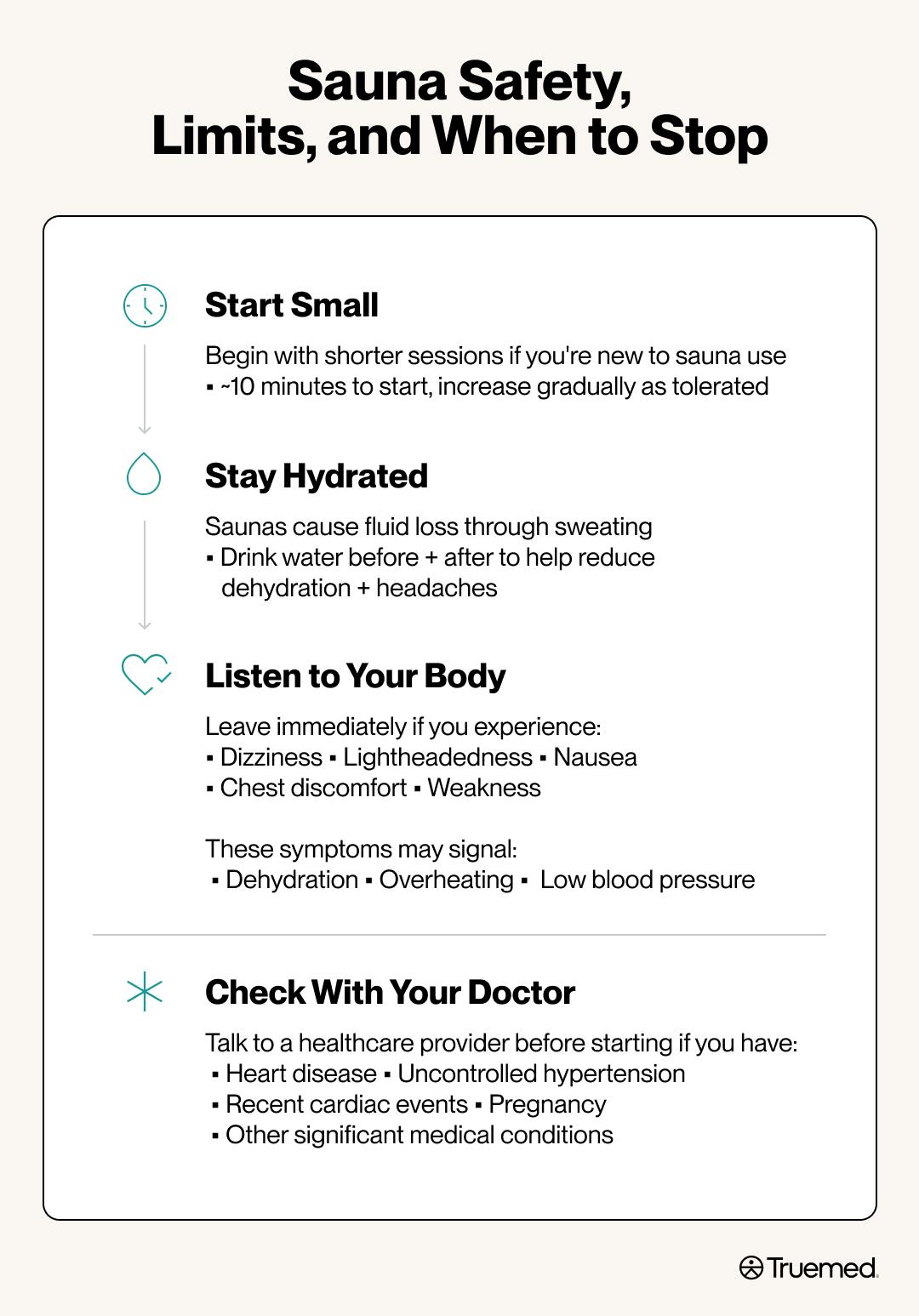
Sauna safety, limits, and when to stop
Saunas are generally safe for most healthy adults. But they're not something you should try to "push through" for extra benefits. Spending too much time in extreme heat can increase your risk of dehydration, dizziness, and overheating.
Here’s what to keep in mind, according to the experts:
- Start small: If you're new to saunas, begin with shorter sessions (around 10 minutes) rather than jumping into extended heat exposure, says Kovacs. As your body gets used to the heat, you can gradually work up to longer sessions if they're comfortable for you.
- Stay hydrated: Because saunas cause significant fluid loss through sweating, it's important to drink water before and after your session, says Zakhary. Proper hydration can reduce the risk of dizziness, headaches, and dehydration.
- Listen to your body: Leave the sauna immediately if you feel dizzy, lightheaded, nauseated, chest discomfort, weak, or otherwise unwell, says Kovacs. These can be signs of dehydration, overheating, or a drop in blood pressure.
- Check with your healthcare provider if needed: “Individuals with cardiovascular disease, uncontrolled hypertension, recent cardiac events, pregnancy, or other significant medical conditions should consult their physician before beginning a sauna program,” says Kovacs.
Better-supported ways to lose weight
If you were considering using a sauna for weight loss, there are more effective strategies than spending extra time sweating. While there's no one-size-fits-all approach, research consistently points to a handful of habits that have the biggest impact, including:
- Nutrition habits you can stick with: Instead of bouncing from one fad diet to the next, focus on building your meals around nutrient-dense foods you enjoy and can eat on a regular basis. Ultimately, consistency matters more than perfection.
- Strength training and regular movement: Exercise supports weight loss and helps preserve muscle mass, improve fitness, and promote long-term health. And that doesn’t necessarily require a gym membership—bodyweight training, walking, cycling, swimming, and other forms of movement can all be part of an effective routine.
- Prioritizing quality sleep: Research shows that consistent, quality sleep can make it easier to manage appetite, energy levels, and food cravings. Sleep also plays an important role in recovery, exercise performance, and day-to-day decision-making—all of which can contribute to healthy weight loss.
- Managing stress: Chronic stress can make it harder to maintain healthy habits by affecting appetite, food choices, sleep quality, and energy levels. Finding sustainable ways to manage stress—whether through exercise, mindfulness, social connection, or other activities—can support long-term health and weight-management goals.
- Staying hydrated: Hydration supports energy levels, exercise performance, recovery, and overall health. While drinking more water won't directly cause weight loss, it can bolster the healthy habits that do.
- Personalized support when needed: If you're struggling to lose weight or have concerns about your health, consider working with a healthcare provider. They can identify underlying factors, recommend evidence-based treatments, and develop a plan that aligns with your goals, symptoms, and medical history.
The bottom line
While a sweaty sauna session can temporarily drop the number on the scale, that typically doesn't mean you've lost fat. Most sauna-related weight loss is simply water loss from sweating, which is why the weight usually comes back after you rehydrate.
Still, saunas may offer other perks. Many people enjoy them for their potential recovery, relaxation, sleep, and cardiovascular benefits, and they may be a helpful addition to a broader health routine.
If you're considering a sauna for a specific medical purpose, you may also be able to use HSA or FSA funds toward the expense. Learn more about whether a sauna is HSA/FSA eligible and how to qualify.
FAQ
Saunas can cause temporary weight loss by increasing sweat production and fluid loss. However, most of that weight comes from water—not body fat—and typically returns once you rehydrate. Sustainable weight loss requires long-term changes in nutrition, physical activity, sleep, and other lifestyle factors.
Using a sauna regularly is unlikely to produce meaningful weight loss on its own. While consistent sauna use may support other aspects of health, such as recovery, relaxation, and cardiovascular function, lasting fat loss typically comes from sustainable habits. These include nutritious eating, regular physical activity, quality sleep, and stress management.
No. Despite common myths, you can't "sweat out" belly fat. Sauna sessions may reduce your body weight temporarily through fluid loss, but they don't selectively burn fat from your abdomen or any other specific area of the body.




See what you can do with your HSA/FSA.
Join 1.5 million Americans who have routed their healthcare dollars toward root cause health via Truemed's HSA/FSA marketplace.
New product announcements
Sales and special offers
Tips for utilizing your HSA/FSA
Editorial Standards
At True Medicine, Inc., we believe better health starts with trusted information. Our mission is to empower readers with accurate and accessible content grounded in peer-reviewed research, expert insight, and clinical guidance to make smarter health decisions. Every article is written or reviewed by qualified professionals and updated regularly to reflect the latest evidence. For more details on our rigorous editorial process, see here.