
Is an Air Purifier HSA/FSA Eligible? Top 5 HSA/FSA Eligible Air Purifiers for 2026
Author:Kennedy Coleman
Published:
August 25, 2026
Last Updated:
October 06, 2026
Truemed writers and editors independently evaluate all our product recommendations. If you make a purchase through any affiliate links we provide, we may receive compensation. Learn more.


Key Takeaways
Air purifiers require an LMN: They can be HSA/FSA eligible, but they're not automatically reimbursable. The IRS classifies them as "dual-purpose" items that require a Letter of Medical Necessity from a licensed provider.
Eligibility is condition-driven: A documented medical condition or medical need, such as asthma, allergies, chronic sinusitis, COPD, or mold sensitivity, is what makes an air purifier potentially eligible, not the brand or price.
Why air purifiers matter: Dust, pollen, pet dander, mold spores, and other airborne particulates circulate indoors and can worsen respiratory, allergy, and sinus conditions.
Shop Eligible Products
Ready to unlock your HSA/FSA funds for qualified medical expenses?
Are air purifiers HSA/FSA eligible?
It’s understandable that people get confused when trying to figure out the best way to spend their HSA or FSA funds. There are thousands of products and services that are always HSA/FSA eligible, like prescriptions, bandages, and sunscreen. Now what if you want to invest in products or services that are important for your health but don’t fall into that “always eligible” category, like gym memberships or air purifiers? Those products sit in a category the IRS classifies as eligible with substantiation, meaning a licensed provider needs to document the medical need in order to make the product eligible for HSA or FSA spending.
In many cases, that substantiation comes in the form of a Letter of Medical Necessity (LMN) from a licensed clinician connecting the air purifier to a qualifying condition. Thankfully, if you’re looking to use your pre-tax HSA/FSA dollars on an air purifier, many common respiratory, allergy, and sinus conditions are clinically tied to airborne particulates, allergens, and pollutants, which is exactly what an air purifier is designed to reduce.
Why an air purifier matters for your health
Indoor air is often more polluted than people expect. Depending on your home, HVAC system, and environment, the air you breathe indoors can carry a mix of allergens and irritants that can circulate continuously in the environment you spend the bulk of your time in.
The contaminants most commonly reduced by a quality air purifier include:
- Dust and dust mites — common triggers for allergy and asthma flare-ups
- Pollen — a seasonal allergy trigger that travels indoors on clothes, pets, and open windows
- Pet dander — a persistent airborne allergen in homes with pets
- Mold spores — airborne particles that can aggravate respiratory and sinus conditions
- Smoke and VOCs — from cooking, wildfires, or household products, often captured by activated carbon filtration
A good air purifier can meaningfully reduce the airborne triggers that make certain conditions harder to manage day to day.
Who benefits most from an air purifier?
While anyone can benefit from cleaner indoor air, air purifiers make an especially large impact on the live of people with specific conditions and sensitivities, including:
- People with asthma — reducing airborne dust, smoke, and pollutants may help manage flare-ups
- People with allergic rhinitis or seasonal allergies — filtering pollen, dust, and pet dander may reduce daily symptom triggers
- People with chronic sinusitis — cleaner indoor air may help reduce irritation of already-inflamed sinus passages
- People with COPD or other chronic respiratory conditions — reducing particulate exposure may support easier breathing
- People with documented mold sensitivity or exposure — filtration may help reduce airborne mold spore exposure in the home
- Immunocompromised individuals — reducing airborne particulates and pathogens may be part of a broader risk-reduction plan
These conditions overlap closely with those that may qualify a customer to use their pre-tax HSA/FSA funds on an air purifier. We'll dive deeper into the process of confirming eligibility and actually receiving the substantiation needed to purchase an air purifier with HSA/FSA funds below. For now, it's important to keep in mind that medical need is the key distinction when deciding whether a purchase is HSA or FSA eligible. Purchasing an air purifier to alleviate seasonal allergies may qualify, while a general preference for "fresher" air or a smart-home upgrade likely does not.
Top 5 HSA/FSA Eligible Air Purifiers for 2026
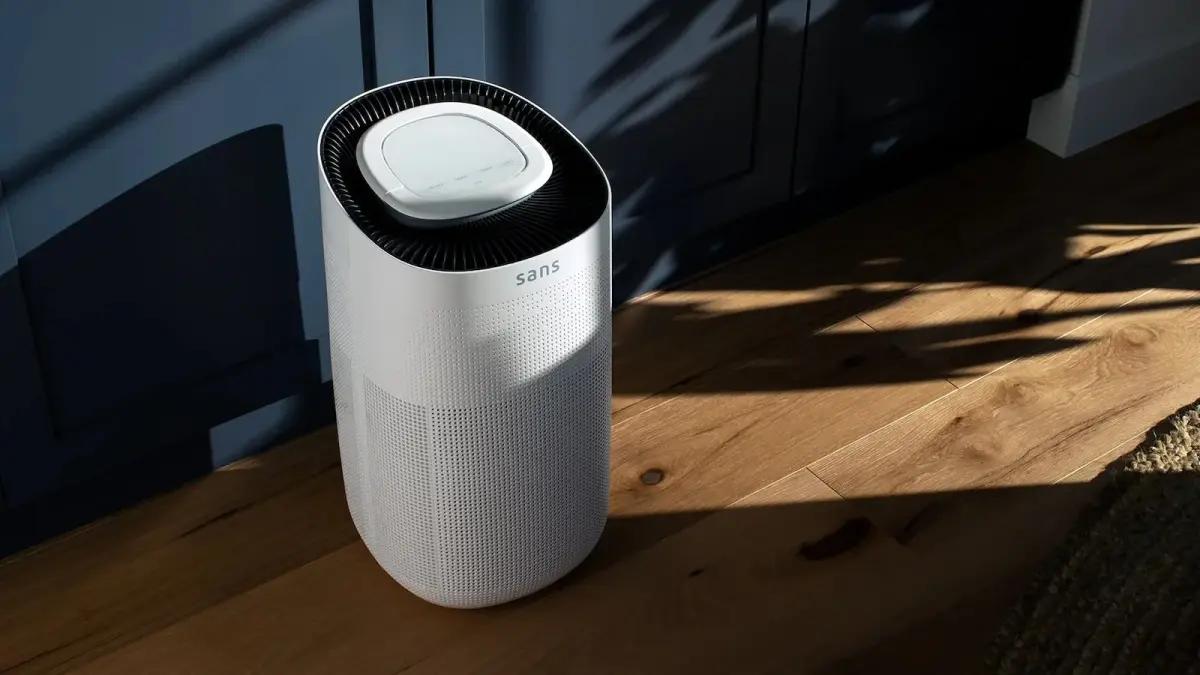
Best for whole-home coverage: Sans Air Purifier
The Sans Air Purifier covers up to 1,854 sq ft, making it one of the few options on this list built to purify an entire home rather than a single room. It pairs HEPA and activated carbon filtration, connects to Wi-Fi for remote control, and comes in four finishes.
- Best for: Larger homes or open floor plans
- Standout features: HEPA + activated carbon filtration, Wi-Fi connectivity, quiet and portable
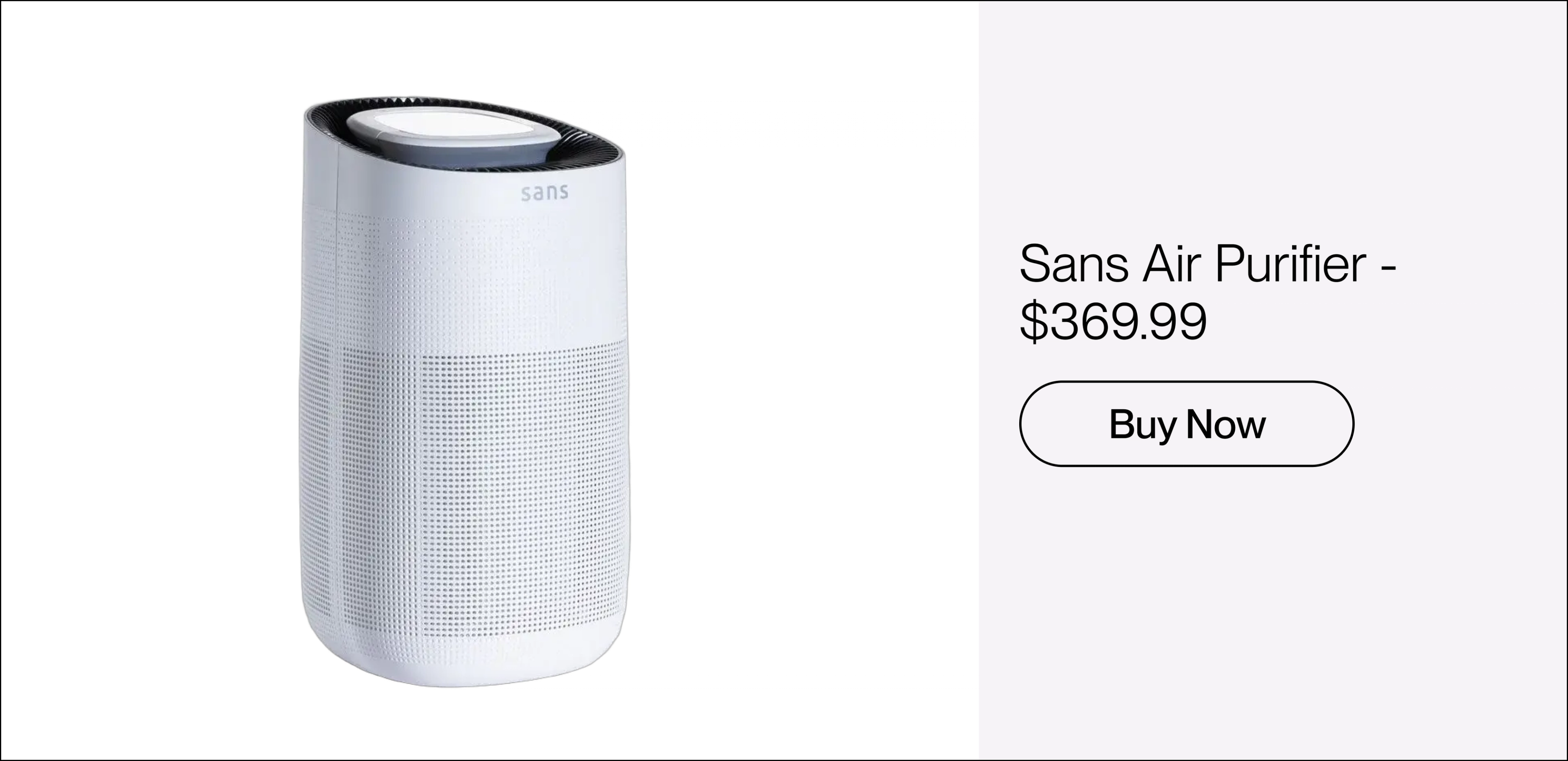
Best for living rooms & shared spaces: Blueair Blue Pure 311i+ Max
The Blueair Blue Pure 311i+ Max is sized for spaces up to 439 sq ft, cycling all the air in a room roughly every 12.5 minutes.
- Best for: Living rooms, family rooms, and other shared spaces that see a lot of foot traffic
- Standout features: HEPA filtration, Wi-Fi-enabled remote control, fast air exchange rate
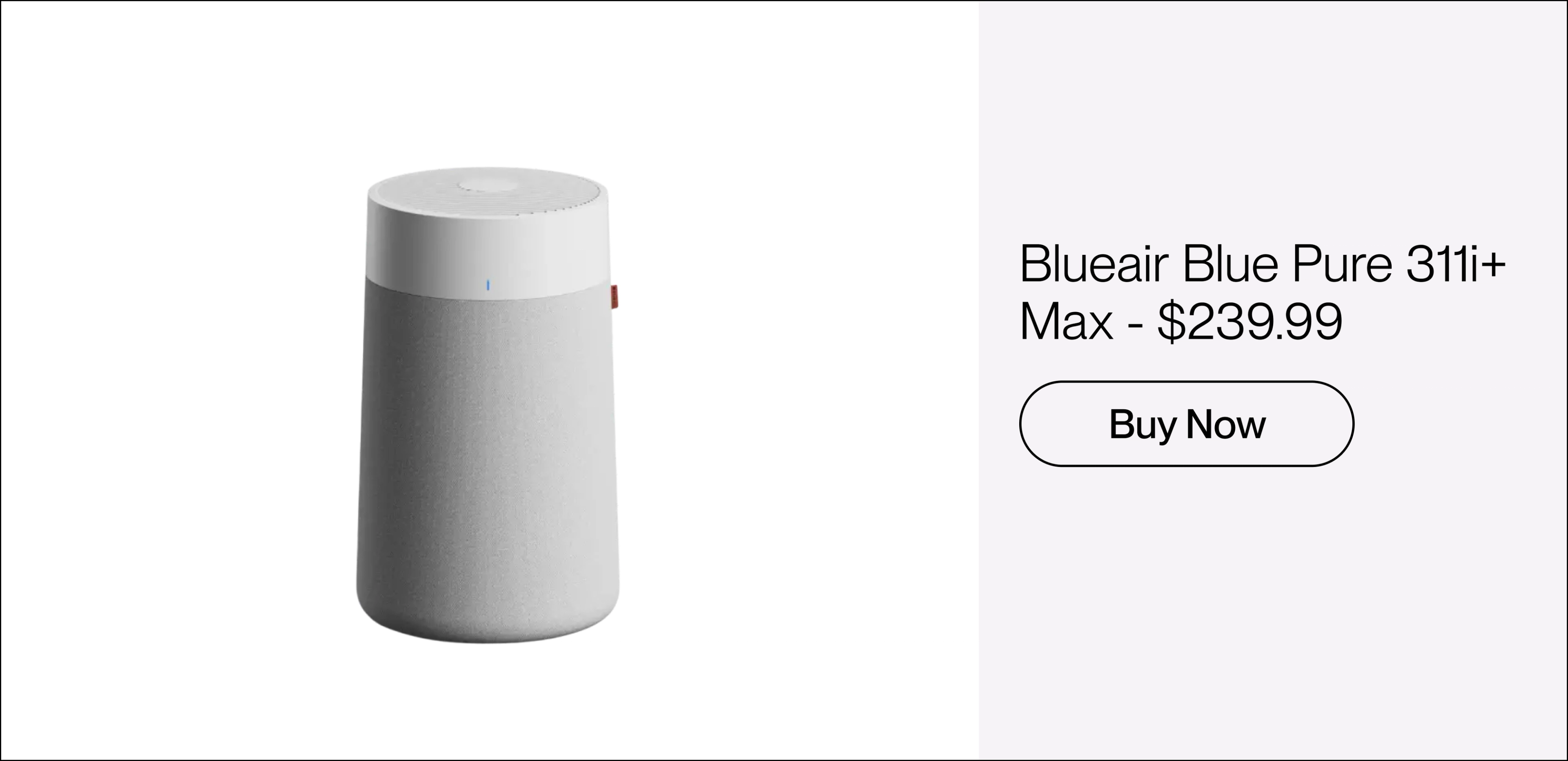
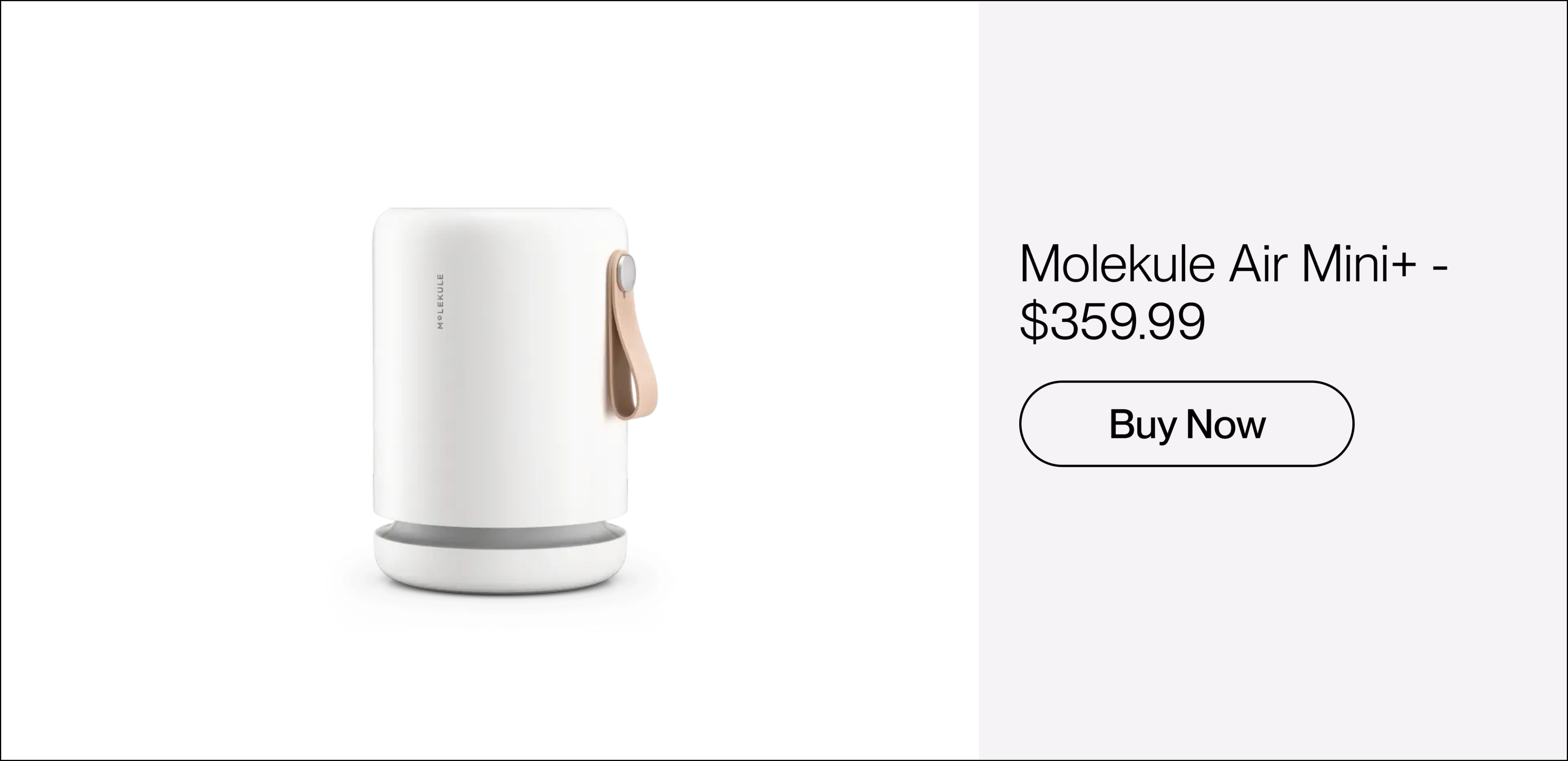
Best for nurseries or other small rooms: Molekule Air Mini+
The Molekule Air Mini+ is a compact, inconspicuous option built for rooms up to 250 sq ft, making it a natural fit for a nursery, kid's bedroom, or home office.
- Best for: Small rooms, nurseries, and spaces where a low profile matters
- Standout features: HEPA + activated carbon filtration, compact design
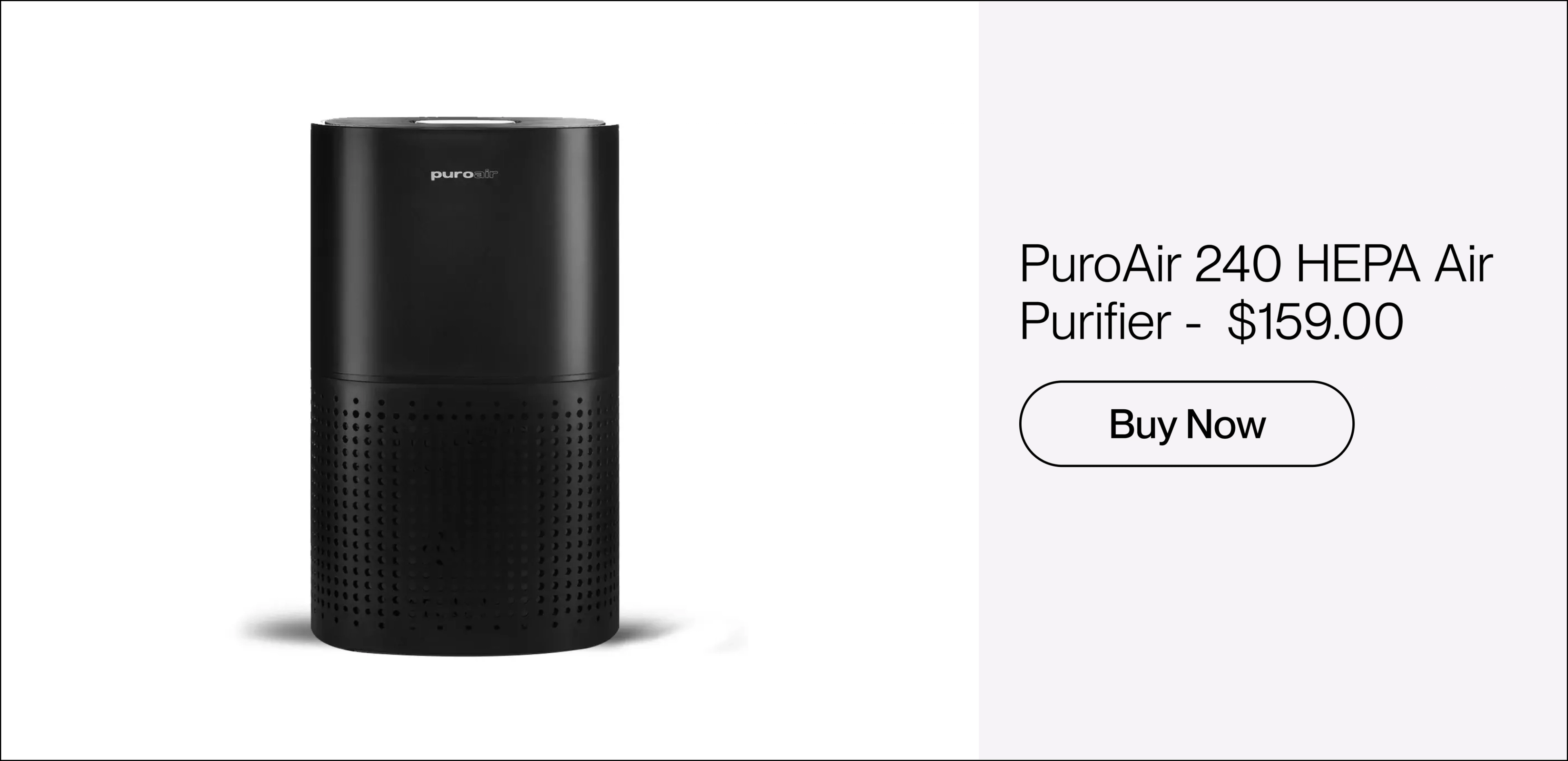
Best affordable option: PuroAir 240 HEPA Air Purifier
The PuroAir 240 combines HEPA and activated carbon filtration to cover up to 1,000 sq ft, and it's one of the more wallet-friendly picks in this lineup without giving up two-stage filtration.
- Best for: Cost-conscious shoppers, kitchens, pet zones, and workout spaces where odor is also a concern
- Standout features: HEPA + activated carbon filtration, mid-size room coverage, lower price point than most units on this list
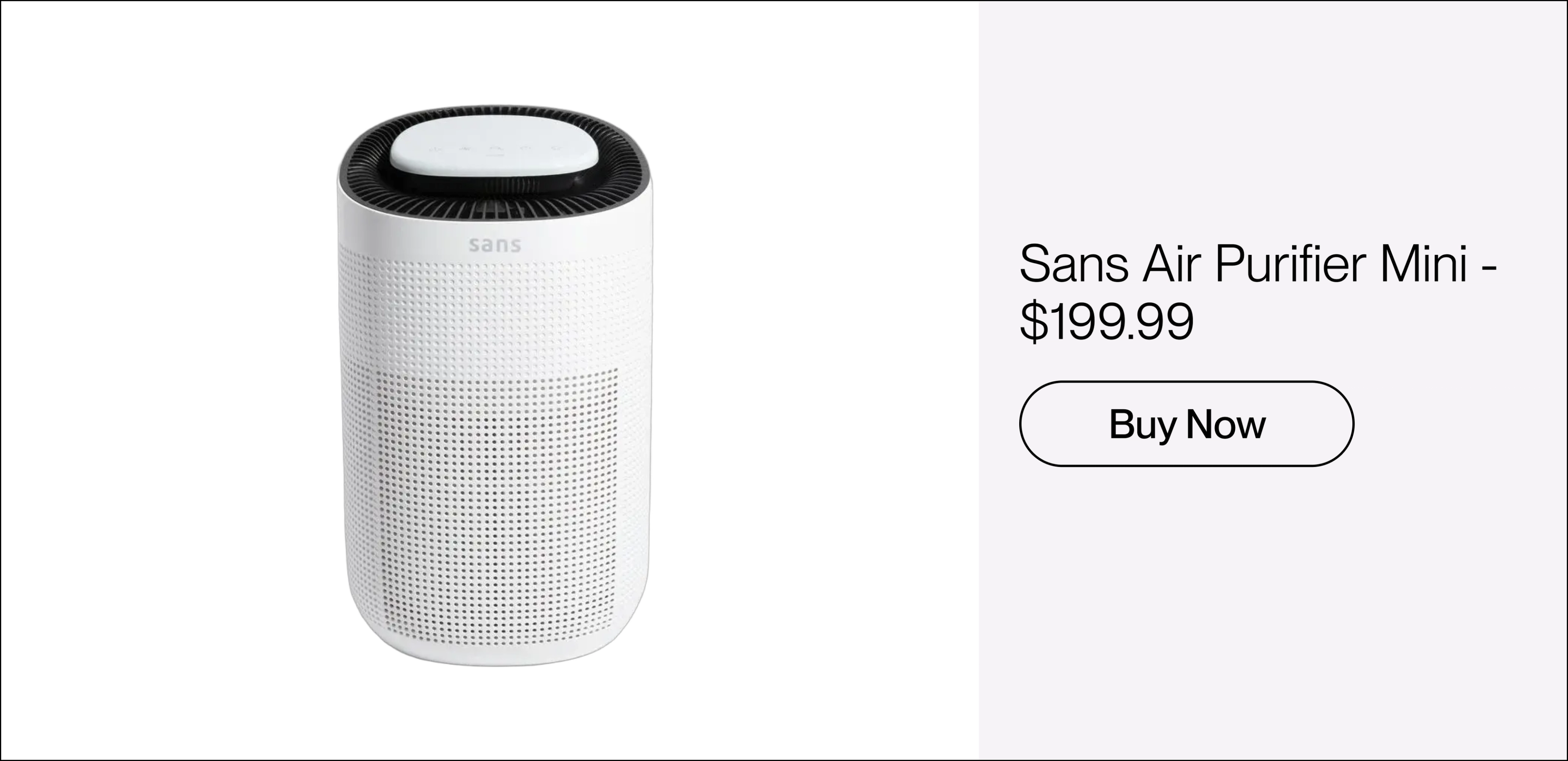
Best for pet owners: Sans Air Purifier Mini
The Sans Air Purifier Mini covers up to 490 sq ft and is built with a high-density pre-filter and carbon layer specifically to catch pet fur, dander, and pet-related odors before they settle.
- Best for: Households with pets, bedrooms, and smaller apartments
- Standout features: Pet-focused pre-filter, HEPA + activated carbon filtration, quiet operation, lights-out mode, portable
Air purifier features compared
| Air Purifier | Best For | Standout Feature | Watchout |
|---|---|---|---|
| Sans Air Purifier | Whole-home coverage | HEPA + carbon, 1,854 sq ft | Sized for whole-home, not just one room |
| Blueair Blue Pure 311i+ Max | Living rooms & shared spaces | Fast air exchange, 439 sq ft | Thin carbon layer may not be a fit for heavy cooking smells/VOCs |
| Molekule Air Mini+ | Nurseries & other small rooms | Compact design, 250 sq ft | Not built for larger rooms |
| PuroAir 240 | Affordable option | Lower price point, 1,000 sq ft coverage | Some reviews note it is louder on high fan speed |
| Sans Air Purifier Mini | Pet owners | Pet-focused pre-filter, 490 sq ft, lights-out mode | Best for small, single rooms |
How it works with HSA/FSA and Truemed
All of the air purifiers above may be HSA/FSA eligible through Truemed, along with other HSA/FSA-eligible health interventions, depending on your individual plan and health needs.
Truemed* helps you maximize your HSA and FSA, saving you an average of 30% when you pay with pre-tax dollars instead of out of pocket. With Truemed, you can check whether a product is normally considered a qualifying medical expense or if you might need a Letter of Medical Necessity (LMN) to prove eligibility. Complete a health intake survey that an independent licensed clinician will review. Then, buy the item, paying either with your HSA/FSA card at checkout or a personal card and submitting for HSA/FSA reimbursement afterward. Truemed itself does not make eligibility determinations: an independent licensed practitioner reviews your medical history and, if you qualify, issues an LMN. Truemed also offers support if you're denied reimbursement and need to provide substantiation documentation.
*Truemed is for qualified customers. HSA/FSA tax savings vary. Learn more at truemed.com/disclosures.
FAQ
Yes, air purifiers may be HSA/FSA eligible for qualified customers. Since they're dual-purpose items, the IRS requires a Letter of Medical Necessity (LMN) from a licensed provider tying the purchase to a qualifying condition such as asthma, allergies, chronic sinusitis, or COPD.
In most cases, yes. Air purifiers fall into the IRS category of items eligible with substantiation. An LMN from a licensed clinician documents that the purifier is being used to treat or manage a specific medical condition, which is what makes the expense reimbursable under HSA/FSA rules.
Replacement filters required to operate an eligible air purifier are generally treated the same as the device itself meaning they are eligible with the underlying LMN. Keep receipts and reference your original LMN when submitting filter purchases for reimbursement.
Eligibility isn't determined by the brand or marketing claims alone. A qualifying purchase must meet the applicable medical-expense requirements, and the medical necessity must be supported by appropriate documentation. Check eligibility with your provider or through Truemed's online process.


See what you can do with your HSA/FSA.
Join 1.5 million Americans who have routed their healthcare dollars toward root cause health via Truemed's HSA/FSA marketplace.
New product announcements
Sales and special offers
Tips for utilizing your HSA/FSA
Editorial Standards
At True Medicine, Inc., we believe better health starts with trusted information. Our mission is to empower readers with accurate and accessible content grounded in peer-reviewed research, expert insight, and clinical guidance to make smarter health decisions. Every article is written or reviewed by qualified professionals and updated regularly to reflect the latest evidence. For more details on our rigorous editorial process, see here.