
The Best Multivitamins for Women
Author:Mia Taylor
Reviewed By:Katherine Janosz, MD
Published:
July 07, 2026
Last Updated:
September 10, 2026
Truemed writers and editors independently evaluate all our product recommendations. If you make a purchase through any affiliate links we provide, we may receive compensation. Learn more.



Key Takeaways
Addressing nutritional gaps: Multivitamins can be one way of addressing nutritional gaps if your body is not getting all of the vitamins and minerals it needs through your diet.
The "Best" option varies: The "best" multivitamin for women depends on a variety of factors such as age, diet, health history, the medications you’re using and more,
Not all women need a multivitamin: If you're eating a varied diet that includes quality protein, vegetables, fruit, whole grains, healthy fats, and your digestive system is functioning well, you may not need a multivitamin.
Things to look for: When shopping for multivitamins it's important to look for third-party testing, clearly labeled ingredients and bioavailability.
Diet is still important: Multivitamins are designed to supplement a healthy diet, not replace nutrient-rich foods.
Key Takeaways
Best multivitamins for women: what “best” really means
Who may benefit from a women’s multivitamin
When a multivitamin may not be necessary
How needs change by age and life stage
How to choose a good women’s multivitamin
Red flags to avoid when comparing women’s multivitamins
Recommended multivitamins available on Truemed
How It Works with HSA/FSA and Truemed
The bottom line
FAQ
Shop Eligible Products
Ready to unlock your HSA/FSA funds for qualified medical expenses?
In a perfect world, we would all get the vitamins and minerals our bodies need from real food. But experts say that even when you're following a well-rounded, nutritionally balanced and varied diet, it can be difficult for some people to meet all recommended nutrient intakes through diet alone.
Multivitamins can be one way of addressing nutritional gaps. But determining whether a multivitamin is right for you and if so, which one best suits your needs can be a complex question. And answering it requires taking many different factors into consideration, as multivitamin needs vary for women based on age, diet, personal health history and more.
This guide will dive into some of those questions, including who may benefit from multivitamin use, who might not and how to select a good multivitamin when you're comparison shopping.
Best multivitamins for women: what “best” really means
First, let's address the idea that there is a "best" multivitamin out there for women or people who menstruate. The reality is that the "best" multivitamin for anyone depends on such factors as age, diet, health history, the medications you're using and more, says Amanda M. Levitt, ND, with Whole Health Family Medicine, who specializes in natural healthcare for women.
"A 28-year-old woman with heavy periods has different nutritional needs than a 58-year-old postmenopausal woman focused on bone and muscle health," says Levitt. "There isn't one multivitamin that's best for everyone, only the one that's best for your current needs."
Laboratory testing for selected nutrient deficiencies (such as vitamin D, vitamin B12, ferritin, or iron studies when clinically indicated) can help identify deficiencies.
And while we're talking about identifying the "best" multivitamin, there's another important point to keep in mind: A higher priced vitamin does not necessarily mean it is any better or that it's "the best" on the market. A steeper price does not necessarily reflect higher quality.
"Cost often reflects marketing, branding, or packaging more than nutrient quality," adds Levitt. "What matters most is whether the nutrients are provided in well-absorbed forms, the doses are meaningful, and the formula addresses your specific needs."
While price is not necessarily indicative of quality, third-party testing is one useful indicator of manufacturing quality and label accuracy. And experts agree that seeking out vitamins that have undergone this sort of rigorous review is important.
"I encourage my patients to look for products that undergo independent third-party testing. Robyn Kutka, ND with Inspire Your Health. "Unlike prescription medications, dietary supplements are not approved by the FDA before they reach the market. Third-party testing helps verify that a product actually contains what the label states, is free of significant contaminants, and meets quality standards."
While no certification guarantees a perfect product, third-party testing can provide some additional confidence that you're getting what you're paying for.
Who may benefit from a women’s multivitamin
It's possible for a woman to meet her nutritional needs through a nutrient-dense diet that includes plenty of vegetables, fruit, quality protein, healthy fats, whole grains, legumes, nuts, and seeds. The challenge, however, is that many of us assume we're adequately meeting our nutritional needs when that may not be the case, says Kutka.
This can be especially true for women who follow restrictive diets, those who have digestive conditions, or women over 50 who have changing nutrient needs as they age. Plant-based eaters may also need additional supplementation. The same goes for menstruating women, who may have higher iron needs. Even eating a diet that's high in highly processed food choices can contribute to nutrient gaps.
"While multivitamins should never replace a well-rounded diet, a high-quality multivitamin may help to fill in nutritional gaps when a woman’s diet is lacking in certain vitamins and minerals that are found mostly in fruits and vegetables, like vitamin C and potassium, or vitamin D, which is not naturally found in most foods," says Jenna Volpe, RDN, LD, IFNCP, CLT, an integrative and functional registered dietitian with Whole-istic Living.
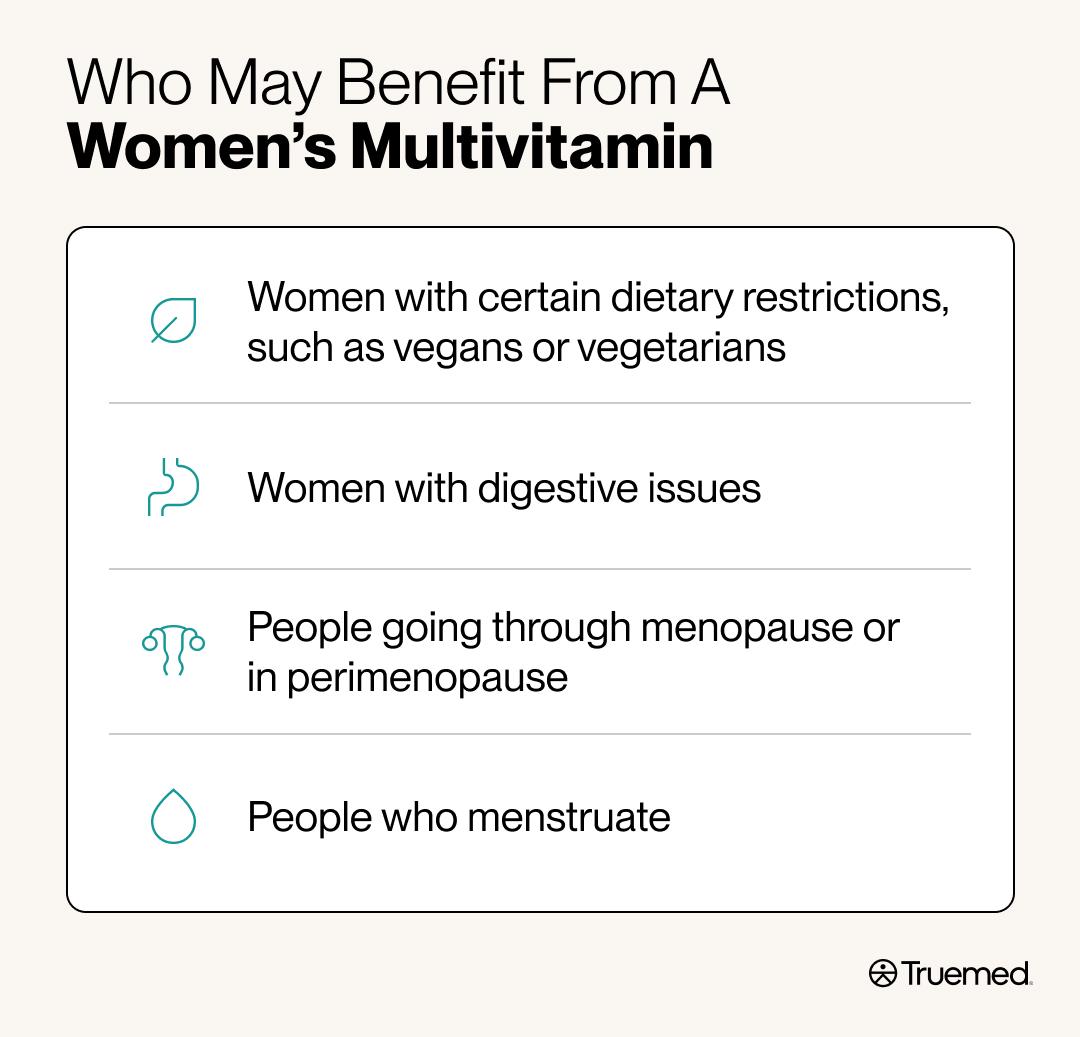
Here's a closer look at some of the specific cases when you might benefit from a multivitamin:
- Women with certain dietary restrictions, such as vegans or vegetarians. Women in this category may potentially benefit from a multivitamin because their diets are generally lower in vitamin B12, zinc, and iron, which are naturally occurring and more bioavailable in animal foods, says Volpe.
- Women with digestive issues. Women impacted by irritable bowel syndrome (IBS), inflammatory bowel disease, or celiac disease may have difficulty absorbing nutrients, even when eating a healthy diet. "Individuals with digestive conditions or medications that impair absorption may need additional nutritional support, ideally guided by clinical assessment and lab testing when appropriate rather than supplementation alone," says Levitt.
- Women over 50, those going through menopause or in perimenopause. Absorption of certain nutrients such as vitamin B12 tends to decline with age, while vitamin D and calcium needs for bone health become more important, says Levitt. Adequate calcium intake, primarily through diet, with supplementation when needed, along with vitamin D can help support bone health.
- Menstruating women. During their menstruating years, women need more iron than non-menstruating women. Women who have particularly heavy menstrual bleeding and are experiencing iron deficiency anemia, may need even higher therapeutic doses of supplemental iron.
"In these situations, a high-quality multivitamin can serve as a helpful nutritional foundation," explains Levitt. "However, it's important to remember that a multivitamin is not a treatment for a true deficiency. When laboratory testing confirms low levels of a nutrient such as iron, vitamin D, or vitamin B12, targeted supplementation at therapeutic doses is often necessary in amounts above what a typical multi-vitamin might provide."
When a multivitamin may not be necessary
Multivitamins are the most commonly used vitamins among Americans, but not everyone needs them. Levitt, who specializes in women's health, says she recommends them far less often than might be expected.
"Multivitamins are consistently one of the top-selling supplement categories among women," Levitt explains. "But most healthy women don't necessarily need a daily multivitamin. If you eat a varied diet that includes quality protein, vegetables, fruit, whole grains, healthy fats, and your digestive system is functioning well, you're likely getting most of the nutrients you need from food."
It may also be unnecessary—or even inappropriate—for women who are already taking several individual supplements to take a multivitamin. "Adding a multivitamin on top of those products can unintentionally lead to excessive intake of certain nutrients," says Kutka.
Similarly, women who are following complex medication routines or who have medical conditions requiring personalized guidance, may want to avoid taking multivitamins unless prescribed by a medical professional.
How needs change by age and life stage
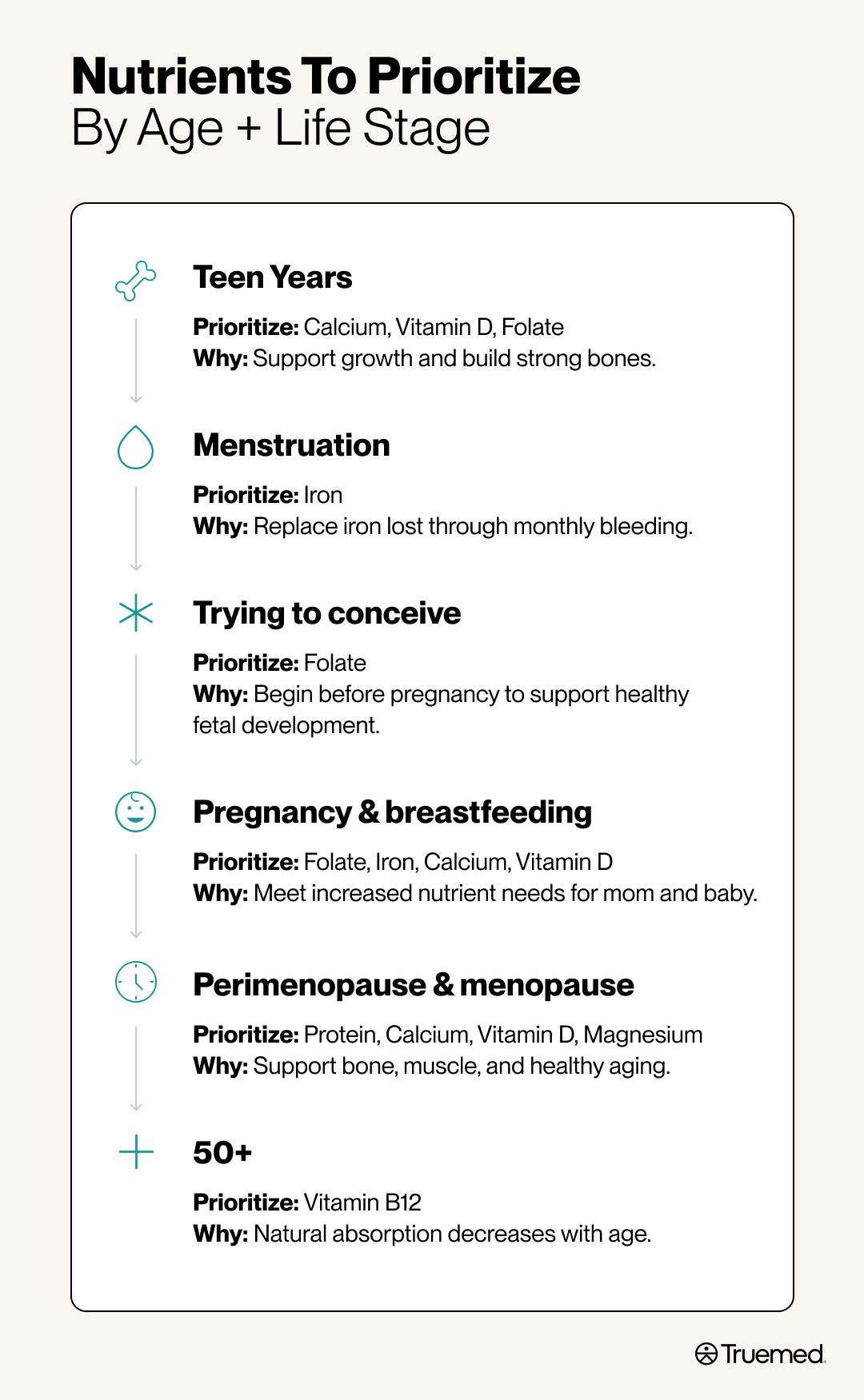
A woman's nutritional needs evolve throughout her life. For instance, during teenage years and even into early adulthood, growth, bone development, and menstrual cycles increase the need for nutrients such as calcium, vitamin D, and folate, says Kutka. "Many teens also consume diets high in processed foods and low in nutrient density, making it more difficult to meet those needs through food alone," Kutka adds.
When women begin menstruating, iron is an especially important nutrient as well, particularly for women with heavy periods, as losing blood on a monthly basis can deplete iron supply.
Women seeking to get pregnant also have different needs. In particular, they should ensure adequate folate intake before conception. The CDC recommends that women who could become pregnant consume 400 mcg of folic acid daily beginning before conception to reduce the risk of neural tube defects. Pregnancy and breastfeeding, meanwhile, increase requirements for numerous vitamins and minerals to support both mother and baby, Kutka says.
During perimenopause and menopause, attention often shifts toward supporting bone health, muscle health, and healthy aging. "Vitamin D, calcium, magnesium, and protein become increasingly important, while iron needs typically decline after menstruation stops," says Kutka.
After age 50—and especially after age 60—changes in digestion can reduce the body's ability to absorb nutrients such as vitamin B12. "Nutritional needs don't necessarily increase across the board, but the body's efficiency at absorbing certain vitamins decreases, making supplementation more beneficial for some women," says Kutka.
How to choose a good women’s multivitamin
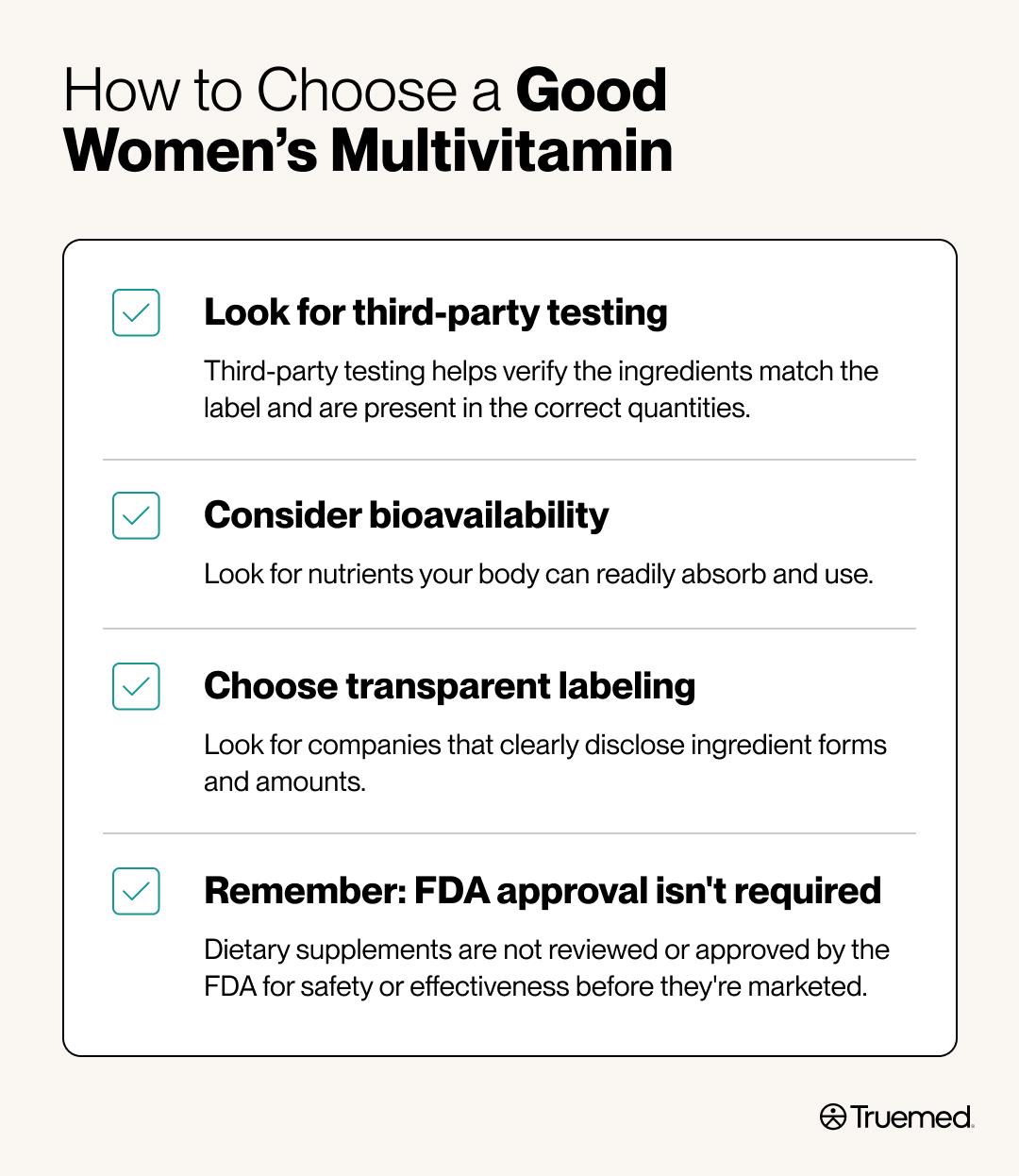
When shopping for a woman's multivitamin, it's important to know what to look for and how to select a quality vitamin. Unlike prescription medication, dietary supplements are not reviewed or approved by the FDA for safety or effectiveness before they are marketed. What's more, the FDA website explains that "generally, a firm does not have to provide FDA with the evidence it relies on to substantiate safety before or after it markets its product."
In addition, third-party testing is not required for vitamins and supplements. But there are vitamin manufacturers who ensure that this important review process takes place. When shopping for a multivitamin, it's a good idea to select an option that clearly states it has undergone this testing.
"A legitimate third-party testing verification helps verify product integrity, which means the ingredients in the actual product are congruent with what is listed on the ingredient label, and in the correct quantities," says Volpe.
"Since supplement companies and products are not formally regulated by the FDA, and there have been many cases of counterfeit supplement products being sold on the market, I would say opting for third-party tested multivitamins and other supplement products is not optional in this day and age," Volpe adds.
There are independent organizations such as NSF, United States Pharmacopeia (USP) and Consumer Lab that help verify a product contains the ingredients listed on the label and is free from significant contamination.
Bioavailability is also an important consideration when shopping for a multivitamin. Bioavailability is a term used to indicate how much of a supplement readily gets absorbed and used by your body, rather than just being excreted as waste.
Finally, look for transparency. "A good supplement company should clearly disclose ingredient forms and amounts, so you and your healthcare provider can evaluate whether the product is a good fit," advises Levitt. "The best multivitamin isn't necessarily the most expensive one…it's the one that safely fills the nutritional gaps you actually have."
Red flags to avoid when comparing women’s multivitamins
In addition to all of the shopping tips above, there are some red flags to watch out for when comparing women's multivitamins. That includes things like promising to prevent, treat or completely cure health conditions.
"Be cautious of any supplement that claims to prevent, treat, or cure a disease or health condition," says Levitt. "Legitimate dietary supplements are not allowed to make those types of claims, and doing so is a sign of poor regulatory compliance."
It can also be a good idea to avoid a multivitamin that requires extreme doses, particularly without clinician guidance.
"When it comes to multivitamins, more is not better– and could even potentially be very harmful. Our body maxes out at a certain amount of each vitamin and mineral that it can use at any given time," explains Volpe.
"Taking higher-than-needed doses of certain other vitamins and minerals can create biochemical imbalances in the body; for example, excess calcium supplementation has been shown to increase the risk of kidney stones for certain people," Volpe adds.
Still more red flags to note include multivitamins based on “proprietary blends” with unclear ingredient amounts and those with no clear supplement facts panel.
And as discussed above, it's a good idea to steer clear of multivitamins that have not undergone any meaningful quality-testing. The same goes for multivitamins that claim they can replace food, medical care, or targeted treatment.
Recommended multivitamins available on Truemed
Now that you know what to look for in a multivitamin, here are some potential options. But remember, no multivitamin is a one-size-fits all.
Preconception & Fertility
- One of the most comprehensive formulas available. WeNatal is designed specifically to support women before conception, during pregnancy, and throughout breastfeeding. It includes methylfolate, choline, iron, iodine, and higher levels of vitamin D than many traditional prenatal vitamins. For women actively trying to conceive, this supplement provides targeted nutritional support during a critical window of reproductive health. Higher pill burden and cost than some alternatives.
- Thorne Basic Prenatal offers high-quality ingredients and nutrients in a bioavailable form. It includes methylfolate, methylcobalamin B12, chelated minerals, and iron bisglycinate. This option can be a good choice for women who are seeking a well-established prenatal. It's important to note however that Thorne Basic Prenatal contains 45 mg of iron, which may be more than some women require and can contribute to constipation or gastrointestinal discomfort.
- Ritual Essential Prenatal is designed specifically for the prenatal period. It focuses on a smaller number of nutrients that are commonly underconsumed or particularly important during pregnancy, including methylated folate, choline, iodine, vitamin D3, vitamin K2, and omega-3 DHA. This option however, is less comprehensive than other prenatal formulas and may require additional supplementation depending on individual needs.
Pregnancy & Postpartum
- WeNatal for Her Prenatal is one of the most comprehensive formulas available. It's designed specifically to support women before conception, during pregnancy, and throughout breastfeeding. It includes methylfolate, choline, iron, iodine, and higher levels of vitamin D than many traditional prenatal vitamins. For women actively trying to conceive, this option provides targeted nutritional support during a critical window of reproductive health.
- Thorne Basic Prenatal provides high-quality ingredients and nutrients in a bioavailable form. It includes methylfolate, methylcobalamin B12, chelated minerals, and iron bisglycinate. It can be a good choice for women looking for a well-established prenatal. It contains 45 mg of iron, which may be more than some women require and can contribute to constipation or gastrointestinal discomfort.
- Ritual's Postnatal formula is designed specifically for women after delivery. It focuses on replenishing key nutrients such as DHA, choline, iodine, and vitamin D, which are commonly depleted during pregnancy and lactation. It's particularly well-suited for breastfeeding mothers seeking targeted postpartum nutritional support.
Menopause & Healthy Aging
- Metagenics PhytoMulti combines foundational vitamins and minerals with a substantial blend of phytonutrients, carotenoids, citrus bioflavonoids, and antioxidant compounds. For menopausal women focused on healthy aging, cognitive wellness, cardiometabolic health, and overall longevity, it is one of the most comprehensive daily multivitamins available. It does not contain iron, making it less suitable for women with iron deficiency.
- A multivitamin formulated specifically for postmenopausal women, Thorne Women's Multi 50+ removes iron and copper and shifts the nutrient profile toward bone integrity, metabolic support, and long-term cellular maintenance. It combines well-absorbed, activated nutrient forms with an emphasis on bone-related cofactors like vitamin K2, boron, magnesium, and calcium.
- Designed specifically for women over 40, this formula combines essential vitamins and minerals with superfoods, mushrooms, and vitamin K2. It offers a whole-food-inspired approach while still providing broad nutritional coverage. An age-specific formula that extends beyond basic nutrient replacement. The proprietary superfood blends add complexity, but many ingredients are included in relatively small amounts.
- For women who prefer a liquid supplement, MaryRuth's offers a convenient liposomal delivery system along with nutrients positioned to support hair, skin, and overall wellness. Its greatest advantage is simplicity and ease of use. This can be a good option for those who struggle with capsules or tablets. However, it is less comprehensive from a micronutrient standpoint than other formulations.
How It Works with HSA/FSA and Truemed
If a multivitamin turns out to be the right choice to support your health needs, it may be possible to use your HSA savings to pay for this supplement.
While HSA funds are generally designed to cover out-of-pocket medical expenses that are medically necessary to treat or prevent your disease, in some instances that can include paying for supplements if they're being used to treat a specific health problem. Plus, prenatal vitamins are always eligible for HSA/FSA spending.
If a health care provider has specifically prescribed a multivitamin, for instance, to treat anemia or to assist with getting enough nutrients if you have a digestive condition, then the expense can likely be paid for with HSA funds. A Letter of Medical Necessity (LMN) is typically required from your health care provider, however, in order to establish the medical need for the supplement and get reimbursed by your HSA for the expense.
Truemed specializes in helping you maximize your HSA and other health-related benefits. If you're curious about whether a multivitamin purchase might be covered by your HSA or FSA, a great place to start is by checking out potentially HSA/FSA-eligible products on Truemed.com. You may qualify to use HSA/FSA funds for your purchase and a Letter of Medical Necessity (LMN) from a licensed clinician can be used to document why a multivitamin is needed to treat a specific condition.
Truemed can guide you through this purchase process. Here's what it entails:
- When you click on a multivitamin product in the Truemed marketplace that you're interested in, you’ll be redirected to the merchant’s site. At that point, be sure you select "pay with HSA/FSA funds at checkout."
- Next, you’ll complete an intake survey that will be reviewed by an independent licensed health care provider. If the purchase is deemed medically necessary to prevent or treat disease, you’ll be able to obtain an LMN and pay with your HSA or FSA funds.
- You can purchase the item using your HSA/FSA card at checkout, or pay out of pocket and submit for reimbursement later. If you pay out of pocket, save the transaction receipts to submit to your HSA administrator for reimbursement.
*Truemed is for qualified customers. HSA/FSA tax savings vary. Learn more at truemed.com/disclosures
The bottom line
If you're eating a varied diet, made up of quality protein sources, vegetables, fruit, whole grains, healthy fats, and your digestive system is functioning well, you're likely getting most of the nutrients you need from food. But if your diet is not meeting your body's vitamin and micronutrient needs, a multivitamin may be helpful. But before proceeding, it's a good idea to talk with a health care professional and potentially even have lab testing done to confirm that a multivitamin is the best choice for you.
FAQ
There is no single best multivitamin for women. The best multivitamin for a woman's needs varies based on factors like age, health history, diet, medications being used and more.
Not necessarily. It really depends on the individual. While multivitamins can help some women get enough of the vitamins and minerals they need, many people are able to achieve that goal by eating a balanced diet made up of a variety of nutritious foods.
No. Expensive multivitamins are not necessarily better, according to experts. "While higher-quality multivitamin supplements generally tend to be more expensive, a higher price point doesn’t automatically mean a particular supplement formula is superior to others," says Jenna Volpe, RDN, LD, IFNCP, CLT, an integrative and functional registered dietitian with Whole-istic Living.



See what you can do with your HSA/FSA.
Join 1.5 million Americans who have routed their healthcare dollars toward root cause health via Truemed's HSA/FSA marketplace.
New product announcements
Sales and special offers
Tips for utilizing your HSA/FSA
Editorial Standards
At True Medicine, Inc., we believe better health starts with trusted information. Our mission is to empower readers with accurate and accessible content grounded in peer-reviewed research, expert insight, and clinical guidance to make smarter health decisions. Every article is written or reviewed by qualified professionals and updated regularly to reflect the latest evidence. For more details on our rigorous editorial process, see here.