
The Best Walking Shoes for Women
Author:Mia Taylor
Reviewed By:Bo Hickey, CSCS
Published:
June 14, 2026
Last Updated:
October 06, 2026
Truemed writers and editors independently evaluate all our product recommendations. If you make a purchase through any affiliate links we provide, we may receive compensation. Learn more.


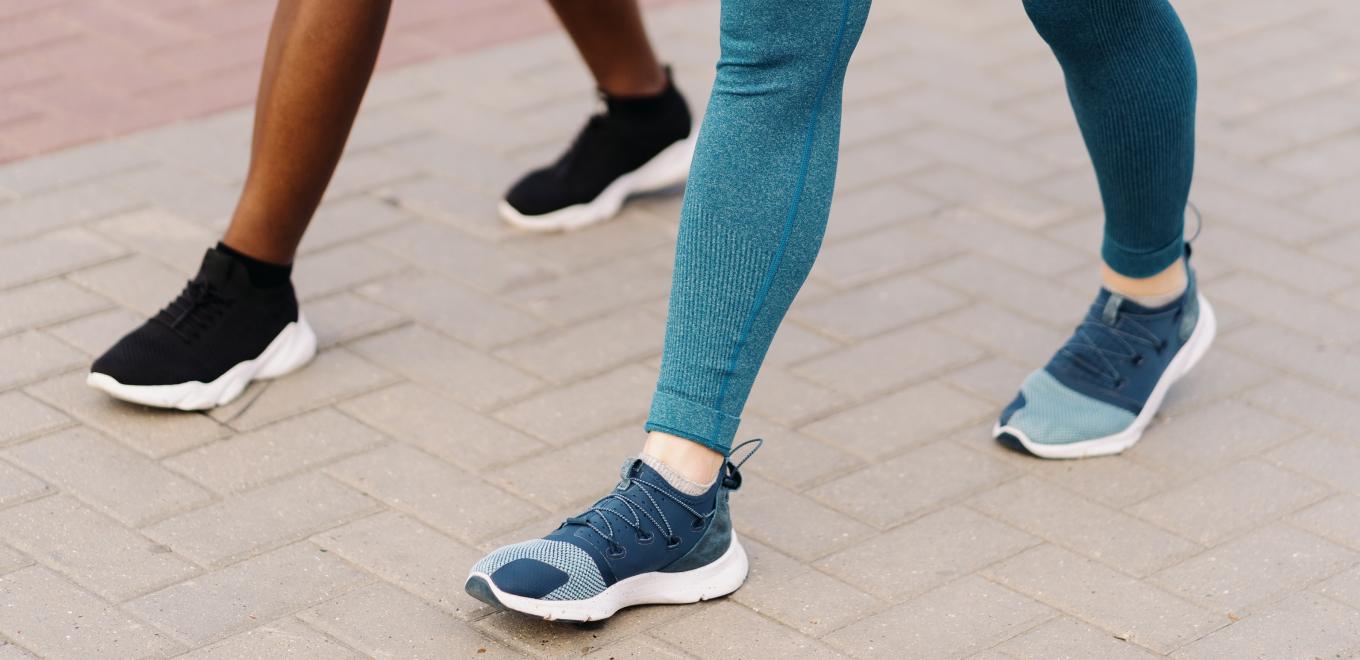
Nearly every single day, I go for a three-mile walk in my neighborhood to help reach my daily goal of 10,000 steps. And for years, I'd simply throw on any old pair of sneakers for this activity. It wasn't until I recently began experiencing various aches and pains in my feet, that I started to consider investing in a pair of shoes designed specifically for walking. But navigating the search for the right walking shoe was a little perplexing.
For starters, there are numerous brands, and styles of walking shoes. I also found myself uncertain about whether the best shoe for actively working toward my daily walking goals would also suffice for running errands, traveling and addressing specific aches and pains. Should I even try to find a single shoe for such varied needs? Or does it make more sense to prioritize buying shoes designed expressly for long walks? (And find a different pair for day-to-day living and errands.)
If you've found yourself sorting through similar questions, this guide is for you. It's designed to help you find the best walking shoes based on such considerations as comfort, walking habits, foot shape, and support preferences. We'll also cover cushioning, arch feel, toe-box room, stability, weight, and upper fit—all of which should also be a key part of your shopping process.
Before wrapping up, we'll also look at when a walking shoe purchase may be eligible for payment with your health savings account (HSA) or flexible spending account (FSA)funds through the Truemed platform.
Best walking shoes for women: how to find the right pair
My go-to approach to buying shoes has typically been to look for brands I'm familiar with and then find a style that appeals to me. That of course, is not what experts recommend if you actually want to end up with the best pair of walking shoes for your needs.
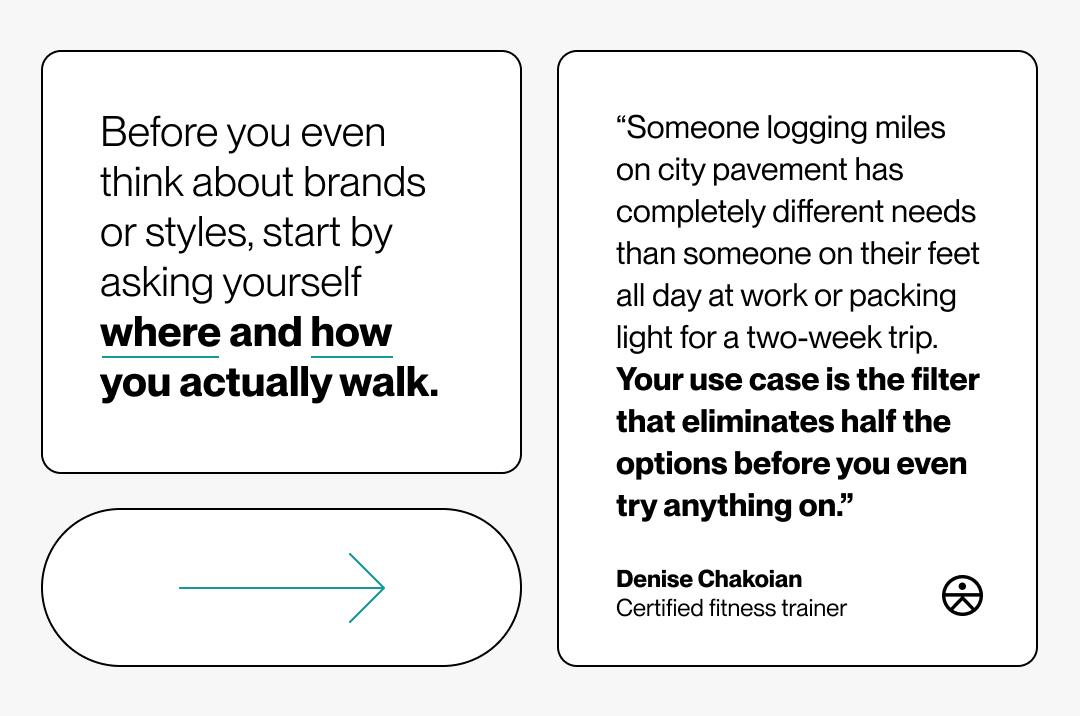
"Before you even think about brands or styles, start by asking yourself where and how you actually walk," says Denise Chakoian, a certified fitness trainer and owner of
Core Cycle and Fitness LaGree."Someone logging miles on city pavement has completely different needs than someone on their feet all day at work or packing light for a two-week trip. Your use case is the filter that eliminates half the options before you even try anything on."
Once you've thought about how you plan to use the shoes, the next step is to match the feel of the shoe with your preference. Meaning: Are you looking for an especially plush walking shoe? Or something more balanced? Or do you perhaps need a shoe that provides very structured support?
This question is where a lot of buyers go wrong, Chakoian points out. Many people buy a shoe simply because it looks good (raising hand). Or they may buy a shoe because a friend swears by it. Neither of these approaches are a good idea. Instead, you should seek out a shoe that actually feels right on your foot.
"Some people genuinely need that locked-in, structured feel to avoid pain, while others find anything too rigid exhausting to wear for hours," continues Chakoian. "Once you know whether you lean toward plush and cushioned or light and flexible, you can stop wasting money on shoes that aren't right for you."
There's one more consideration that can help guide you toward the best pair of walking shoes as well. It's foot shape. Are your feet narrow or average? Do you have a wide forefoot? Or swelling-prone feet? All of these questions impact how a shoe fits.
"Foot shape plays a major role in fit. Someone with a wider forefoot or swelling throughout the day will need a shoe with more room in the toe box. Ignoring this can lead to pressure, irritation, and discomfort during longer walks," says Sadia Ali, DPM, FACFAS with Ankle & Foot Centers of America.
The goal as you sort through all of these variables while shopping is to arrive at a shoe that feels good both on day one and after repeated wear.
What to look for in comfortable walking shoes
Now that we've covered the high-level basics for walking shoe shopping, let's look closer at some of the individual factors to pay special attention to. To help with this, we asked experts to weigh in on each of the factors below and explain why they're so critical when selecting a walking shoe.
- Cushioning level for pavement and long days: A comfortable walking shoe should have enough cushioning to absorb impact, especially on pavement. But too much cushioning should typically be avoided.
"Cushioning should absorb impact but still feel stable," explains Mikel Daniels, DPM, MBA, FACFAS, a board-certified podiatrist and CEO of WeTreatFeet Podiatry."If it feels like you are walking on a pillow, that sounds nice, but often leads to fatigue and results in pain."
- Stable base and secure heel hold: The experts were unanimous when discussing stability, describing it as arguably the most important factor in your walking shoe. This is especially true for those who have plantar fasciitis, posterior tibial tendon dysfunction, or fatigue with walking or overpronation, stressed Anne Sharkey, DPM, a board certified podiatrist with Solely Podiatry."The more support and stability the shoe provides, the less the individual has to depend on foot structures which results in reduced strain on the feet and lower extremities," explains Sharkey. " Many foot pains can be traced back to shoes that not supportive or too flexible." Features in a shoe that indicate it has good stability include a firm heel counter, supportive midsole and inability to “twist” the shoe. A shoe should bend where the toes bend (at the ball of the foot) but it should not be able to be twisted like a dish rag or folded in half through the arch, adds Sharkey.
- Toe-box room for natural toe splay: This important feature of your walking shoes should not be ignored. Toe-box room is the front part of your walking shoes, where your toes are located. The goal should be to find a shoe that offers enough space for your toes to move and spread naturally. Wide toe-boxes are a non-negotiable for proper fitting walking shoes, says Milica McDowell DPT, author and exercise physiologist with US Physical Therapy.
"This is the most critical feature for having a shoe that allows your foot to function most naturally. You want a shoe that is shaped like your foot, not a shoe that is shaped like an arrow," says McDowell.A cramped toe-box can cause you to develop blisters, bunions, and more.
- Breathable upper shoe: At the risk of stating the obvious, the upper part of a walking shoe should be breathable. But what does that really mean in practice? The shoe's design should easily allow air to pass through, which in turn, regulates your foot's temperature. Breathable shoes also help to avoid excess moisture buildup.
"The foot should feel supported and secure without being overly tight or compressive," says Sharkey.
- Outsole grip for city walking and mixed surfaces: Cities throw everything at you, wet pavement, subway grates, uneven sidewalks, so a solid rubber outsole with some texture is non-negotiable. "A flat or worn-down sole might look sleek, but it becomes a liability the moment it rains," says Chakoian.

Common walking shoe mistakes to avoid
So you've done your research and you know what to look for in a walking shoe. That's great news. But before you start shopping, keep these common mistakes in mind to help ensure you walk away with the best possible shoe option.
Buying based on brand loyalty alone
We all have our favorite brands and shoe makers, but remaining too loyal, at the expense of comfort and functionality, can be a mistake. You should ideally focus on finding a shoe that addresses your needs and goals. "I see the same mistakes over and over. People come in saying 'I only wear this brand,' even when the model clearly does not fit their foot," says Daniels. Remember, the feet change as we age. I’ve seen it after pregnancies, after injuries, even just with age."
Choosing ultra-soft cushioning without enough stability
Walking on a cloud feels amazing in the short term, but over the long term you're depriving sensory nerve endings of the stimulus they need, advises Perez. "If you were to walk out of a movie on a bright sunny day, the sun would feel blinding. Not because the sun is now suddenly dangerous, but instead because when you sat in the dark your eyes turned up the volume on your receptors to be able to see. This happens with our feet too," Perez explains. "If we are constantly putting our feet into soft socks and very plush shoes, our sensory nerves may start to turn up the volume to try to feel something and as soon as we take these shoes off, our feet can be very sensitive and the ground can feel scary."
Ignoring toe-box fit and swelling later in the day
Ignoring toe box fit is another common mistake that Daniels has seen often in his practice. "I had a patient who kept getting tingling in her toes. Turned out her shoes were just too narrow once her feet swelled during the day," he explains. The patient in question was wearing a fashionable but narrow shoe that did not provide appropriate toe-box space. "Lots of fashionable shoes are just not built for long walking, or some foot types," adds Daniels.
Keeping worn-out shoes too long after support fades
Hanging on to shoes long after the support has ceased to be functional is a serious problem. McDowell says this habit can even put you at risk for injuries. Once the midsole breaks down, you're essentially walking on flat foam with zero support. This can affect your knees, hips, back, and feet.
"Shoes are only designed for 3 to 400 miles of walking," McDowell explains. "A pro tip is to write the date that you purchased the shoe on the shoe in an inconspicuous place, so you can refer back and calculate how much mileage is on your shoe."

Recommended Truemed walking shoes
Now that you know what to look for in women's walking shoes, let's cover some of the best options available.
- Best for: Kuru's ATOM 2 shoes are best for readers who want an everyday walking shoe that can handle errands, long days, and mixed daily use.
- Features: balanced comfort, versatile styling, and walking-friendly support.
- Best for: The Footwear FLEX is a flexible, wear-everywhere shoe for casual walking and daily use.
- Features: lighter structure, versatile look, and all-day comfort framing, which can be a good choice for those who dislike bulkier walking shoes.
- Best for: Altra's Running Experience Flow 3 is a good choice for readers who are seeking a roomy toe box and a natural-feeling shape for frequent walking.
- Features: Foot-shaped comfort, everyday mileage, and smoother stride language.
- Best for: Readers who prioritize softer cushioning to support longer walks and more repetitive pavement time.
- Features: Plush comfort, toe-box room, and higher-mileage walking support.
- Best for: The APOGEE offers a more casual everyday sneaker feel with walking-friendly comfort.
- Features: This walking shoe offers lifestyle styling, heel comfort, and daily wear support.
When walking shoes may be worth discussing with a healthcare provider
There are indeed times when it can make sense to discuss walking shoes with a healthcare provider. For instance, if you're experiencing ongoing foot pain, heel pain or numbness in the toes, then it's likely time to speak to a medical professional, says Daniels. "Don’t just keep switching shoes and hoping it resolves. I’ve had patients try five or six pairs before coming in, and by then the problem is more difficult to treat as some damage has been done," he explains.
Additionally, if you feel unsteady or experience discomfort after even short walks, that's another sign that something may be off. Sometimes the culprit is the shoe and sometimes the problem is how the foot is functioning.
Individuals whose walking tolerance has changed over time may also want to check in with a healthcare provider for guidance. "This can happen after a pregnancy, after a knee or ankle injury, or just over time," says Daniels. "Those are moments where the 'old reliable' shoe suddenly is not so reliable anymore. Since your foot can change, the shoe type also may need to change."
If you're someone who has been told you need orthotics in the past, it's important to check in periodically with a healthcare provider as well, as this requirement may change over time.
"Just because someone told you you need inserts years ago doesn't necessarily mean you still need them so it's important to assess this yearly with a qualified healthcare provider," says McDowell.
How It Works with HSA/FSA and Truemed
Walking shoe purchases do not automatically qualify for HSA or FSA benefits because can be a general fitness item. And general fitness or personal wellness purchases do not fall within the IRS criteria for allowable use of the funds in either type of account.
But there are scenarios where a walking shoe could be eligible for HSA or FSA benefits. If the shoes are a necessary part of the treatment or management of a diagnosed medical condition, then you may be able to tap into those HSA or FSA funds you've been busy setting aside and use them to cover the cost of your shoe purchase. Examples might include when the walking shoe in question is being used to address musculoskeletal or foot-related issues like plantar fasciitis. Additional conditions that might qualify range from achilles or tendon problems to gait abnormalities and bone issues like heel spurs or bunions.
If you're curious about whether a walking shoe purchase might be covered by your HSA or FSA, a great place to start is by checking out potentially HSA/FSA-eligible footwear on Truemed.com. You may qualify to use HSA/FSA funds for your purchase and a Letter of Medical Necessity (LMN) from a medical provider can be used to document why the shoes are needed to treat a specific condition.
Truemed can guide you through this purchase process. Here's what it entails:
- When you click on walking shoes on the Truemed marketplace that you're interested in, you’ll be redirected to view the shoes on the merchant’s site. At that point, be sure you select "pay with HSA/FSA funds at checkout."
- Next, you’ll complete an intake survey that will be reviewed by an independent licensed healthcare provider. If the purchase is deemed medically necessary to prevent or treat disease, you’ll be able to obtain an LMN and pay with your HSA or FSA funds.
- You can purchase the item using your HSA/FSA card at checkout, or pay out of pocket and submit for reimbursement later. If you pay out of pocket, save the transaction receipts to submit to your HSA administrator for reimbursement.
Equally importantly, Truemed also offers support in the event you get a denial of reimbursement and need to provide substantiation documentation.
*Truemed is for qualified customers. HSA/FSA tax savings vary. Learn more at truemed.com/disclosures
The bottom line
Before you head out to buy that next pair of walking shoes, be sure to do your research first. This guide is a great starting point and can help you sort through the many options on the market today. Some of the most important criteria to focus on while shopping include fit, support, cushioning and stability. It's also best to avoid making decisions based on factors that do not support functionality, such as style or brand loyalty. And if you still have questions about the best choice for your goals and needs, consider consulting with a healthcare professional.
FAQ
There is no one size fits all "best" option for all women. Everyone has unique needs, goals and use cases. The best shoe to address those things will vary from person to person. To find what may be the "best" shoe for your needs, pay attention to such key factors as fit, support, cushioning and stability. "The shoe should feel comfortable right away, with enough room in the toe box to allow natural movement without pressure. Stability is also important, especially for people who will be walking on hard surfaces for extended periods. Cushioning matters, but more cushioning is not always better," says Sadia Ali, DPM, FACFAS with Ankle & Foot Centers of America. "A balanced shoe that combines support, cushioning, and proper fit tends to provide the best overall comfort."
Experts say there are differences between walking sneakers and running shoes. In particular, walking shoes and running shoes are built for two different movements, even though they may look similar at first glance. "Walking shoes are designed for a slower, more controlled heel-to-toe motion. They tend to have a lower heel height, more flexibility through the forefoot, and enough cushioning to absorb lower level impact (less force)," explains Mikel Daniels, DPM, MBA, FACFAS, a board-certified podiatrist and CEO of WeTreatFeet Podiatry. Running shoes, on the other hand, are built for higher impact and forward momentum. They typically have more cushioning, with a higher heel-to-toe drop. They're built for shock absorption, so that they can handle the force when your foot strikes the ground. Many running shoes also include features that help with propulsion and energy return.
In some cases, you may be able to use HSA or FSA funds to cover the cost of walking shoes. While walking shoes don't automatically qualify for HSA or FSA benefits (because they're a general fitness item), if the shoes are a necessary part of the treatment or management of a diagnosed medical condition, then you may be able to pay for them with HSA or FSA funds.

Editorial Standards
At True Medicine, Inc., we believe better health starts with trusted information. Our mission is to empower readers with accurate and accessible content grounded in peer-reviewed research, expert insight, and clinical guidance to make smarter health decisions. Every article is written or reviewed by qualified professionals and updated regularly to reflect the latest evidence. For more details on our rigorous editorial process, see here.