
Creatine Benefits: Who Can Benefit From It and Why?
Author:Jennifer Chesak
Reviewed By:Katherine Janosz, MD
Published:
July 15, 2026
Last Updated:
October 06, 2026



Key Takeaways
Creatine: Helps recycle ATP, your body’s primary cellular energy source, for improved exercise performance, adaptation, and recovery. It also may support brain energy, metabolism, and certain aspects of cognitive function.
What to look for: Creatine monohydrate products are the most studied, and third-party certifications offer added peace of mind.
Truemed: specializes in helping you maximize your FSA, HSA, and other health-related benefits.
Shop Eligible Products
Ready to unlock your HSA/FSA funds for qualified medical expenses?
Chances are that the word “creatine” brings to mind images of gym locker rooms, barbells, and buff bodies. True, creatine supplements are commonly used in strength-training regimens for their muscle-supporting benefits. But creatine has been studied for a range of potential benefits, from exercise performance and recovery to muscle growth and cognitive function.
If you’ve been thinking about adding creatine to your routine, you might be surprised to learn that you may be able to use your health savings account (HSA) or flexible spending arrangement (FSA) dollars to offset the cost of this supplement if you’re using it to affect the structure or function of your body, or address a specific medical condition that creatine could help. This depends on your plan’s rules and other factors.
In this article, we break down what the research says about creatine benefits, who may benefit most, potential side effects, and what to know before taking it.
How creatine works in the body
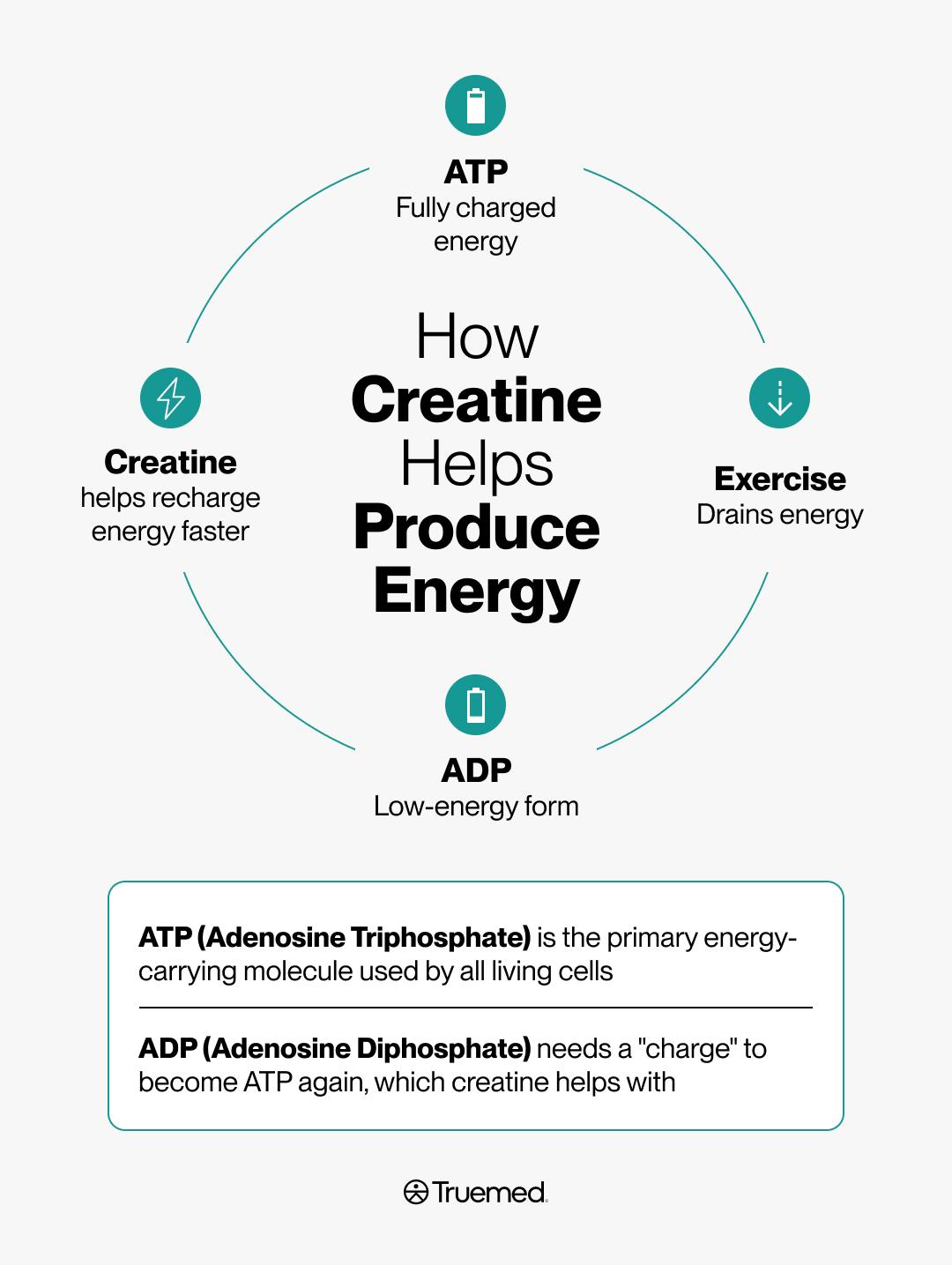
Creatine is a natural compound produced in your body, and you get it from certain foods in your diet. You mostly store creatine in your muscles, which then convert the compound to phosphocreatine, a combination of phosphate and creatine.
Phosphocreatine helps recycle adenosine triphosphate (ATP), your body’s primary source of cellular energy. During high-intensity exercise, ATP is rapidly broken down into adenosine diphosphate (ADP). Phosphocreatine helps convert ADP back into ATP, helping maintain energy availability during short bursts of intense activity.
“Creatine is one of the best researched sports supplements,” says Mariam Zakhary, DO, a clinical advisor for Ikon Recovery Center and a physical, rehabilitation, and sports medicine physician.
To sum it all up, she says, “Creatine increases muscle’s capacity to store phosphocreatine, which is then able to convert ADP into ATP at a faster rate. The result is an increase in strength, increased power output, ability to complete a higher amount of training per week, and an increase in muscle mass through resistance training.”
8 Evidence-backed benefits of creatine
You might be wondering about what research says about creatine supplementation or where the evidence is most robust.
The following benefits are noted in a 2025 research review, published in the journal Nutrients.
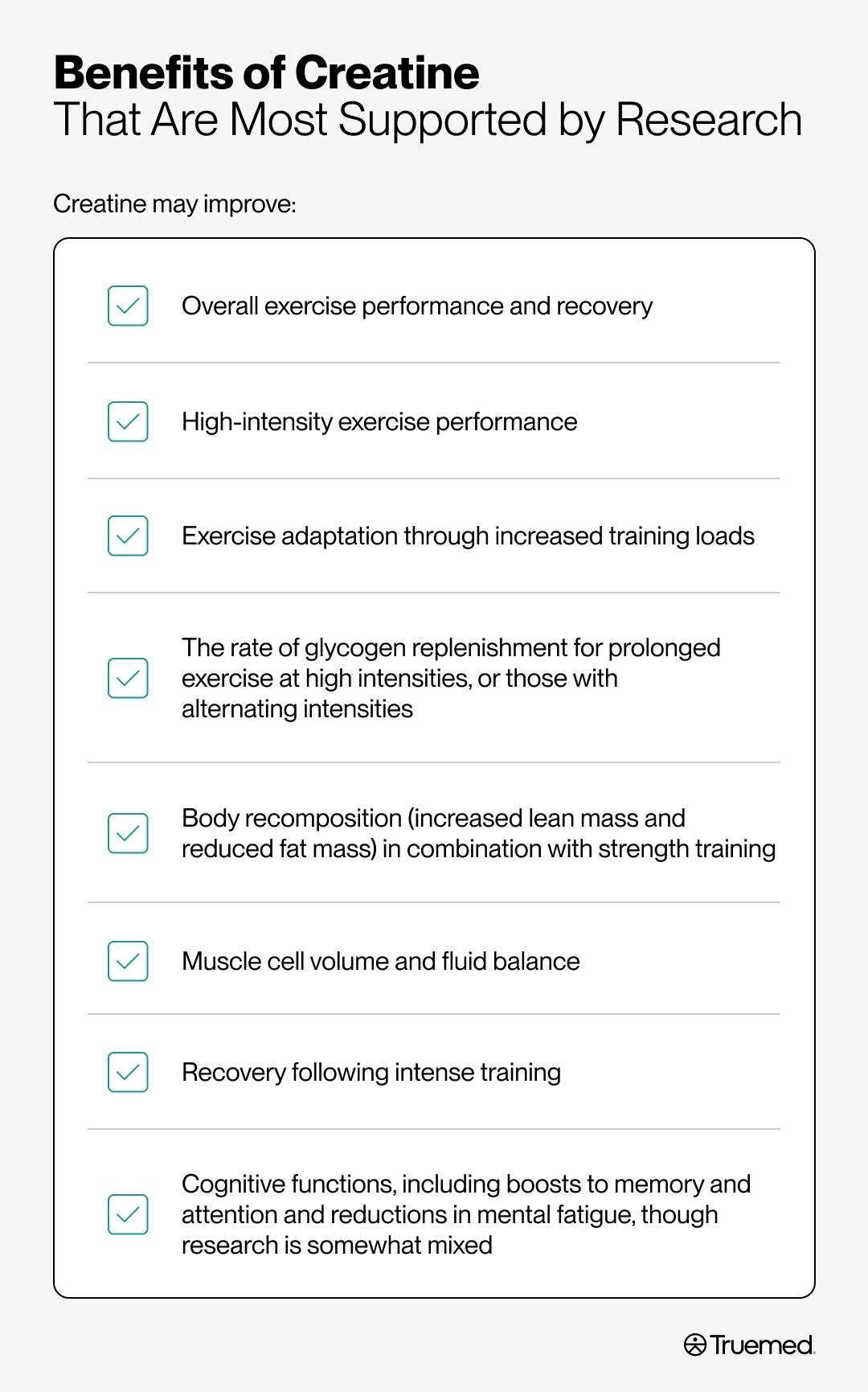
Research suggests creatine may support:
- Overall exercise performance and recovery
- High-intensity exercise performance
- Exercise adaptation through increased training loads
- The rate of glycogen replenishment for prolonged exercise at high intensities, or those with alternating intensities
- Body recomposition (increased lean mass and reduced fat mass) in combination with strength training
- Muscle cell volume and fluid balance
- Recovery following intense training
- Cognitive functions, including boosts to memory and attention and reductions in mental fatigue, though research is somewhat mixed
If you’re considering adding creatine to your routine, check out our guide to the best creatine supplements to learn what to look for and how to choose the right option for you.
Who may benefit the most from creatine supplements
Many people may benefit from taking a creatine supplement, not just gym regulars. This is especially true for people who fall into the following categories.
People who are physically active
Exercise places energy demands on your body, so your muscles use creatine to produce ATP from ADP quickly. During exercise, muscles rely more on phosphocreatine to regenerate ATP. High-intensity exercise utilizes phosphocreatine stores, which must be replenished afterward. Supplementation helps increase intramuscular creatine and phosphocreatine stores, supporting repeated bouts of intense exercise.
If you’re physically active, you may have higher creatine demands. This is true whether you strength train, do high-intensity interval workouts, play team sports, or endurance train, according to research in the journal Nutrients.
Vegans or vegetarians
Additionally, if you’re strictly vegan, you do not get creatine from diet, though your body still makes half your needs. You also might not get enough creatine from your diet if you stick mostly to plant foods, according to research in Frontiers in Nutrition.
People undergoing the menopause transition
During and after menopause, creatine supplementation may help. Creatine has mostly been studied for the male body. But some research points to improvements in strength and exercise performance in females, according to a journal article in Nutrients.
Maintaining and building muscle mass during this life change is important because estrogen loss tends to ramp up age-related muscle loss.
Emerging evidence suggests creatine may help support cognitive function and mood during the menopause transition, although larger clinical trials are still needed.
People concerned about cognitive function
Some evidence suggests creatine may support memory, attention span, and information-processing speed in some adults, according to a study in Frontiers in Nutrition. Research is still mixed on whether creatine supplementation could help protect against neurodegenerative conditions, such as Alzheimer’s disease.
Who should be cautious before taking creatine?
Anyone who is considering taking a creatine supplement should consult their health care provider first. This is especially true for those with underlying conditions or who take prescription or over-the-counter medications or supplements.
Creatine is generally not recommended for people who:
- Have kidney disease
- Have endometriosis
- Are under 18
- Are pregnant or nursing
- Take diuretics
- Take medications that may affect kidney function (such as prolonged NSAID use)
Creatine side effects
Creatine may cause some side effects, though these are generally mild. According to research in Frontiers in Nutrition, common side effects include:
- Abdominal discomfort
- Bloating
- Diarrhea
- Water weight gain in muscles
You may be able to mitigate these side effects by skipping the loading dose. Some creatine protocols recommend taking a high loading dose of 20 grams per day for the first week, followed by 5 grams per day going forward for maintenance.
But the loading dose phase may increase your risk of side effects. You can simply start with the maintenance dose, according to an article in the Journal of the International Society of Sports Nutrition. Or start with even less and see how you react.
“Gradually increasing your dose, taking creatine with food, and spreading out the dose throughout the day can reduce side effects such as bloating, abdominal cramps, and diarrhea,” says Jared Ross, MD, an emergency medicine physician, assistant professor at the University of Missouri, and the founder and president of EMSEC, LLC, a medical consulting company.
If your provider has recommended the supplement, follow their directions for how to take creatine to best support your needs.
FAQ
No, creatine is not a steroid. It is a natural compound your body makes from amino acids and that you get from eating certain animal and seafood products. When taken as a supplement, it is a synthetic substance made in a lab from the chemicals sodium sarcosinate and cyanamide.
No, creatine does not increase body fat. Some people experience a small increase in body weight due to increased water stored within muscle cells, particularly during the first few weeks of supplementation. If you stop taking creatine, you will naturally excrete the excess water weight through urine and sweat.
Yes. While many of creatine's muscle-performance benefits are greatest when combined with resistance training, creatine may still support brain energy metabolism and may help preserve muscle in certain populations, such as older adults or during periods of inactivity.
Creatine can be HSA/FSA eligible, but it depends on how it's being used. Under IRS rules, over-the-counter supplements like creatine aren't automatically qualified medical expenses just because they're available for purchase. To use HSA/FSA funds, you generally need a Letter of Medical Necessity (LMN) from a licensed provider connecting the supplement to a specific health condition — for example, using it to support muscle mass and strength related to a diagnosed condition (like sarcopenia or age-related muscle loss), aid recovery from an injury, or as part of a broader treatment plan for a qualifying condition.



See what you can do with your HSA/FSA.
Join 1.5 million Americans who have routed their healthcare dollars toward root cause health via Truemed's HSA/FSA marketplace.
New product announcements
Sales and special offers
Tips for utilizing your HSA/FSA
Editorial Standards
At True Medicine, Inc., we believe better health starts with trusted information. Our mission is to empower readers with accurate and accessible content grounded in peer-reviewed research, expert insight, and clinical guidance to make smarter health decisions. Every article is written or reviewed by qualified professionals and updated regularly to reflect the latest evidence. For more details on our rigorous editorial process, see here.