
Is Brick HSA/FSA Eligible? What to Know About the Latest Focus Tool
Author:Kennedy Coleman
Published:
August 04, 2026


Key Takeaways
Brick eligibility isn't automatic: Whether Brick qualifies for HSA/FSA funds depends on your individual health needs and documentation, not on the product alone.
A Letter of Medical Necessity (LMN) is the mechanism: For dual-use products like Brick, an independent licensed clinician may issue an LMN connecting the purchase to a qualifying condition, such as ADHD or anxiety.
Truemed simplifies the process: Truemed integrates the eligibility questionnaire and LMN process directly into checkout, so qualified customers can pay with HSA/FSA funds without extra paperwork.
Qualified customers save an average of 30%: Because HSA/FSA funds are pre-tax, using them for an eligible purchase like Brick can bring the effective cost down significantly, if qualified.
Shop Eligible Products
Ready to unlock your HSA/FSA funds for qualified medical expenses?
What Is Brick?
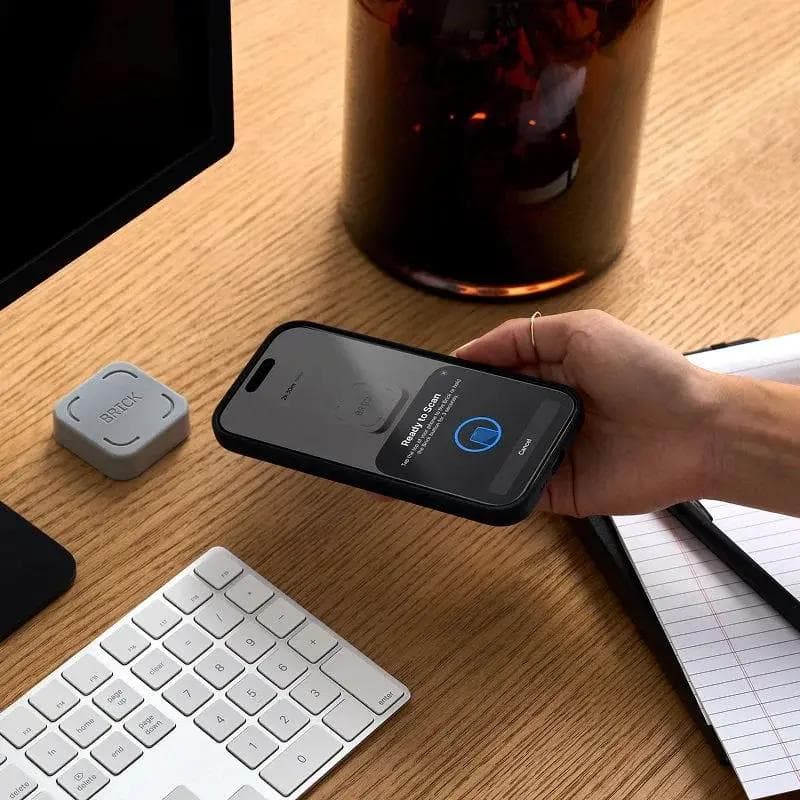
Brick is a small, tap-to-unlock hardware device that pairs with an app on your phone. Using NFC technology (the same short-range wireless tech behind contactless payments), you tap your phone to the physical Brick to lock a set of apps you've chosen, and tapping again is the only way to unlock them. Because the "off switch" is a physical object rather than a setting on your phone, it's harder to casually override than a software-only blocker, which is part of why it's become popular with people who've tried app-based limits and found ways around them.
Brick also offers a scheduling feature where you can “Brick” yourself out of certain apps on a pre-determined schedule. For example, you may realize that social media apps have become distracting during the workday, so you could choose to automatically lock yourself out of things like Instagram and TikTok from 9am to 5pm, Monday through Friday. You may instead decide that you’re spending too much time on shopping apps before bed and choose to lock yourself out of Amazon or Target apps after 6pm. Those are just a couple of examples of how Brick can help people take their time back from apps that may command too much attention from particular people.
Is Brick HSA/FSA Eligible?
Focus and attention tools aren't automatically classified as medical products just because they're marketed for health. HSA/FSA eligibility for a dual-use product like Brick typically requires documentation tying the purchase to a qualifying health condition. A few health conditions that may necessitate focus aids like Brick include ADHD, anxiety, or another diagnosed attention or focus-related concern.
That documentation usually takes the form of a Letter of Medical Necessity (LMN), which an independent licensed clinician may issue after reviewing your individual health history and needs. For example, a person who has been diagnosed with ADHD may require a focus aid like Brick to get through day-to-day tasks like their job or schoolwork. For another person without a diagnosed condition that affects attention and focus, Brick may just be a nice health tool to help them cut back on social media usage. That's the key thing to keep in mind: HSA/FSA eligibility is person-dependent, not necessarily product-dependent. What is medically necessary for one person may just be a nice wellness gadget for another.
How to Buy Brick with HSA/FSA Funds, if Qualified
Truemed* is a platform that facilitates this process directly at checkout for thousands of health brands, including Brick. Here’s how it works:
- Check eligibility first. Confirm whether a product is normally a qualifying medical expense on its own, or whether it falls into the category of products that require an LMN, like Brick.
- Complete a health intake survey, reviewed by an independent licensed clinician. Truemed does not make eligibility determinations, the clinician does.
- Buy the item. Pay directly with your HSA/FSA card at checkout, or pay another way and seek reimbursement afterward.
- Get your determination. The independent clinician reviews your medical history and, if you qualify, issues an LMN tied to your specific condition.
- Keep your documentation. Truemed offers support if you receive a reimbursement denial and need to provide substantiation.
*Truemed is for qualified customers. HSA/FSA tax savings vary. Learn more at truemed.com/disclosures.
Brick vs. Opal (and Other Screen-Time Tools)
If you're comparing Brick to software-only alternatives, like Opal, before buying, here's the practical difference:
| Brick | Opal | |
|---|---|---|
| Type | Physical NFC device + app | Software only |
| Cost structure | One-time hardware cost, commonly cited at around $59 | Subscription, commonly cited around $19.99/month or $99/year for premium tiers |
| How it blocks | Tap-to-lock/unlock; can't be bypassed through phone settings alone | Scheduled blocks and "Deep Focus" sessions, enforced entirely in software |
| Best for | People who've already tried software blockers and found workarounds | People who want detailed usage analytics and don't need physical friction |
| HSA/FSA eligibility | May qualify with a Letter of Medical Necessity via services like Truemed | Eligibility depends on the specific plan and product classification — check before assuming |
If you're looking to invest in a tool to help improve focus, time management, or anxiety caused by excessive screen time, either Brick or apps like Opal may be a great choice. Some people find they benefit more from the physical barrier Brick creates between themselves and the distraction, which can make it the better choice, but it really comes down to whether physical friction or software analytics matters more for how you actually use your phone.
And remember: if qualified, Brick's one-time hardware cost may be partially offset by paying with pre-tax HSA/FSA funds. Qualified customers save an average of 30% when paying this way, which can bring Brick's $59 hardware cost closer to $41 for some people.
FAQ
Not necessarily a prescription in the traditional sense, but you typically do need documentation, most commonly a Letter of Medical Necessity, connecting the purchase to a qualifying health condition. A service like Truemed can help facilitate that documentation, if qualified.
This varies by provider and individual circumstances, but conditions like ADHD, anxiety, or other diagnosed attention-related concerns are commonly cited. A licensed clinician makes this determination on a case-by-case basis.
Sometimes, depending on your plan's rules and whether you can obtain the necessary documentation after the fact. Check with your HSA/FSA plan administrator directly, since policies vary.
Sometimes the brand will run sales where you can save on the device using a promo code at checkout. Another smart way to save on Brick without waiting for a sale to come around is to pay with HSA/FSA funds, if qualified, since those dollars are pre-tax, saving customers an average of 30% compared to paying out of pocket.



See what you can do with your HSA/FSA.
Join 1.5 million Americans who have routed their healthcare dollars toward root cause health via Truemed's HSA/FSA marketplace.
New product announcements
Sales and special offers
Tips for utilizing your HSA/FSA

Editorial Standards
At True Medicine, Inc., we believe better health starts with trusted information. Our mission is to empower readers with accurate and accessible content grounded in peer-reviewed research, expert insight, and clinical guidance to make smarter health decisions. Every article is written or reviewed by qualified professionals and updated regularly to reflect the latest evidence. For more details on our rigorous editorial process, see here.