
Are Insoles FSA Eligible?
Author:Kennedy Coleman
Published:
July 22, 2026
Last Updated:
October 06, 2026


Key Takeaways
Insoles are a recognized medical expense: The IRS treats them as medical care, so many types of insoles are eligible through an FSA, HSA, or HRA.
Some are preapproved, some need a letter: Clearly medical or orthotic insoles often go straight through at the register, while comfort-and-performance insoles typically require a letter of medical necessity (LMN).
A letter documents medical necessity, it doesn't create it: No LMN can make general-comfort insoles eligible; the insoles have to be treating an actual condition like plantar fasciitis, flat feet, or diabetes, for example.
Truemed builds the LMN step into checkout: For insoles that are not automatically eligible, Truemed can help facilitate the letter of medical necessity process for qualified customers.
Key Takeaways
It depends on what kind of insole you're buying
The comfort myth: no, you can't expense your sneakers just because they feel great
When you need a letter of medical necessity
Which foot conditions actually qualify?
FSA vs. HSA vs. HRA: does it matter for insoles?
What about custom orthotics and orthopedic shoes?
How to actually buy insoles with your FSA or HSA
HSA/FSA eligible insoles available through Truemed
FAQ
Shop Eligible Products
Ready to unlock your HSA/FSA funds for qualified medical expenses?
It depends on what kind of insole you're buying
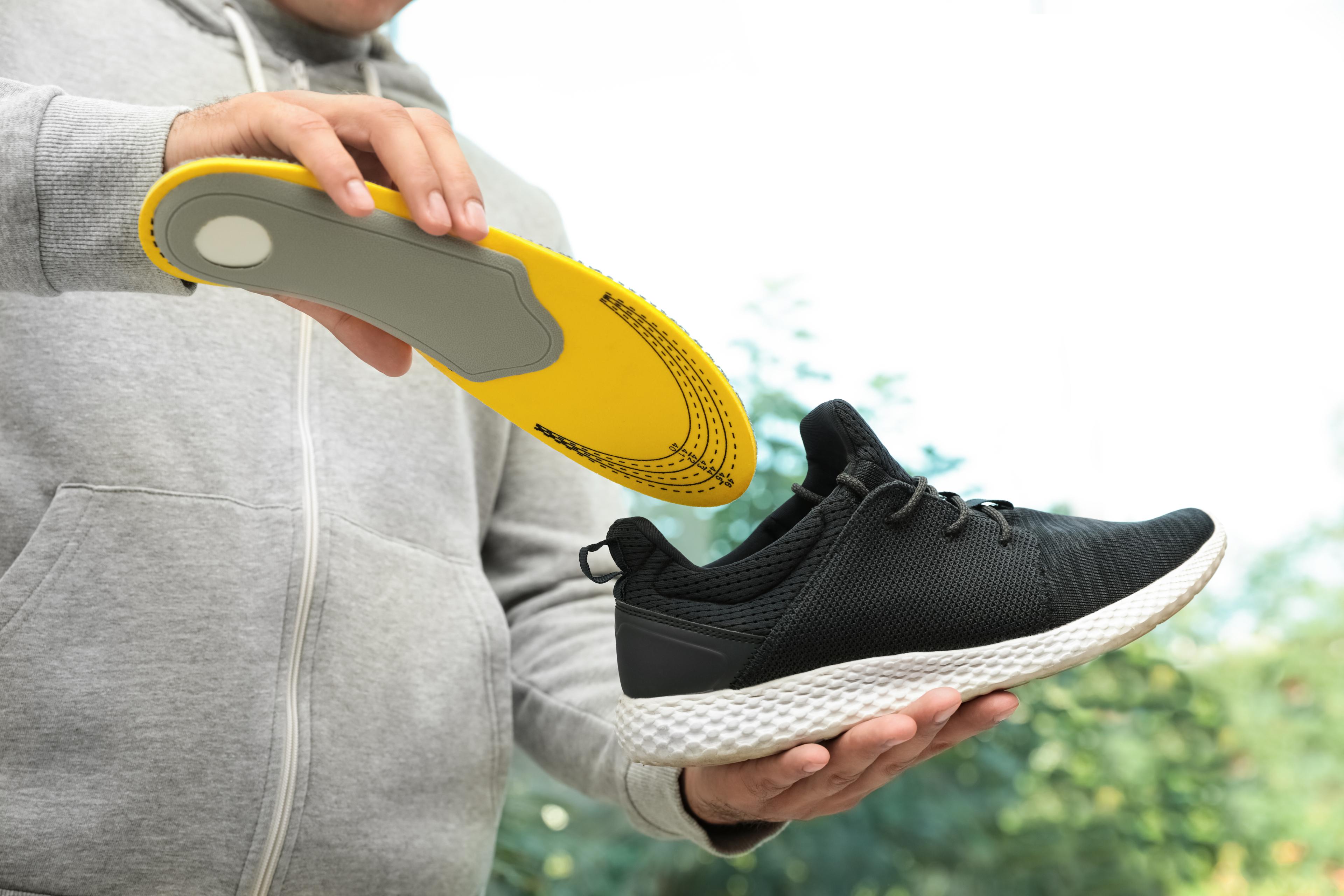
The word "insole" covers a surprisingly wide range of products, and eligibility slides along with it. Think of it as a spectrum:
Custom orthotics sit at the easy end. If a podiatrist molds or prescribes orthotics for you, they're almost always eligible because they're individualized medical devices tied to a diagnosis, full stop. This is the least ambiguous category there is.
Over-the-counter medical and orthotic insoles are the big middle, and this is where "a lot of insoles are automatically eligible" comes from. Arch supports, heel cups, and prefabricated orthotic inserts are recognized by the IRS as devices that support or correct foot structure, which is exactly what makes them medical care. When a product is clearly built and marketed to treat something like plantar fasciitis relief, overpronation control, or diabetic cushioning, plenty of plans will approve it at the register with no documentation required. Many retailers even flag these as HSA/FSA-eligible right on the product page, and eligible items sail through checkout automatically.
Plain comfort cushioning is the gray end. Gel pads, carbon fiber insoles, and squishy inserts marketed for comfort or performance are technically “dual-purpose.” This means they can serve both a general and a medical need depending on the individual health situation. That dual-purpose status is what can trigger a request for documentation.
So the honest answer isn't a flat yes or a flat no. It's more like the more clearly medical the insole, the more automatic the eligibility.
The comfort myth: no, you can't expense your sneakers just because they feel great
Here's the mistake we see people make constantly. They figure that because their HSA has money in it and their feet hurt, any comfy shoe or squishy insert is fair game. It typically isn't, and understanding why is what helps people maximize their healthcare benefits.
Product eligibility runs on one idea: medical necessity. A qualified medical expense has to be for the diagnosis, treatment, mitigation, or prevention of a health condition based on the standard the IRS sets in Section 213(d). An insole you buy to manage diagnosed plantar fasciitis clears that bar. The identical insole bought purely because it makes your walking commute cushier does not. Same product, different reason, different answer.
This is why you can't just expense your favorite trainers. Everyday footwear is a personal expense no matter how supportive it happens to be. The thing that converts a dual-purpose item into an eligible one isn't the product but rather the medical reason behind it.
Once you know what makes an insole or shoe eligible, the fun part is realizing how much already fits the bill. If you're dealing with something like plantar fasciitis, flat feet, or chronic foot pain, it's worth seeing what qualifies before you pay full price out of pocket. Truemed's adaptive footwear collection is a good place to browse, spanning orthopedic, zero-drop, and supportive brands, with the eligibility check for qualified customers built into checkout.
When you need a letter of medical necessity
Not every eligible insole is handled the same way at checkout. It helps to think in three tiers:
Tier 1 — Preapproved, no extra paperwork. Insoles clearly built and labeled as medical, like orthotic inserts, arch supports, and heel cups marketed for a specific condition, are often eligible right at the register. You buy them, tap your HSA/FSA card, keep the itemized receipt, done. Because the item is plainly medical, the receipt itself does the work.
Tier 2 — Eligible with a letter of medical necessity. This is the big middle, and it's where a lot of great insoles actually live. Take a product like a premium carbon-fiber performance insole: it's marketed on comfort, energy, and all-day wear, so nothing on the product page establishes a medical purpose. Insoles like that are "dual-purpose” which means they could be treating a condition, or they could just be a nice upgrade. To use pre-tax dollars on them, your plan wants a letter from a licensed clinician confirming they're treating a diagnosed condition. This is the path platforms like Truemed build right into checkout at partner brands, so qualified customers get the clinician review handled as part of the purchase instead of chasing paperwork afterward.
Tier 3 — Not eligible, letter or not. Here's the part people miss: a letter of medical necessity doesn't manufacture eligibility, it documents it. If you want insoles purely for general comfort without a diagnosed condition or medical reason, no letter can change their eligibility. The letter is the paperwork that proves a real medical reason exists. It can't invent one that doesn't.
So the dividing line isn't really "preapproved vs. needs-a-letter." Underneath both of those is the same requirement: the insoles have to be treating or managing a health condition.
Which foot conditions actually qualify?
Eligibility flows from the diagnosis, not the product, so it helps to know which conditions typically support using benefits on insoles. These are common ones a licensed provider might connect to supportive inserts:
- Plantar fasciitis — heel and arch pain that supportive insoles are specifically designed to relieve.
- Flat feet and overpronation — arch support that corrects alignment and reduces strain up through the ankles, knees, and hips.
- Diabetes and diabetic neuropathy — cushioned, pressure-relieving insoles that help prevent ulcers and protect insensitive feet.
- Arthritis — shock-absorbing support that eases joint load and stiffness.
- Chronic heel or foot pain — inserts addressing the diagnosed cause, from heel spurs to metatarsalgia.
- Post-surgical recovery — support that protects the foot while it heals.
The same pair of insoles might qualify for someone with one of these conditions and not for someone buying them off the shelf on a whim. The condition is the deciding factor.
FSA vs. HSA vs. HRA: does it matter for insoles?
Not really. The eligibility rules for insoles are the same across all three of the main medical spending accounts. Here's the quick reference:
| Account type | Insoles eligible? |
|---|---|
| FSA (Flexible Spending Account) | Yes |
| HSA (Health Savings Account) | Yes |
| HRA (Health Reimbursement Arrangement) | Yes |
| LPFSA (Limited-Purpose FSA) | No — dental & vision only |
| DCFSA (Dependent Care FSA) | No — childcare only |
The practical difference between the accounts is how the money behaves. An HSA is yours to keep and rolls over year to year, while a standard FSA is employer-tied and often use-it-or-lose-it.
What about custom orthotics and orthopedic shoes?
Custom orthotics are the most clear-cut win on this whole page. When a podiatrist evaluates your feet and prescribes orthotics, you've got a medical device tied to a diagnosis, and eligibility follows automatically. Keep the prescription and receipt and you're covered.
Orthopedic shoes follow a slightly trickier rule worth knowing. Because a shoe is inherently dual-purpose, an orthopedic or prescription shoe generally needs a letter of medical necessity — and in some cases only the price difference between the specialized shoe and an ordinary pair is reimbursable, not the full cost. If you're looking at supportive footwear rather than just inserts, we cover the specifics in our guide to HSA/FSA-eligible shoes and our adaptive footwear collection, which spans orthopedic, zero-drop, and supportive brands.
How to actually buy insoles with your FSA or HSA
Two paths, depending on where you're shopping:
1. Pay directly with your HSA/FSA card. If the retailer accepts benefits cards and the insoles are clearly eligible, this is the whole process: swipe and keep the itemized receipt. Many medical-insole and orthotic retailers label eligible products right on the listing, and the card handles the rest.
2. Pay out of pocket and get reimbursed. If the store doesn't take benefits cards (or the card gets declined, more on that below), buy the insoles with a regular card, then submit an itemized receipt to your plan administrator for reimbursement. If your plan wants proof of medical necessity, you'll need to include appropriate documentation in your claim.
Either way: keep your receipts. The IRS expects you to be able to document that a purchase was for medical care, so hold onto itemized receipts and any diagnosis or letter. You generally won't need to send anything to the IRS proactively, but you want the paper trail if your plan reviews the expense or you're ever audited.
If your card gets declined at checkout, it's usually not because the insoles are ineligible. The most common culprit is that the store's payment system can't tell a medical orthotic from a general comfort insole based on the product code, so it defaults to rejecting it. When that happens, pay another way and file for reimbursement with the itemized receipt instead. That path almost always goes through.
HSA/FSA eligible insoles available through Truemed
If you’re interested in investing in your health with targeted insoles, here are a few on the Truemed marketplace that have the qualification step built right into checkout.
- VKTRY Gold Carbon Fiber Performance Insoles — aerospace-grade carbon fiber insoles customized to your gender, age, weight, shoe type, and sport. Built to support the foot and help reduce injury risk, they're a strong fit if a provider connects them to a bones-and-joints or activity-related need.
- Old Bones Therapy All Day Foot Insoles — heel-to-toe cushioned insoles with breathable, moisture-wicking material, made for people on their feet all day. A good option when the goal is managing daily foot fatigue and discomfort tied to a real condition.
- Aurorra by ARRIS Super Insoles — carbon fiber plus responsive PEBAX foam borrowed from elite running-shoe tech, aimed at reducing foot fatigue and easing strain from the feet up through the knees and lower back.
FAQ
Yes. Arch supports are recognized as devices that support or correct foot structure, which makes them a medical-care item. Ones clearly designed to treat a condition are typically eligible, sometimes with a letter of medical necessity if your plan considers them dual-purpose.
It depends on why you're buying them. Gel insoles prescribed or recommended to treat a diagnosed condition can qualify. Ones bought purely for everyday comfort are the classic dual-purpose case and are the most likely to need a letter of medical necessity.
Often, yes, if the retailer accepts HSA cards and the insoles are clearly eligible, you can pay directly. If the card is declined or the store doesn't take it, buy them another way and submit an itemized receipt for reimbursement.
Yes, and they're the most straightforward category. Because a podiatrist prescribes them for a specific diagnosis, custom orthotics are almost always eligible. Keep the prescription and receipt.
If they're addressing a diagnosed issue, like plantar fasciitis, overpronation, or chronic pain from your gait, they can qualify like any other medical insole. Running insoles bought just to feel better on long runs fall into the comfort category and would generally not be eligible.



See what you can do with your HSA/FSA.
Join 1.5 million Americans who have routed their healthcare dollars toward root cause health via Truemed's HSA/FSA marketplace.
New product announcements
Sales and special offers
Tips for utilizing your HSA/FSA
Editorial Standards
At True Medicine, Inc., we believe better health starts with trusted information. Our mission is to empower readers with accurate and accessible content grounded in peer-reviewed research, expert insight, and clinical guidance to make smarter health decisions. Every article is written or reviewed by qualified professionals and updated regularly to reflect the latest evidence. For more details on our rigorous editorial process, see here.