
The Best Rowing Machine for Your Home Gym
Author:Mia Taylor
Reviewed By:Bo Hickey, CSCS
Published:
January 08, 2026
Last Updated:
October 06, 2026
Truemed writers and editors independently evaluate all our product recommendations. If you make a purchase through any affiliate links we provide, we may receive compensation. Learn more.


Key Takeaways
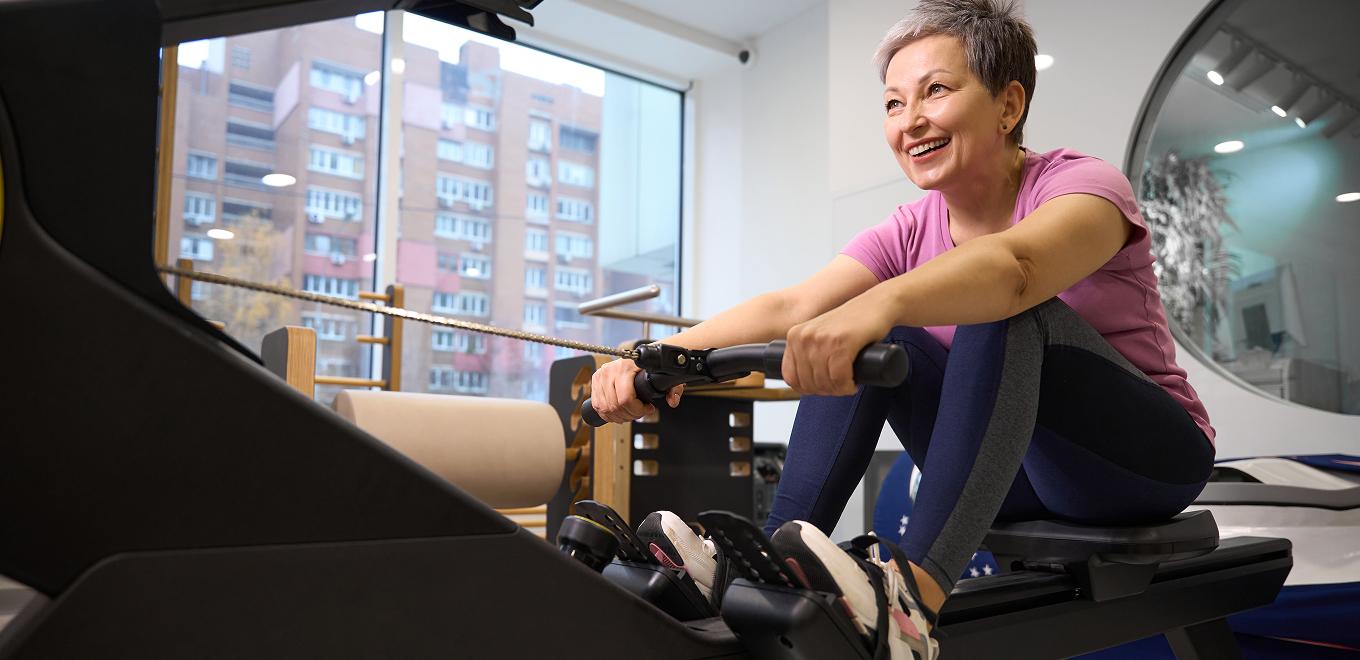
Rowing machines offer a low-impact, full-body workout that engages your arms, shoulders, core, back, glutes and legs.
Studies have shown that rowing workouts also improve cardiovascular fitness.
There are various types of rowing machines,among them air resistance rowers, magnetic resistance rowers, water rowers and hydraulic rowers.
Magnetic rowers are the quietest rowing machines, making them a good choice for apartments or home use.
Key Takeaways
How This Guide Helps You Choose the Best Home Rowing Machine
Why a Rowing Machine Is Great for Home Workouts
Types of Row Machines: Pros and Cons
Buying Guide: What to Look For in the Best Rowing Machine for Home
Best Rowing Machines by Category
Setup and Form Basics for Row Machines
How It Works with HSA/FSA and Truemed
When to Talk to a Healthcare Provider Before Starting Rowing
FAQ
Rowing offers an incredible low-impact, full-body workout that engages your arms, shoulders, core, back, glutes and legs. Owning a boat that allows you to get this kind of exercise, however, is not exactly a practical solution for most people. Adding a rowing machine to your home gym on the other hand, is a far more convenient option.
Still, it can be more than a little daunting sorting through all of the choices and figuring out which rowing machine might be the best buy based on your space limitations, fitness level, and overall goals, not to mention your budget.
If you need a little help navigating these questions and selecting a rowing machine for your home gym, you've come to the right place. This practical guide will cover the different types of rowing machines, their key features and how a rower for your home gym may even be eligible for purchase with your HSA or FSA savings.
How This Guide Helps You Choose the Best Home Rowing Machine
Whether you're a beginner, casual exerciser or an experienced home-gym owner who's searching for the newest addition to your array of fitness equipment, this guide can help. The information we'll cover includes:
- The various types of rowing machines on the market
- A buying guide detailing what to look for in a rowing machine
- How to match a rowing machine to your space, budget and goals
The goal of this article is to help you successfully navigate the shopping process to find a rowing machine that works for your needs amid real-world constraints. And remember, as long as you've done your research, you don't need to be a rowing expert to make a smart purchase.
Why a Rowing Machine Is Great for Home Workouts
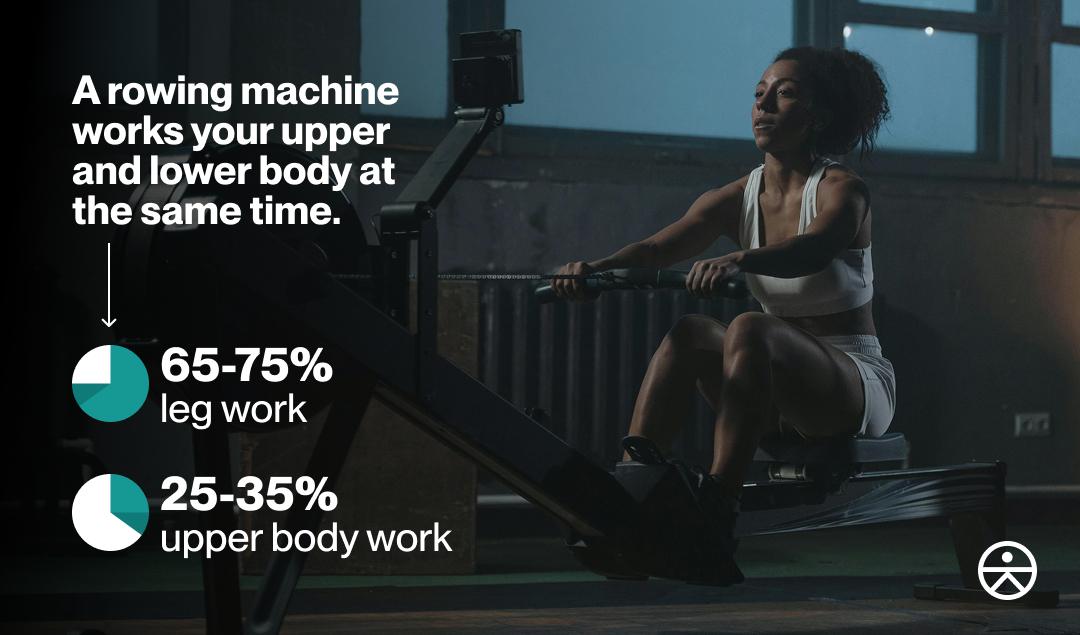
First, let's talk about why a rowing machine can be such a valuable addition to your home gym and workout routine. In contrast to cardio machines (think: treadmills, exercise bikes and the like) a rowing machine works your upper and lower body at the same time, according to the American Fitness Professionals Association.
In fact, when you use a rowing machine, you're getting 65 percent to 75 percent leg work and 25 - 35 percent upper body work. The muscle groups that a rowing machine targets include quadriceps, calves and glutes. At the same time, it builds strength in upper body muscles like your pecs, arms, abs, and obliques.
You can also complete the upper body portion of the row with varying grip positions (ex. underhand). This change in grip can completely change the muscle activation a user feels during the exercise.
And still that's not all of the benefits of a rowing machine. "It's a full body workout that works out all aspects of the body from a strength and conditioning perspective," says Sergio Pedemonte, a certified personal trainer for Your House Fitness. "It's great for the upper and lower body, plus the core muscles. Great for conditioning, for heart, lung and cardio health. Great for beginners and advanced users because it's a low impact exercise that allows you to push to the max without minimal risk of injuries."
The fact that a rowing machine is a low-impact option is an especially important point. Rowing machines provide valuable muscle-building exercise without putting stress on surrounding joints. This is in contrast to many other common forms of exercise.
"Other popular gym cardio like treadmill, running or group exercise classes (like traditional HIIT or step), typically have you applying force to the ground. With the rower you’re in a seated position and applying force with your feet fixed to a foot plate," says Casey Lee, a certified personal trainer and owner of Purposeful Strength, LLC.
Similarly, the cardiovascular benefits of rowing are very important. Studies have shown that 12 weeks of rowing exercise improves cardiorespiratory fitness.
"Rowers are a top tier choice for cardiovascular training because they provide double resistance," explains Lee. "The first form of resistance is with your legs pushing on the footplate as your body extends," says Lee. "The second form of resistance comes from your arms continuing the pull with the handle coming into the body. By having whole body resistance, the rower challenges both the muscular system and cardiovascular system."
Types of Row Machines: Pros and Cons
There are several types of rowing machines and they vary based on price, size, functionality, noise level and more. Here's a rundown of the options and what the experts have to say about each.
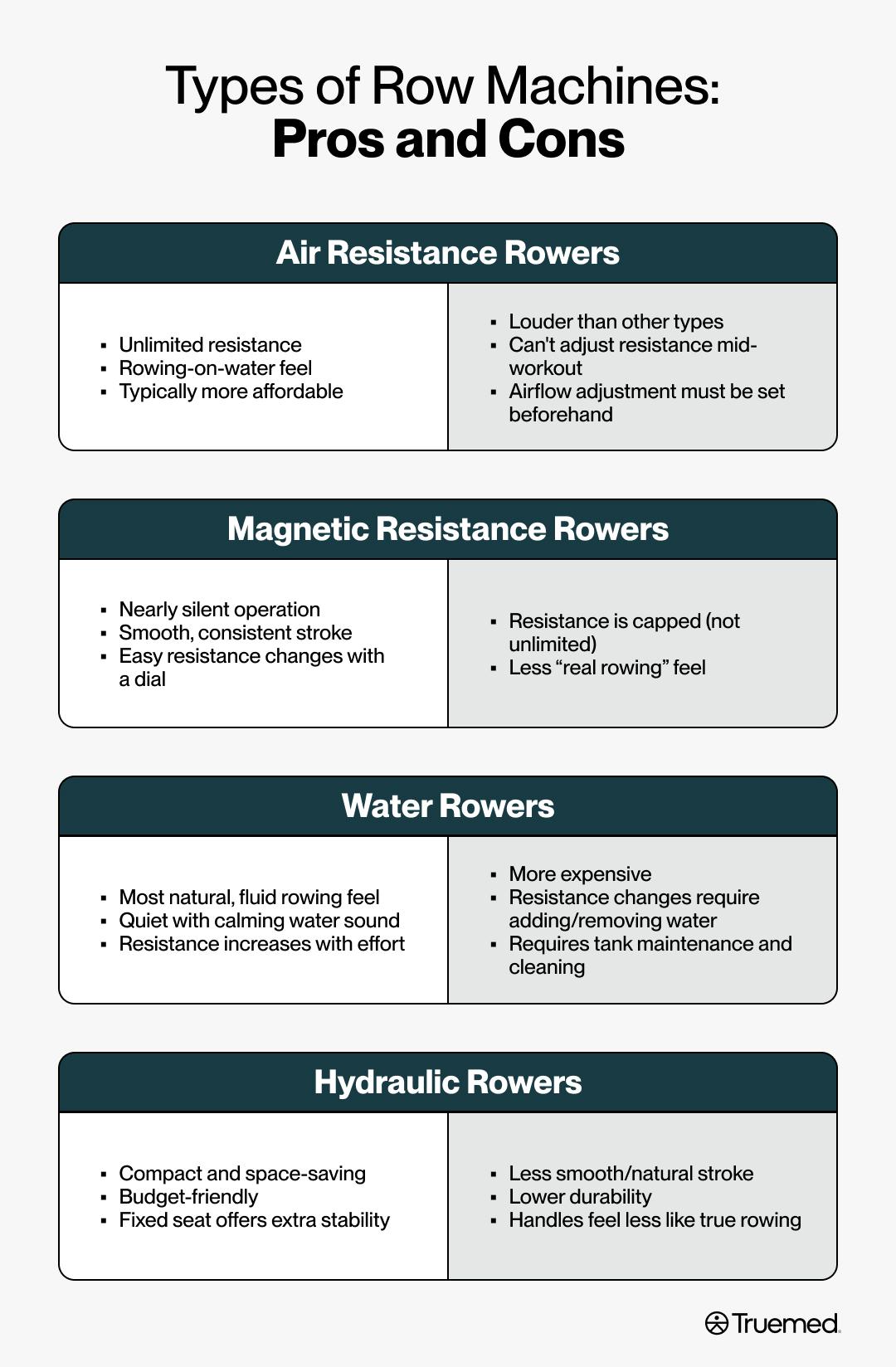
- Air resistance rowers: This style of rowing machine, which offers a feel similar to actually rowing on water, is common at commercial gyms. Its name is based on the fact that the rower provides resistance by blowing air through a flywheel."Air rowing machines have unlimited resistance, as the resistance is generated by the air flow into the fan, which gets stronger the harder you row," says Kaleigh Ray, a RunDNA certified run coach and certified exercise physiologist (ACSM) with Treadmill Review Guru.
Typically, you cannot change the feel of the resistance on an air rower while you're in the midst of a workout, adds Ray. However, some air rowers have dampers that allow you to adjust the flow of the air to the fan before your workout.
If you're shopping on a tight budget, note that air rowers typically cost less than other rower options.
- Magnetic resistance rowers: If it's a quieter machine you're after, with a smoother rowing stroke and adjustable levels, a magnetic resistance rower may be your best bet. The American Fitness Professionals Association says these rowers are "nearly silent." A magnetic rower is quieter because in contrast to air resistance rowers, this machine uses a magnetic brake system.
"Magnetic resistance rowers have become popular as technology has advanced," says Lee. "These work very similar to a traditional spin bike in that you twist a dial to increase the amount of magnetic resistance attached to the flywheel. More magnets, more resistance."
- Water Rower: If you participate in outdoor rowing and are looking for a home gym rowing machine that offers a similar feel (and even a similar sound), a water rower may be a solid choice. As the name implies, water rowing machines rely on water to generate resistance. In this case, it's a tank filled with water that works in conjunction with a patented flywheel that spins through the water to create resistance.
This type of rower offers a smoother, more natural feel and they're mostly silent when being used for a workout, but you will hear the sound of the water in the tank moving.
"Water rowers tend to be loved by the rowing purists," says Lee. "The sloshing water provides a slightly more dynamic feel when you row, and similar to the fan-based models can give unlimited resistance as you're in charge of producing more strokes per minute."
On the downside, a water rower can be more expensive than other types of rowing machines. In addition, alternating the resistance on a water rower can be cumbersome.
"To adjust the resistance, you have to add or remove water from the tank," says Ray. "Water rowers also require you to add cleaning tablets to the rowing tank to keep it looking clear."
- Hydraulic: Hydraulic rowing machines offer a compact choice if space is an issue and they're also typically a more budget-friendly option. On the downside, hydraulic rowers may feel less smooth and natural and they're less durable.
The resistance in this type of rower is created by hydraulic cylinders attached to the handles. "These tend to have two large handles off the side of the seat (kind of like a row boat) and you row the hydraulic handles independently," explains Lee. "The pro’s to these are definitely the cost, and also the ease of access. These are the only models where the seat does not move. Fan, magnetic, and water-based rowers all involve you sitting on a moving seat." If you’re someone who has a history of poor balance or you require added stability within your exercise routine, a hydraulic rower could be a viable option, says Lee.
Buying Guide: What to Look For in the Best Rowing Machine for Home
Now that we've covered the different types of rowing machines on the market, let's turn to what you should look for when shopping for new fitness equipment, specifically a rowing machine.
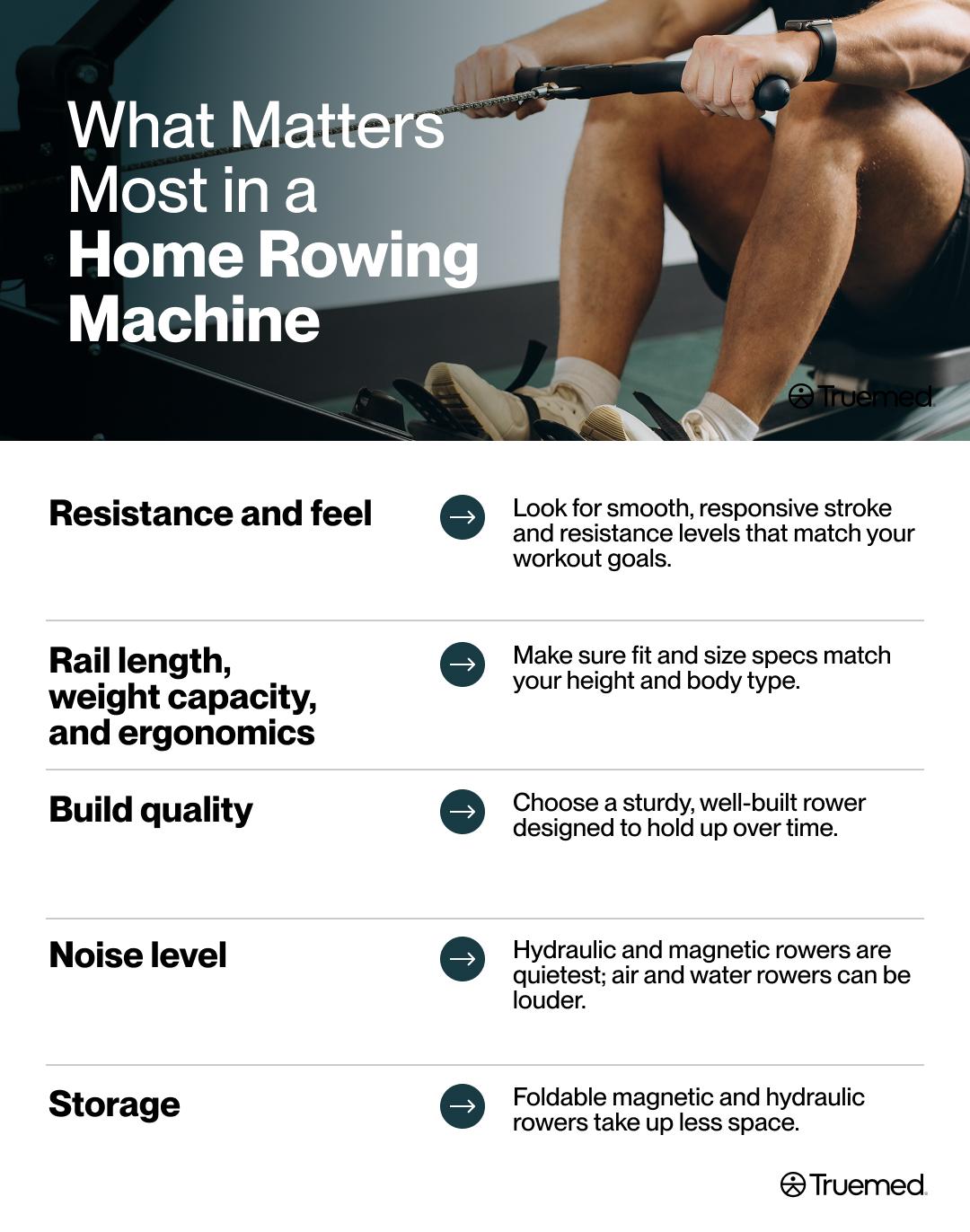
- Resistance and feel: As you're reviewing different rowing machine options, it's important to do so with an eye toward factors such as the smoothness of the machine's performance and its responsiveness. Resistance is another important factor. Some machines offer a variety of resistance levels (minimal resistance to significant resistance), which can also be a distinguishing feature, depending on your workout goals and how challenging you want the rowing workout to be.
- Rail length, weight capacity, and ergonomics: It's important to find a rowing machine that suits your body size. That includes making sure the weight capacity and rail lengths are suitable. Most rowing machine brands provide information about the maximum inseam or height a rower can support. Verify that these ratings match your needs.There are other ergonomic factors to consider as well when purchasing a rowing machine. For instance, seat height matters, as you don't want to struggle to get up and down. (Some rowing machines have seat heights that aren’t much lower than a typical chair.) You'll also want to make sure the seat is comfortable to sit in.
- Build quality: A rowing machine is an investment, making it important to find a model with a sturdy frame that's built for long-term durability.
- Noise level: The noise level of rowing machines varies significantly and you'll want to keep this in mind when considering a purchase. Hydraulic and magnetic rowers offer a quieter performance. Conversely, air and water rowers are on the noisier end of the spectrum.
- Storage: Storage is another important factor to consider before making your purchase. Some rowing machines can be folded and tucked away when not in use, making them more apartment friendly or better for smaller homes. In some cases, your folded rowing machine may be compact enough to be tucked under a bed or in a closet. Often, it is magnetic and hydraulic rowers that offer a smaller footprint and easier storage.
Matching the Best Rowing Machine for Home to Your Space, Budget, and GoalsNow let's run down a check list covering how best to match a rowing machine for your home, budget and goals.
Space: Be sure to measure the space in your room or home gym available for the rower. And compare those measurements to the rower you are considering. Rowing machines are typically easier to move around than treadmills or ellipticals, but it's still important to make sure you have enough room for them.
"You should account for an extra foot of space to the sides and behind your rowing machine for comfort and safety," advises Ray. "If you are tall, you may need even more space behind your rower to accommodate your entire rowing stroke. Remember that you are leaning back with your legs fully extended."
Budget tiers: Rowing machines are available at all price points from entry-level and mid-range to premium top rowing machines. The difference between price points often impacts the amount of features available, as well as the level of resistance, among other factors. "When considering budgets, with entry level expect normal to lower quality resistance and not that many features," explains Pedemonte. "Mid-range rowers have more features and have better builds and even a better stroke. Finally, premium machines are the best in the business because they're built to go the distance and have better features."
Goals: As you're considering rower options, be sure to think about your exercise goals for the machine. Will you be using it for general movement and weight support? Or for structured cardio training or performance-focused rowing. If the answer is the latter option, you'll want to invest in a more substantial machine offering stronger resistance.
If you're looking for an experience that's somewhat similar to outdoor rowing, an air rower (which feels similar to actually rowing on water) or water rower (which even offers water sounds) may be better options. If you're on a tight budget or have limited space, a hydraulic rower may be your best bet.
Best Rowing Machines by Category
- Best Rowing Machine for Beginners: Aviron Strong Go Rower ($1279) is a dual air magnetic rower that features gamified workouts (that can be played on your personal device such as an iPad), which can be helpful for beginning rowers. This rower also promises a very accessible experience, also helpful if you're just getting started on rowing workouts. As an added bonus, it folds up for those with compact spaces.
- Best Compact Rowing Machine for Small Spaces: The Echelon Row ($899) is a quiet, magnetic rower featuring a foldable design, so it can be neatly stored when not in use. Its overall footprint dimensions are just 84" L x 21" W (213.4 x 53 cm) or about 7 feet x 1.75 feet. And at just $899, it is one of the most budget friendly-options available.
- Best Quiet Rowing Machine for Apartments: The ProForm Pro 750R ($699)is known for barely making a noise as you move through your workout, ideal in apartment living. The Pro750R is also foldable, another benefit for apartment dwellers who have limited space. Additional benefits include 24 levels of resistance and smooth performance.
- Best Rowing Machine for Serious Training: The Technogym Skillrow ($5,050) is an advanced rowing machine for a serious full-body workout. It's designed to hone your rowing skills, while improving cardio fitness and total body power. The Skillrow is known for its authentic and tough rowing experience, along with its sturdy, long-lasting design, both important features for serious rowers who are committed to long-term use of a rowing machine.
- Best Budget Rowing Machine: Sunny Health Premium Smart Full Motion Magnetic Rowing Machine ($599) offers a full body workout rowing experience that mimics natural rowing. This machine offers 16 levels of resistance and is known for being quiet and stable. It can also be folded when not in use. Overall, this rowing machine can be a good, entry-level choice if you're on a budget.
Setup and Form Basics for Row Machines
Ready to set-up your new rowing machine and get started? Here are some important tips to ensure your safety and a good workout. Make sure your new rower is placed in an area with a stable, level floor and in an area that offers space behind and around the rower. A level floor helps ensure you don't fall off of the rower during a workout.
"Some basement and garage floors may be angled slightly for drainage and you don't want your rower to be tippy side-to-side," explains Lee. "If you do find that your surface is uneven you may want to invest in rubber shims from your local hardware store, so that your machine doesn't slide around and stays relatively even. With all the force and front to back moving [during a workout], it can be a long 10 inch fall from the seat to the floor."
Speaking of working out, when using your machine, make sure you're using good form. This includes setting up your feet first, putting them onto the rowing machine's foot plates and placing the strap over the widest part of your shoe. After that it's important to understand the rowing sequence, which follows legs first then hips and arms on the drive and arms first, then hips followed by legs on the recovery.
A common misconception with rowing machines is that it's an arm-dominant exercise. However, to get to your arms, you need to go through your legs, says Lee. "When I coach people on rower technique I tell them to push with their legs first - kind of like you would stand up in a squat exercise. Push hard until your legs are extended then bring the arms with you and pull the handle just above your belly button."Some of the common mistakes made when rowing include hunching the back, which means , overreaching, yanking with the arms, or slamming the seat.
How It Works with HSA/FSA and Truemed
Standard cardio machines, including rowing machines for a home gym, are not typically pre-approved to be eligible for payment with your HSA or FSA funds. However, in some cases, a medical practitioner may include a rowing machine in a treatment plan for a specific health condition and provide you with what's known as a Letter of Medical Necessity (LMN).
An LMN is a document outlining why a particular service or purchase is needed to treat a condition or support your health. With this document in hand, you're able to use HSA and FSA funds to cover the cost of items and expenses that may not have been otherwise eligible.
Truemed provides an intake form that can help you obtain an LMN as part of your shopping experience. Here's how it works: Once you've finished shopping on Truemed, you will be given the opportunity to complete a health survey. Next, an independent licensed provider will review the survey answers you provided in order to determine eligibility.
If the LMN is approved, you will then be able to use it to demonstrate that your rowing machine purchases are eligible for HSA and FSA use.
If you're interested in making a rowing machine purchase, it's also a good idea to reach out to your HSA/FSA administrator to find out whether the expense may be covered.
*Truemed is for qualified customers. See terms at truemed.com/disclosures.
When to Talk to a Healthcare Provider Before Starting Rowing
Before starting a rowing exercise routine, it can be a good idea to speak with a medical professional or healthcare provider.
This is particularly important if you have an existing medical condition such as heart disease, uncontrolled high blood pressure or significant joint or back issues. You may also want to seek medical advice if you've had surgery recently."With any exercise you should consult with your doctor to make sure your body is physically ready for an uptick in stress," says Lee.
It can be a good idea, adds Lee, to ask your doctor if there are any heart rate zones you should avoid. "Some providers may tell you to delay maximum heart rate efforts for a period of time until you’ve given your body a chance to acclimate to the new stressor. This is a common consideration that I see often as a personal trainer and will go a long way in ensuring a safe start with the rowing machine."
If you start rowing and experience any issues like chest pain, shortness of breath, dizziness or palpitations, consult your doctor. While it’s not unusual for exercise to cause shortness of breath and a high heart rate, it can also be a sign that something is wrong. If you feel concerned, stop your exercise routine and talk with a medical professional.
FAQ
The amount of time you should use your rowing machine depends on your goals and overall fitness routine. Exercise guidelines from the Centers for Disease Control and Prevention (CDC) recommend that we engage in 150 minutes of moderate-intensity exercise each week. Based on this recommendation, you might consider engaging in moderate-intensity exercise such as a rowing machine, 30 minutes a day, five days a week.
Yes, it may be possible to cover the cost of a rowing machine with your HSA or FSA funds if you have a Letter of Medical Necessity (LMN) from a health professional explaining how the equipment will help address a specific medical condition.
The best choice really depends on your space and fitness goals. However, magnet rowers are the quietest option, making them a good choice for at home use.

Editorial Standards
At True Medicine, Inc., we believe better health starts with trusted information. Our mission is to empower readers with accurate and accessible content grounded in peer-reviewed research, expert insight, and clinical guidance to make smarter health decisions. Every article is written or reviewed by qualified professionals and updated regularly to reflect the latest evidence. For more details on our rigorous editorial process, see here.