
How to Use Red Light Therapy at Home
Author:Kennedy Coleman
Published:
September 15, 2026
Truemed writers and editors independently evaluate all our product recommendations. If you make a purchase through any affiliate links we provide, we may receive compensation. Learn more.


Key Takeaways
Match your device to your target area: Panels suit larger areas like the back or legs, masks target the face, wands handle small spots, and wraps contour to joints. Follow the manufacturer's distance and timing guidance over generic ranges.
Skin prep and positioning matter as much as timing: Clean, bare, uncovered skin and a steady distance held for the full session do more for your results than hitting an exact minute count.
3 to 5 sessions per week is a typical cadence: Most people don't need daily use, and a new routine should run for several weeks before you judge results, since benefits build cumulatively rather than overnight.
Common mistakes come from setup, not effort: Wrong distance or intensity, mismatching device size to treatment area, inconsistent use, and skipping manufacturer instructions are the most frequent slip-ups.
HSA/FSA eligibility often depends on medical necessity: Red light therapy devices can be eligible for qualified customers with a documented medical need, and Truemed can help confirm eligibility and documentation.
Shop Eligible Products
Ready to unlock your HSA/FSA funds for qualified medical expenses?
Red light therapy has moved from dermatology offices and niche wellness clinics into millions of living rooms thanks to at-home panels, masks, wands, and wraps. Products have become increasingly more accessible, both in terms of affordability but also ease of use. However, even easy to use products have some tips and tricks that users should know if they want to see the best results.
This guide walks through how to use red light therapy at home, including how to set up a session, how often to use red light therapy, common mistakes to avoid, and how to use the product safely and effectively, no matter which device you own.
If you haven't picked a device yet, our guide to the best red light therapy devices can help you choose one first, and if you want the full rundown on what red light therapy can (and can't) do, see the benefits of red light therapy.
What Home Red Light Therapy Looks Like
Using red light therapy at home means sitting or standing near a light-emitting device for a set period, most often a few times a week, to expose a specific area of the body to red and near-infrared wavelengths. Unlike an in-clinic treatment, home sessions are self-administered, which is exactly why setup and consistency matter so much.
Many people use red light therapy for goals including skin health and appearance, muscle and joint pain, post-workout recovery, and hair support. Home devices generally treat one area of the body at a time, so your device format should match your target area.
Common device formats and treatment areas
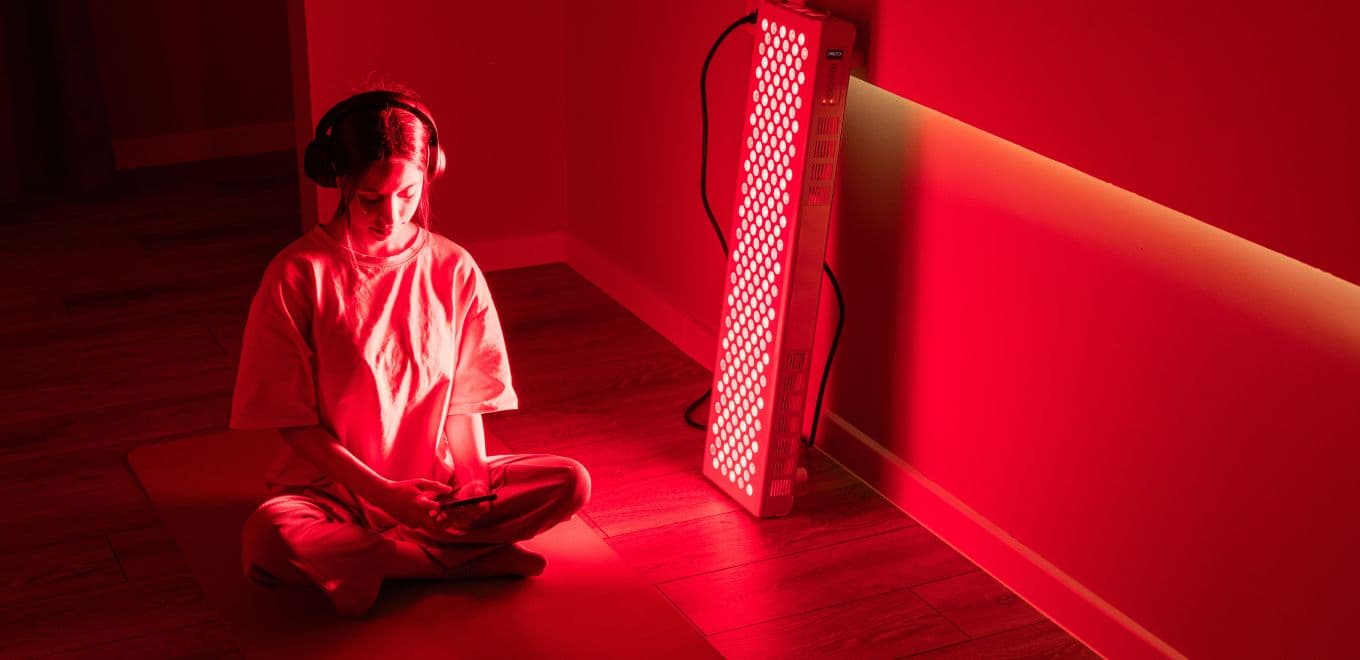
- Panels: Best for larger areas like the back, shoulders, legs, or even full-body sessions if the panel is large enough.
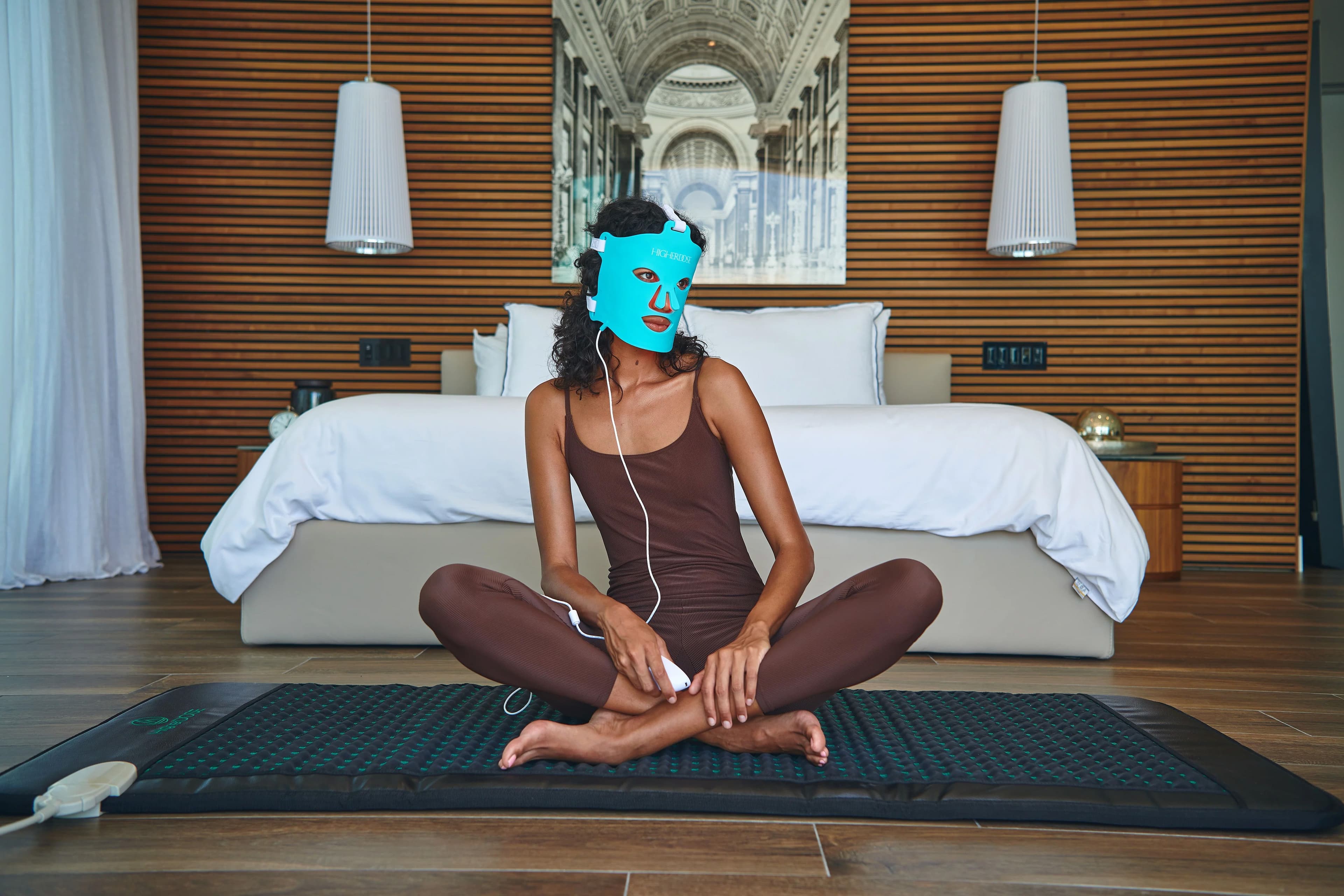
- Masks: Designed for the face, targeting fine lines, redness, or acne-related concerns.
- Handheld wands: Useful for smaller, precise areas like a knee, elbow, or a specific patch of skin.
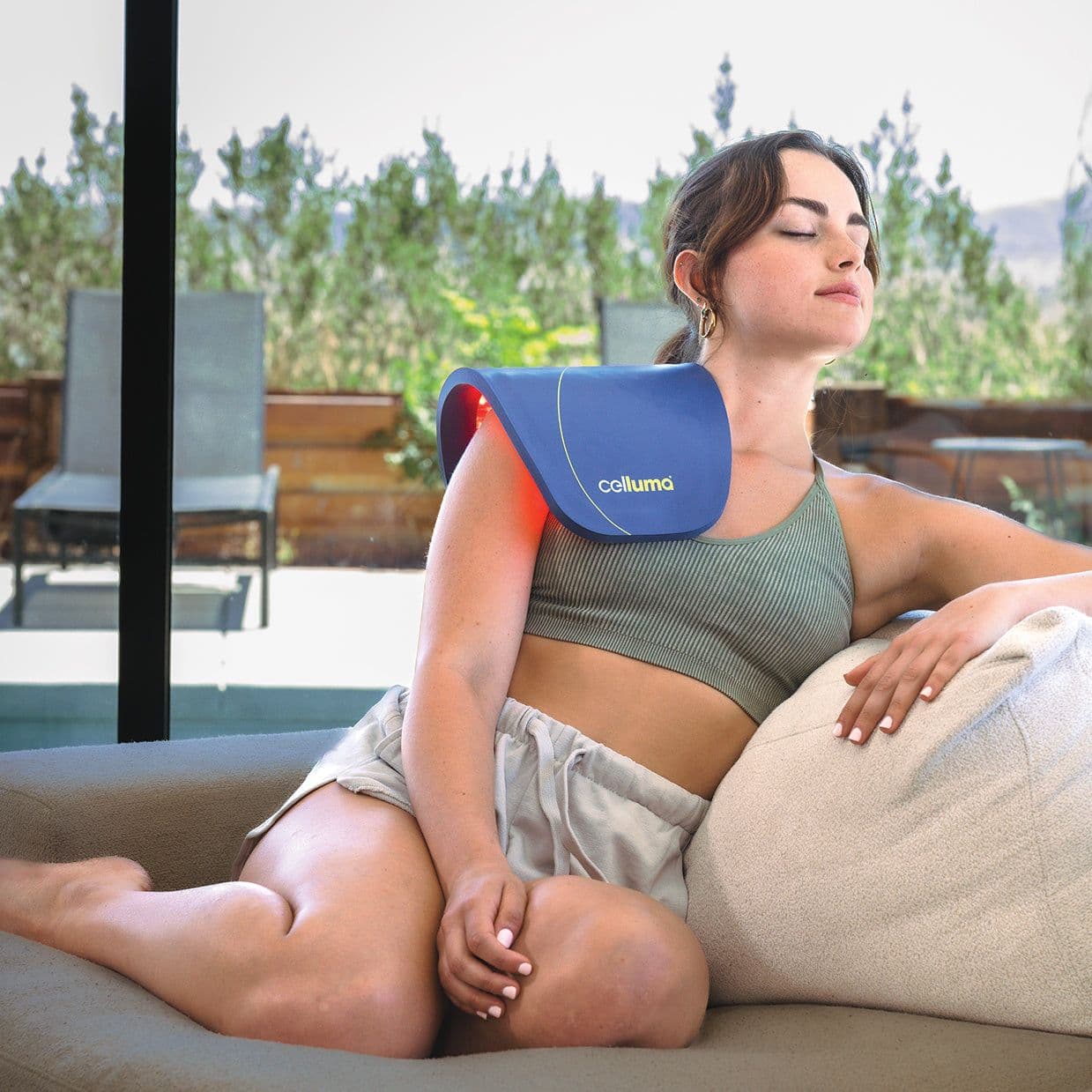
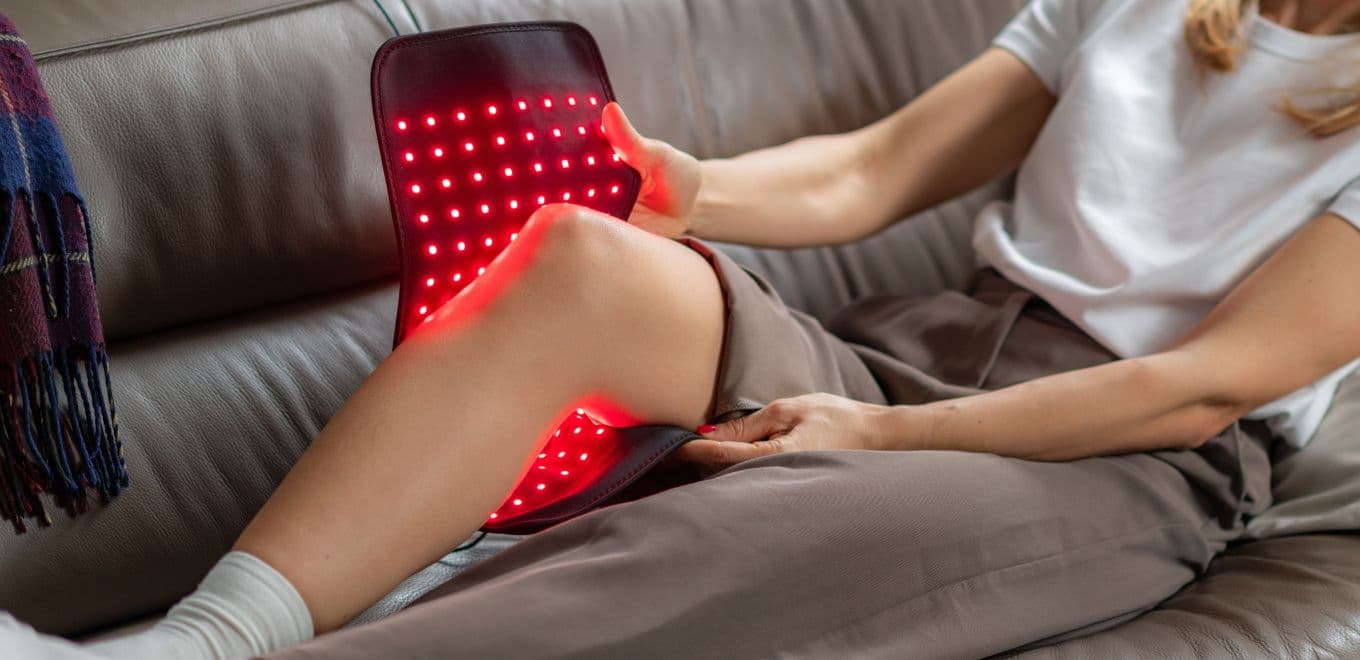
- Wraps and pads: Contour to joints or muscle groups, often used for pain and recovery, and allow hands-free sessions.
How to Set Up a Session
Every device ships with manufacturer instructions, and those should always take priority over general guidance because irradiance, LED density, and wavelength mix vary enough between products that a generic number can be off for your specific device. That said, many home sessions follow a similar shape.
By-device starting setup
- Panels: Start around 6 to 12 inches from the skin for 10 to 20 minutes per area, depending on the panel's power output.
- Masks: Worn directly on the face (or very close to it) for 10 to 15 minutes per session, per the manufacturer's timer.
- Handheld wands: Held a few inches from the treatment area for a few minutes per spot, moving slowly across the area if it's larger than the wand's beam.
- Wraps and pads: Applied directly to the skin over the target joint or muscle, typically for 15 to 20 minutes.
Deeper tissue goals, like joint or muscle pain, generally call for the longer end of these ranges and the near-infrared setting if your device offers one, since NIR wavelengths penetrate further than red light alone. Surface-level skin goals typically need shorter sessions at closer range.
Remember to verify these recommendations against your specific device’s guidelines. This is only intended to be a starting point if you’re curious about what a session with different red light tools may look like.
Positioning and prep
- Clean, dry, bare skin lets more light reach your cells, so remove makeup, lotion, sunscreen, or oils from the treatment area beforehand. This also helps keep your device clean, which is especially important if you are using red light on sensitive areas like the face.
- Expose the treatment area directly. Clothing blocks the light and reduces the dose that reaches your skin.
- Keep the device steady and at a consistent distance for the full session as moving closer or further mid-session changes your dose unpredictably.
How Often to Use Red Light Therapy at Home
Consistency, not session length, is what drives results with red light therapy. A shorter session done regularly will generally outperform an occasional long one.
Be sure to check the instructions on your specific device to see the number of weekly sessions the brand recommends, but if you’re curious, here are some common starting points.
Beginner weekly schedule
A reasonable starting cadence is 3 to 5 sessions per week, at whichever session length your device recommends for your goal. This gives your body regular, repeated exposure without overdoing it while you learn how your skin or symptoms respond.
Most people don't need daily sessions to see benefits, though some choose to use lower-intensity devices, like facial masks, more frequently since the exposure per session may be gentler.
When to adjust your routine
Give a new routine several weeks of consistent use before judging results because red light therapy works cumulatively, and visible changes in skin or reported pain relief typically build over weeks, not days. From there you may choose to:
- Increase frequency or session length gradually if you're tolerating sessions well and want to push toward a specific goal, like faster recovery after intense training.
- Reduce frequency or distance if you notice excessive skin dryness, redness that doesn't fade quickly, or irritation.
- Maintain your current routine once you're seeing steady progress. There's no need to keep escalating once something is working.
Common Red Light Therapy Mistakes to Avoid
Setup and device-use mistakes
- Wrong distance or mode: Sitting too far from a panel (or too close to a high-powered one) under- or over-doses the treatment area.
- Treating too large or too small of an area with the incorrect device: Trying to cover a large area with a device meant for spot treatment stretches out sessions unnecessarily and often leads to inconsistent coverage. Similarly, it may not be necessary to invest in a full body panel if your main concern is something like eczema on your face where a smaller, less expensive mask would do the trick.
- Skipping manufacturer guidance: Generic ranges are a starting point, not a substitute for your device's specific instructions.
Routine and expectation mistakes
- Inconsistent use: Sporadic sessions make it hard to build the cumulative exposure red light therapy depends on. You’re likely not going to see results if you only remember to use your tool once a month.
- Expecting instant results: Red light therapy is a gradual, cumulative treatment, not a one-session fix.
- Poor tracking: Not logging session length, frequency, or how your skin or symptoms respond makes it hard to know what's actually working. It’s never a bad idea to maintain documentation so you can precisely pinpoint if something worked or not.
- Skipping provider input when necessary: Not checking in with a clinician when you have an underlying condition, take photosensitizing medication, or aren't seeing expected results.
Red Light Therapy Safety at Home
Session safety checks
- Follow your specific device's instructions on distance, duration, and frequency rather than a one-size-fits-all number.
- Ask a clinician first if you're pregnant, have a photosensitivity condition, take photosensitizing medications, have active skin cancer, or are undergoing other light-based or dermatologic treatment.
- Stop the session and give your skin a break if you notice irritation, excessive redness, or discomfort.
Environmental and routine precautions
- Most red light therapy devices don't require special eye protection since they don't emit UV light, but check your specific device's instructions as some higher-powered panels recommend goggles.
- Avoid looking directly at high-intensity panels for extended periods.
- Skip sunscreen or SPF makeup on the treatment area during a session, since some formulations can block or alter light absorption.
Featured Red Light Partner: Celluma Light Therapy
Truemed partner, Celluma, makes award-winning, FDA-cleared LED light therapy devices designed to support cellular health, calm acne, ease inflammation, and relieve pain from arthritis, sore muscles, and achy joints. Built on NASA-derived photobiomodulation research, the devices boost ATP production and circulation to speed healing and recovery, restore mobility, and help maintain healthy cellular function over time as part of a preventative wellness routine.
What really sets Celluma apart is its patented, flexible, shape-taking design, which molds to any part of the body for precise, close-contact treatment, making the devices just as practical in a clinical setting as they are for everyday use at home.
Celluma red light therapy devices are HSA/FSA eligible for qualified customers.

FAQ
It depends on the device and how it's used. Red light therapy devices can be HSA/FSA eligible for qualified customers when used to treat or manage a diagnosed medical condition, typically supported by a Letter of Medical Necessity from a licensed clinician. Eligibility isn't automatic for every device or every use case because eligibility is tied to the specific medical purpose behind the purchase. Truemed can help qualified customers check eligibility and complete the required documentation. Explore more potentially eligible red light therapy tools or browse other surprising HSA/FSA-eligible purchases.
No, most home routines settle around 3 to 5 sessions per week rather than daily use. Some people use gentler devices, like facial masks, more frequently, but daily sessions aren't a requirement for most goals.
Wavelength range (red light around 630–660nm for skin, near-infrared around 810–850nm for deeper tissue), coverage area relative to what you're treating, power density (irradiance) at your typical treatment distance, and safety certification such as FDA clearance are the specs worth comparing before buying a device.
See what you can do with your HSA/FSA.
Join 1.5 million Americans who have routed their healthcare dollars toward root cause health via Truemed's HSA/FSA marketplace.
New product announcements
Sales and special offers
Tips for utilizing your HSA/FSA

Editorial Standards
At True Medicine, Inc., we believe better health starts with trusted information. Our mission is to empower readers with accurate and accessible content grounded in peer-reviewed research, expert insight, and clinical guidance to make smarter health decisions. Every article is written or reviewed by qualified professionals and updated regularly to reflect the latest evidence. For more details on our rigorous editorial process, see here.