
Is Vitamin D FSA or HSA Eligible? What to Know
Author:Kennedy Coleman
Reviewed By:Katherine Janosz, MD
Published:
July 23, 2026
Last Updated:
October 06, 2026



Key Takeaways
Vitamin D isn't typically eligible by default: As a general-wellness supplement, a standalone vitamin D product doesn't meet the IRS definition of a qualified medical expense.
It may qualify when medically necessary: For qualified customers, vitamin D may be HSA/FSA eligible when a medical practitioner recommends it as treatment for a specific diagnosed medical condition. A Letter of Medical Necessity may help substantiate the medical purpose of the purchase.
Truemed makes the process simple: Shop an eligible product, complete a private health intake survey, and if you qualify, a clinician issues an LMN so you can pay with your HSA/FSA card or seek reimbursement.
Key Takeaways
Why vitamin D usually isn't HSA/FSA eligible by default
When vitamin D is HSA/FSA eligible
What a Letter of Medical Necessity actually is
Why so many people are low on vitamin D
How much vitamin D is a "clinical" dose?
How to buy vitamin D with your HSA or FSA (step by step)
Featured vitamin D supplements from Truemed partners
FAQ
Shop Eligible Products
Ready to unlock your HSA/FSA funds for qualified medical expenses?
Why vitamin D usually isn't HSA/FSA eligible by default
Whether a product is HSA/FSA eligible comes down to how the IRS defines a qualified medical expense. Under Internal Revenue Code Section 213(d), "medical care" means amounts paid for the diagnosis, cure, mitigation, treatment, or prevention of disease.
Vitamins sit in a gray area because they can serve two purposes at once. A daily vitamin D supplement taken simply to "stay healthy" is considered a general-health product, and general-health products don't meet the 213(d) bar. This is why most multivitamins and standalone supplements are not eligible when you buy them off the shelf with no context.
The key phrase, though, is "treatment, or prevention of disease." When a medical practitioner recommends vitamin D as treatment for a specific diagnosed medical condition, the supplement may qualify as medical care rather than a general-health expense.
When vitamin D is HSA/FSA eligible
Vitamin D may qualify as an eligible expense for qualified customers when a medical practitioner recommends it as treatment for a specific diagnosed medical condition. Documentation, such as a Letter of Medical Necessity, may be used to substantiate the medical purpose of the purchase. Depending on your individual health situation, conditions where a clinician might determine vitamin D is medically necessary include:
- Diagnosed vitamin D deficiency or insufficiency
- Bone disorders such as osteoporosis, osteopenia, or osteomalacia, when vitamin D is recommended as part of treatment
- Osteomalacia (softening of the bones caused by severe deficiency)
- Malabsorption conditions such as celiac disease, Crohn's disease, or short bowel syndrome, when a medical practitioner recommends vitamin D as part of treatment
- Hyperparathyroidism and related calcium-regulation disorders
- Other conditions where a clinician determines vitamin D supplementation is part of treatment
This list is illustrative, not exhaustive. And remember, eligibility depends on the individual's medical circumstances and the applicable IRS requirements. A qualified medical practitioner must recommend the supplement as treatment for a specific diagnosed medical condition.
What a Letter of Medical Necessity actually is
A Letter of Medical Necessity (LMN) is a formal letter from a licensed healthcare provider explaining why a specific product is necessary to treat, mitigate, or prevent a medical condition. It is documentation that a plan or benefits administrator may request to substantiate the medical purpose of an otherwise dual-purpose product like vitamin D.
An LMN is not a prescription, and it isn't a casual doctor's note. It's a formal approval that typically identifies the condition being addressed, the product recommended, and how long the recommendation applies. When a qualified medical practitioner recommends vitamin D as treatment for a specific diagnosed medical condition, an LMN may help document the medical purpose of the purchase for HSA/FSA substantiation.
Why so many people are low on vitamin D
Part of why vitamin D comes up so often in HSA/FSA questions is simply how common deficiency is. Vitamin D deficiency has been described as a global public health concern affecting an estimated one billion people across all ages and ethnicities, with wide variation by region and lifestyle.
Vitamin D matters because it's essential for maintaining calcium and phosphorus balance and for building and maintaining healthy bone. When levels run low for a long time, the consequences can range from reduced bone mineral density to, in severe cases, the bone-softening disorder osteomalacia.
Common contributors to low vitamin D include limited sun exposure, indoor lifestyles, darker skin pigmentation, aging, and diets low in vitamin D and calcium. If you suspect you're low, a simple blood test ordered by your provider can confirm it.
How much vitamin D is a "clinical" dose?
If a clinician recommends vitamin D for a diagnosed condition, dosing usually reflects the goal of raising levels into a healthy range rather than the small amounts found in a basic multivitamin. Randomized trials summarized in the bone-health literature have generally found that around 1,000–2,000 IU of vitamin D daily is needed to keep blood levels above the commonly cited 20 ng/mL threshold, and many practitioner-grade products are formulated at 5,000 IU to support people who are starting from a deficient baseline. However, There is no single clinical dose of vitamin D that is appropriate for everyone. The amount recommended depends on factors such as baseline 25-hydroxyvitamin D levels, body size, age, absorption, medical conditions, and the goal of treatment.
You'll also notice that higher-quality vitamin D products are often formulated with vitamin K (K1 and K2) alongside D3. That’s because vitamin D helps regulate calcium absorption and metabolism, while vitamin K is involved in the activation of proteins involved in bone and vascular biology. This pairing is why some vitamin D products combine D3 with vitamin K in a single formula, although the need for vitamin K supplementation depends on the individual and the specific product.
As always, the appropriate amount depends on your clinical circumstances and your clinician's guidance. Avoid routinely taking high-dose vitamin D without appropriate medical supervision.
How to buy vitamin D with your HSA or FSA (step by step)
This is where Truemed* comes in. Truemed specializes in helping qualified customers put their HSA and FSA dollars toward products used to address a medical condition. Here's how the process works:
- Shop eligible vitamin D products on the Truemed marketplace or a partner merchant's site, and add the product to your cart.
- Complete a private health intake survey at checkout. An independent licensed clinician reviews your answers to determine eligibility. Truemed itself does not make eligibility determinations.
- If you qualify, the clinician issues a Letter of Medical Necessity.
- Make your purchase — either pay directly with your HSA/FSA card, or pay with a regular credit/debit card and submit for reimbursement afterward using the guide included with your LMN.
If you ever receive a denial of reimbursement and need substantiation documentation, Truemed offers support to help resolve it.
*Truemed is for qualified customers. HSA/FSA tax savings vary. Learn more at truemed.com/disclosures.
Featured vitamin D supplements from Truemed partners
If you're looking for a vitamin D supplement, the following are products from Truemed partners that are HSA/FSA eligible for qualified customers.
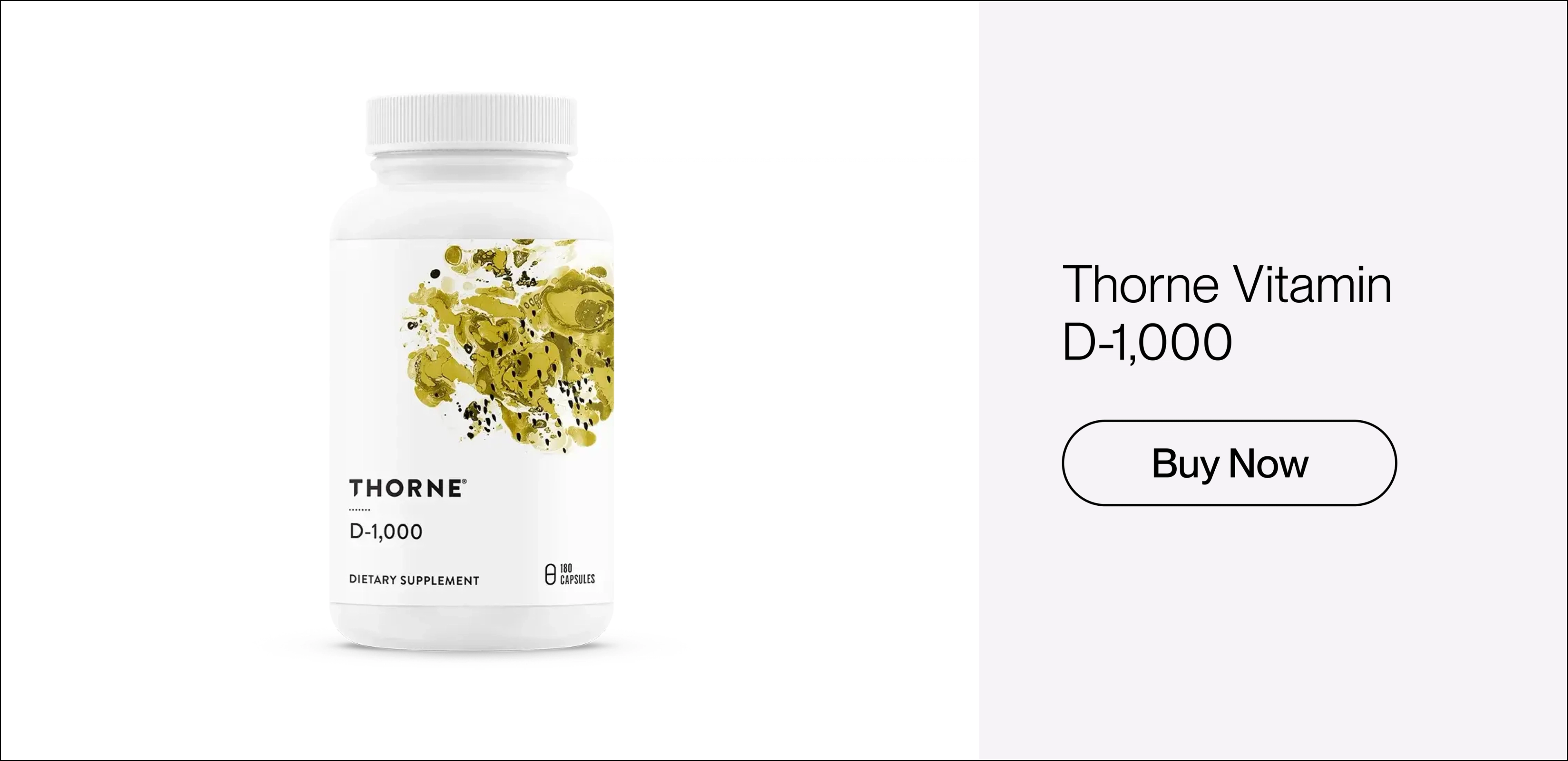
Thorne Vitamin D-1,000
Thorne Vitamin D-1,000 delivers 1,000 IU of vitamin D3 per capsule. Vitamin D3 generally raises blood 25(OH)D levels more effectively than vitamin D2 in many studies. This is a single-ingredient vitamin D3 supplement designed for individuals whose clinician has recommended a higher-dose formulation.
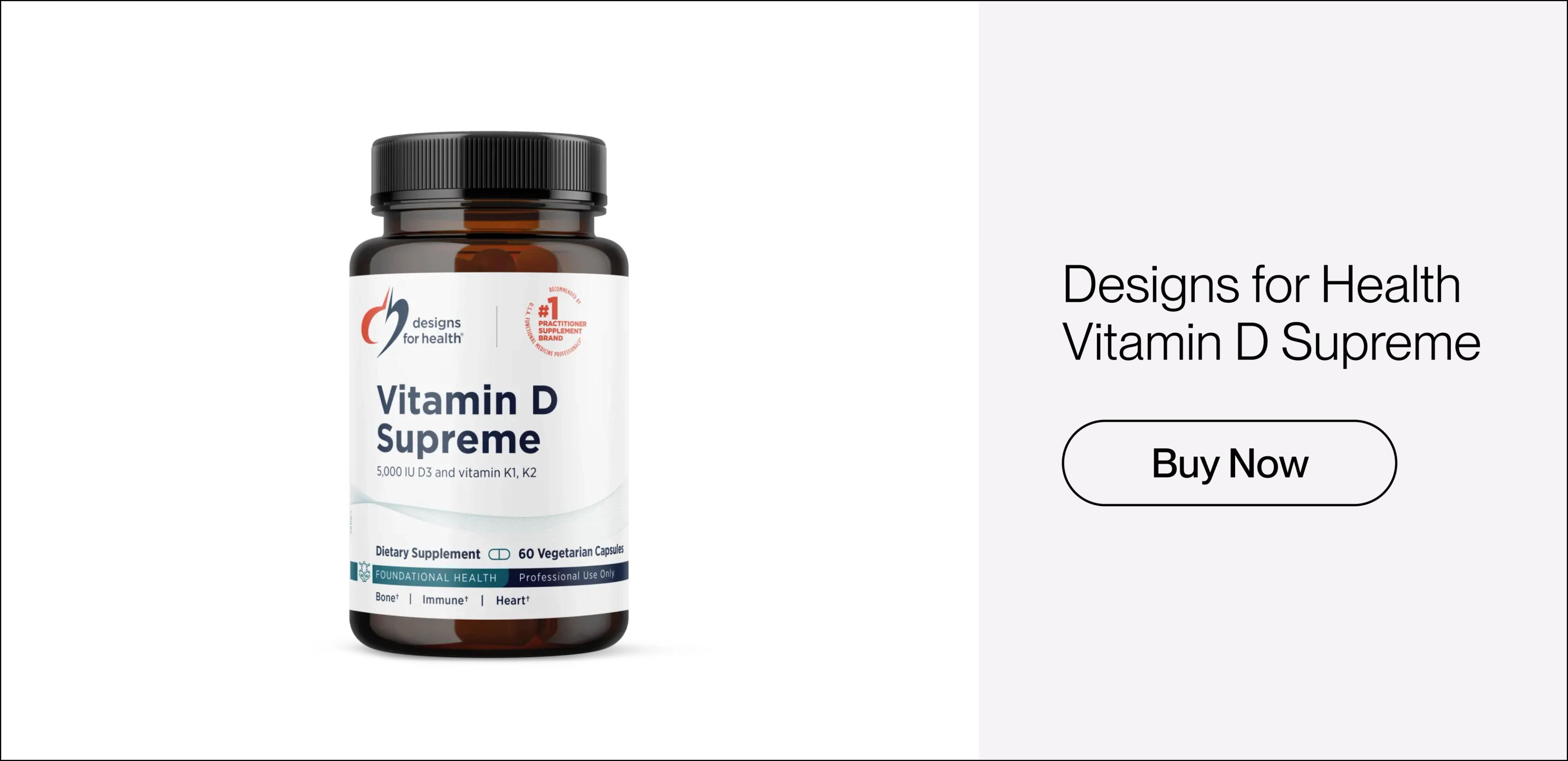
Designs for Health Vitamin D Supreme
Designs for Health Vitamin D Supreme pairs 5,000 IU of vitamin D3 with vitamins K1 and K2 plus geranylgeraniol. The formula combines vitamin D and vitamin K with additional nutrients involved in bone and calcium metabolism.
Metagenics Vitamin D 5,000 + K
Metagenics Vitamin D 5,000 + K is a softgel providing 5,000 IU of vitamin D3 along with vitamins K1 and K2. The formula is designed to provide vitamin D and vitamin K in a single supplement for individuals whose clinician has recommended this combination.

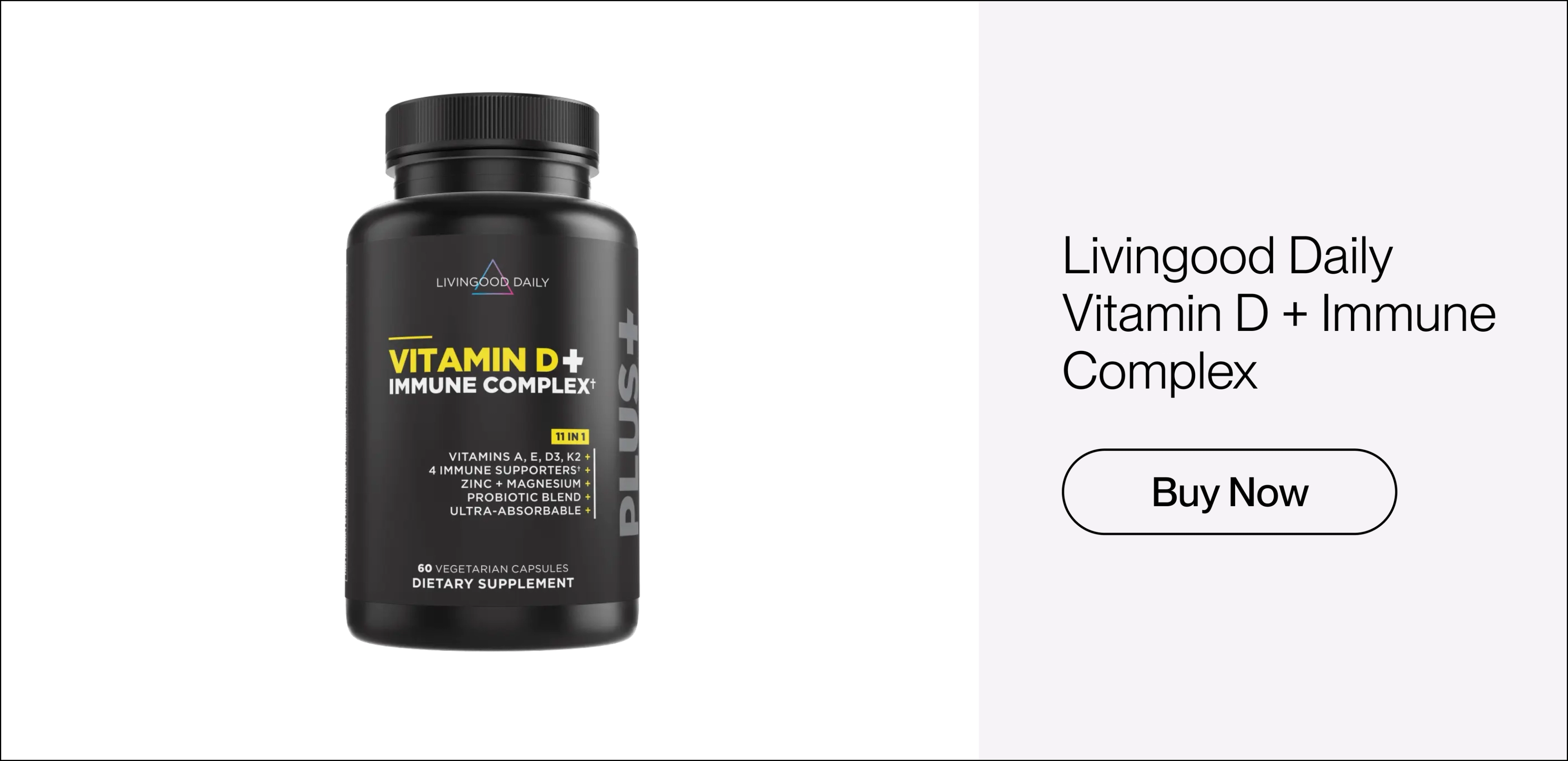
Livingood Daily Vitamin D + Immune Complex
Livingood Daily Vitamin D + Immune Complex is a multi-ingredient formula that combines vitamin D3 and K2 with additional ingredients, including probiotics and magnesium. It may appeal to people who prefer a broader multi-ingredient formula rather than a standalone vitamin D supplement.
FAQ
Similar to HSA eligibility, a standalone vitamin D supplement generally isn't FSA eligible as a general-wellness product, but it may qualify for FSA spending for qualified customers when it's used to address a diagnosed medical condition and supported by a Letter of Medical Necessity.
Vitamin D3 (cholecalciferol) follows the same eligibility rules as vitamin D generally. It isn't automatically HSA eligible, but it may be for qualified customers when a licensed clinician determines it's medically necessary for a specific condition and issues an LMN.
Not a traditional prescription. What's typically needed is a Letter of Medical Necessity which is a formal letter from a licensed provider explaining why the product is necessary to treat, mitigate, or prevent a medical condition. Through Truemed, an independent licensed clinician reviews a health intake survey and issues an LMN if you qualify.
Eligibility generally depends on the medical purpose of the expense rather than whether the product comes as a gummy, softgel, or capsule. A vitamin D gummy, softgel, or combination D3 + K formula may qualify when a medical practitioner recommends it as treatment for a specific diagnosed medical condition. Documentation may be required to substantiate the medical purpose of the purchase.




See what you can do with your HSA/FSA.
Join 1.5 million Americans who have routed their healthcare dollars toward root cause health via Truemed's HSA/FSA marketplace.
New product announcements
Sales and special offers
Tips for utilizing your HSA/FSA
Editorial Standards
At True Medicine, Inc., we believe better health starts with trusted information. Our mission is to empower readers with accurate and accessible content grounded in peer-reviewed research, expert insight, and clinical guidance to make smarter health decisions. Every article is written or reviewed by qualified professionals and updated regularly to reflect the latest evidence. For more details on our rigorous editorial process, see here.